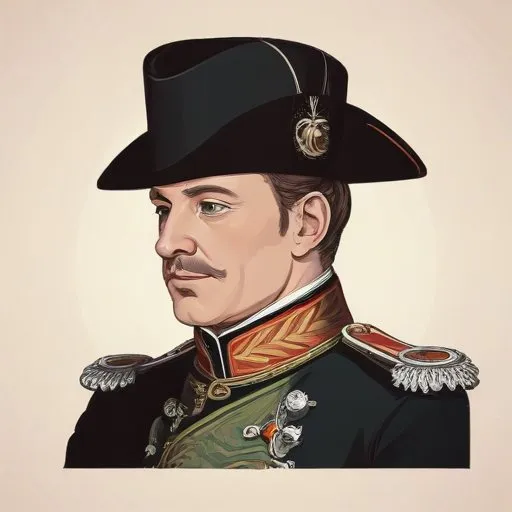
Charles Alexander, Duke of Württemberg

Charles Alexander, Duke of Württemberg

Charles Alexander, Duke of Württemberg was born on January 24th, 1684

Full Name: Charles Alexander, Duke of Württemberg
Birthplace: Stuttgart, Württemberg
Profession: German noble
Notable Positions: Duke of Württemberg
Zodiac Sign: Leo
Death Date: October 28, 1793
Burial Place: Ludwigsburg Palace
Father Of: Frederick I of Württemberg

Written by: Thomas Blackwood Thomas Blackwood

Charles Alexander, Duke of Württemberg: The Militant Regent and Ruler

Charles Alexander, Duke of Württemberg, is renowned for his dual roles as regent of the Kingdom of Serbia and ruler of the Duchy of Württemberg, leaving an indelible mark on European history. Throughout his life, he skillfully navigated the complexities of politics, warfare, and governance, earning recognition as a capable and astute leader.

Early Life and Conversion

Born on January 24, 1684, in Stuttgart, Charles Alexander was the eldest son of Frederick Charles, Duke of Württemberg-Winnental, and Margravine Eleonore Juliane of Brandenburg-Ansbach. He succeeded his father as Duke of Württemberg-Winnental in 1698, marking the beginning of his illustrious career.

In 1712, Charles Alexander converted to Roman Catholicism, a decision that would have significant implications for his military and political endeavors. This conversion not only solidified his allegiance to the Holy Roman Emperor but also facilitated his rise as a prominent military commander.

Military Expeditions and Governorship of Serbia

Charles Alexander's military prowess earned him recognition as a skilled commander, serving under Prince Eugene of Savoy in the Spanish War of Succession and the Ottoman-Venetian War. In 1719, he was appointed imperial governor of Belgrade, a position that laid the groundwork for his subsequent governorship of the Kingdom of Serbia.

In 1720, Holy Roman Emperor Charles VI appointed Charles Alexander governor of the Kingdom of Serbia, a role he held for 13 years. During this period, he successfully governed the region, earning the respect of his contemporaries and solidifying his position as a capable administrator.

Marriage and Family

In 1727, Charles Alexander married Princess Marie Auguste of Thurn and Taxis (1706-1756), with whom he had six children:

Rule as Duke of Württemberg

After 13 years of governing Serbia, Charles Alexander inherited the Duchy of Württemberg from his cousin, Eberhard Louis, in 1733. He promptly moved the court from Ludwigsburg to Stuttgart, marking a new era in Württemberg's history.

During his reign as Duke of Württemberg, Charles Alexander employed financier Joseph Süß Oppenheimer, who would later be executed in 1738 for abuse of office. This tumultuous episode notwithstanding, Charles Alexander's rule was characterized by a strong sense of governance and administration.

Legacy and Impact

Charles Alexander's nine-year-old son, Charles Eugene, succeeded him after his sudden death in 1737. Despite his relatively short reign, Charles Alexander left an indelible mark on Württemberg's history, earning recognition as a skilled military commander, capable administrator, and shrewd politician.

His legacy extends beyond his military conquests and governorship, as he played a significant role in shaping the destiny of the Duchy of Württemberg and the Kingdom of Serbia. Charles Alexander's remarkable life serves as a testament to the complexities and nuances of 18th-century European politics and governance.

Timeline
1684
Born in Stuttgart
Charles Alexander, Duke of Württemberg, was born on January 24, 1684, in Stuttgart, Württemberg, Germany.
1698
Inherited Duchy of Württemberg
Charles Alexander inherited the Duchy of Württemberg from his father, Eberhard Louis.
1707
Married Marie Auguste of Thurn
Charles Alexander married Marie Auguste of Thurn and Taxis, solidifying an alliance between two prominent noble families.
1717
Renounced Protestantism
Charles Alexander renounced Protestantism and converted to Catholicism, causing controversy in Württemberg.
1737
Died
Charles Alexander died on March 12, 1737, at the age of 53, in Ludwigsburg Palace, Württemberg, Germany.
Charles Alexander, Duke of Württemberg

Charles Alexander, Duke of Württemberg Quiz

What was Charles Alexander, Duke of Württemberg known for in the War of the Polish Succession?

Score: 0/5
FAQ
What were the key accomplishments of Charles Alexander, Duke of Württemberg?
Charles Alexander, Duke of Württemberg, was a prominent German noble who played a crucial role in the Napoleonic Wars. He was a skilled military leader and strategician, and his accomplishments include the organization of the Württemberg army and the formation of the Confederation of the Rhine.
What was Charles Alexanders role in the Napoleonic Wars?
During the Napoleonic Wars, Charles Alexander, Duke of Württemberg, allied himself with Napoleon, and his army fought on the French side. He played a significant role in the Battle of Austerlitz and the Battle of Jena.
What were Charles Alexanders contributions to the cultural development of Württemberg?
Charles Alexander, Duke of Württemberg, was a patron of the arts and supported the cultural development of Württemberg. He founded the University of Stuttgart and promoted the construction of several important buildings, including the New Palace in Stuttgart.
What was Charles Alexanders family life like?
Charles Alexander, Duke of Württemberg, was married to Princess Antoinette of Saxe-Coburg-Saalfeld and had five children with her. He was known for his strong family ties and was deeply devoted to his wife and children.
What is Charles Alexanders legacy in modern-day Württemberg?
Today, Charles Alexander, Duke of Württemberg, is remembered as a significant figure in Württembergs history. His legacy continues to be celebrated, and he is revered as a champion of the regions cultural and economic development.

Related People: