


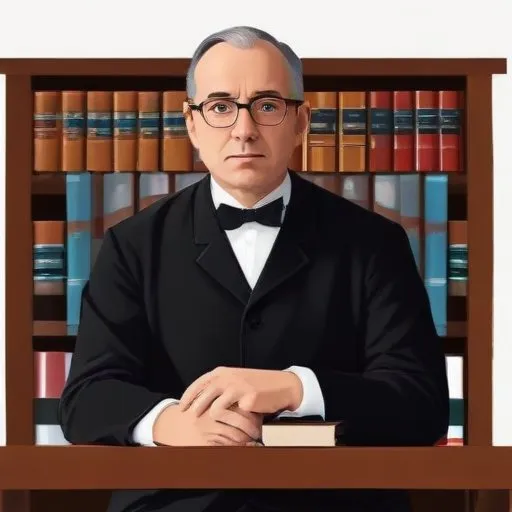
Developed the Cutter Classification system, a method of organizing library materials that is still used today.
Charles Ammi Cutter, a renowned American librarian, is best known for revolutionizing the way libraries organize and catalog books, introducing the concept of card catalogs and standardized classification numbers. His groundbreaking work transformed the way people access information, making it easier for patrons to find books on similar topics.
Cutter was born on March 14, 1837, in Boston, Massachusetts. His aunt, an employee of the regional library in Boston, likely sparked his interest in the field. Cutter enrolled in Harvard Divinity School in 1856, where he was appointed assistant librarian while still a student. During his tenure, he began designing a new cataloging schema for the library's outdated system.
In the 1850s and 1860s, Cutter assisted with the recataloging of the Harvard College library, producing America's first public card catalog. This innovative system proved more flexible for librarians and far more useful to patrons than the old method of entering titles in chronological order in large books. The card catalog allowed for easy updates, additions, and removals, making it a more efficient and practical solution.
In 1868, Cutter joined the Boston Athenaeum, where he created an exemplary card catalog that became an international model. He promoted centralized cataloging of books, which eventually became the standard practice at the Library of Congress. Cutter's work earned him leadership positions in numerous library organizations at the local and national level.
Cutter's most significant contribution to librarianship is his system of giving standardized classification numbers to each book, and arranging them on shelves by that number. This allowed books on similar topics to be shelved together, facilitating research and discovery. The Cutter Expansive Classification has had a lasting impact on the field, influencing the development of modern library classification systems.
Charles Ammi Cutter's pioneering work in library cataloging has left an indelible mark on the way we access and organize information. His innovations have shaped the modern library, making it easier for people to find and access books and knowledge. As a testament to his contributions, Cutter is remembered as one of the most influential librarians in American history.
"The catalog is the very heart of the library, and its perfection is the perfection of the library itself."
Charles Ammi Cutter's legacy continues to inspire librarians and information professionals around the world, reminding us of the importance of innovation and dedication to making knowledge accessible to all.
Born in 1851
Creator of the Dewey Decimal System, a widely used method for organizing books and other materials in libraries, making it easier for people to find what they need. This system has become a standard in libraries worldwide.
Born in 1918
A pioneering mountaineer who led the first ascent of Mount Everest's South Col, and a dedicated educator who helped establish the University of Wales Institute of Science and Technology.
Born in 1861
The 8th Librarian of Congress was a pioneering figure in American library development, credited with modernizing the Library of Congress and expanding its collections. He also played a key role in establishing the Copyright Office.
