


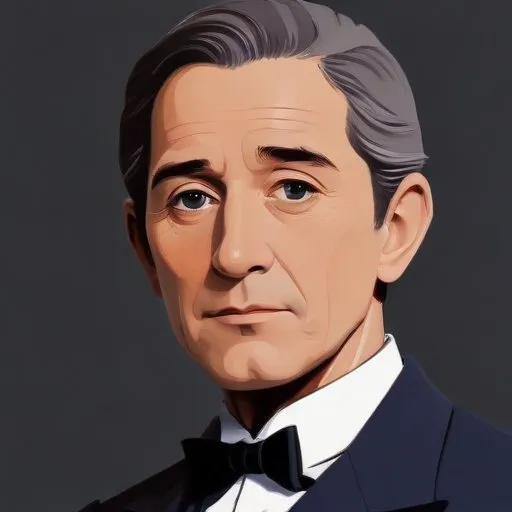
A French painter of the Rococo era, known for his delicate and intimate portraits of European aristocracy. His works often featured soft, feathery brushstrokes and a sense of quiet elegance.
CharlesAndr van Loo was a renowned French painter of the 18th century, celebrated for his mastery of various genres, including religion, history, mythology, portraiture, allegory, and genre scenes. As the most famous member of a successful dynasty of painters of Dutch origin, van Loo's oeuvre is a testament to his extraordinary talent and adaptability.
Born on February 15, 1705, in Nice, then part of the Duchy of Savoy, van Loo followed in the footsteps of his father, Louis-Abraham van Loo, and brother, Jean-Baptiste van Loo. He received his early training in Turin and later in Rome, where he studied under the guidance of Benedetto Luti and the sculptor Pierre Le Gros.
In 1723, van Loo returned to Paris and was awarded the first prize for drawing at the Académie Royale. Four years later, he received the first prize for historical painting, a distinction he shared with his future rival, François Boucher. This recognition propelled him to the forefront of French art, earning him the patronage of King Victor Amadeus II of Sardinia and, subsequently, the French court.
Venturing beyond courtly commissions, van Loo's artistic scope expanded to encompass a diverse range of subjects. He created a series of paintings inspired by Torquato Tasso, which showcased his skill in rendering dramatic and emotive scenes. His portraits, characterized by simplicity and correctness of design, were highly sought after by members of the aristocracy and the emerging bourgeoisie.
Van Loo's influence on the modern French school was profound, as he introduced a new level of simplicity and elegance to French art. His impact extended beyond France, with his works enjoying immense popularity throughout Europe. Although subsequent generations of art historians have reassessed his oeuvre, van Loo's contribution to the development of French art remains undeniable.
Van Loo received numerous accolades during his lifetime, including the prestigious Prix de Rome in 1724 and the Order of Saint Michael in 1762. He was also appointed First Painter to King Louis XV of France, a testament to his exceptional skill and dedication to his craft.
CharlesAndré van Loo passed away on July 15, 1765, leaving behind a legacy of artistic excellence. His life was marked by a series of significant milestones, including his membership in the Académie royale de peinture et de sculpture and his rise through the ranks of the academy.
Born in 1732
A prolific Rococo painter and etcher, renowned for his delicate, whimsical, and often erotic works that capture the carefree spirit of 18th-century French aristocracy. His art often featured lush landscapes, gentle colors, and playful scenes of love and leisure.
Born in 1703
A prominent artist of the Rococo style, known for his delicate and ornate paintings, often depicting mythological and pastoral scenes, as well as designing sets for the Paris Opera.
Born in 1725
A French painter and educator renowned for his sentimental and moralizing genre scenes, often depicting young women in domestic settings, which captivated 18th-century audiences.
Born in 1748
A French painter and illustrator who revolutionized Neoclassicism with his realistic and emotive works, creating iconic pieces like "Oath of the Horatii" and "Napoleon Crossing the Alps".
Born in 1659
A prominent portrait painter of the French monarchy and aristocracy, capturing the essence of 17th and 18th century European royalty with exquisite detail and realism.
