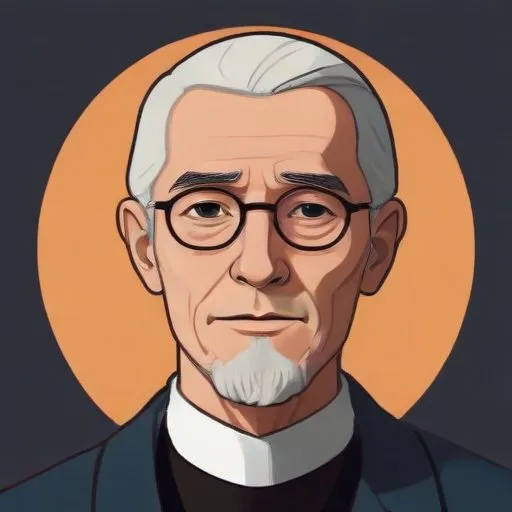
Charles Chauncy: A Pillar of Faith and Education in Early America
A Champion of Puritanism and Harvard's Second President
Charles Chauncy was a stalwart figure in early American history, known for his unwavering commitment to Puritanism and his instrumental role in shaping the educational landscape of the New World. As the second President of Harvard College, Chauncy left an indelible mark on the institution, fostering a culture of academic excellence and religious fervor that would endure for generations to come.
Early Life and Education
Born in Ardeley, Hertfordshire, England on November 5, 1592, Chauncy was raised in a family of modest means, with his father serving as a clergyman. He received a solid education at Westminster School, before proceeding to Trinity College, Cambridge, where he excelled in Greek studies and eventually became a lecturer. Chauncy's academic prowess earned him a reputation as a learned scholar, paving the way for his future roles in education and the clergy.
Puritan Views and Early Ministry
Chauncy's strong Puritan convictions often put him at odds with the Church of England. He was vocal in his opposition to communion rails, a stance that led to disciplinary proceedings against him. Undeterred, Chauncy continued to preach and teach, eventually becoming vicar of St. Mary's Church in Ware, Hertfordshire, and later, vicar of Marston St. Lawrence, Northamptonshire. His unwavering dedication to his faith and his congregation earned him respect and admiration from his peers and the community.
The Journey to America
In 1637, Chauncy set sail for America, driven by his desire to spread the Puritan faith and contribute to the growth of the New World. He preached in Plymouth and Scituate, Massachusetts, where he became embroiled in a heated debate with local leaders over the issue of baptism. Chauncy advocated for full immersion, while his opponents favored sprinkling water over the body. This controversy notwithstanding, Chauncy's magnetism and oratory skills won him many followers, and he remained a prominent figure in the colonies for over three decades.
President of Harvard College
In 1654, Chauncy was appointed President of Harvard College, a position he held until his death in 1671. During his tenure, he worked tirelessly to strengthen the institution, promoting academic rigor, and fostering a culture of intellectual curiosity. Chauncy's leadership helped establish Harvard as a beacon of learning, attracting students from across the colonies and cementing its reputation as a hub of educational excellence.
Published Works and Legacy
Chauncy's literary contributions include several sermons, as well as notable works such as "The Doctrine of the Sacrament, with the Right Use Thereof" (1642), "The Plain Doctrine of the Justification of a Sinner in the Sight of God" (1659), and "Antisynodalia Scripta Americana" (1662). These writings reflect his abiding commitment to Puritanism and his passion for educating others in the ways of faith.
Personal Milestones and Family
Chauncy's descendants include Connecticut Governor and National Baseball Hall of Fame member,
Morgan Bulkeley. His family legacy is a testament to the enduring impact of his life's work, a reminder of the profound influence he had on the development of American education and religion.
- Charles Chauncy's legacy extends beyond his tenure as Harvard's President, as his commitment to Puritanism and education continues to inspire generations.
- His dedication to the faith and his congregation earned him respect and admiration from his peers and the community.
- Chauncy's literary contributions remain a testament to his abiding passion for educating others in the ways of faith.
In conclusion, Charles Chauncy's remarkable life and achievements serve as a beacon of inspiration, illuminating the path for future generations of educators, clergy, and scholars. His unwavering commitment to faith, education, and the betterment of society has left an indelible mark on American history.
FAQ
What was Charles Chauncys role in the American colonies?
Charles Chauncy was a prominent English-American pastor, theologian, and academic who played a significant role in the American colonies. He was a strong advocate for education and served as the president of Harvard College from 1654 to 1672.
What were Charles Chauncys contributions to theology?
Chauncy was a notable theologian who wrote extensively on various aspects of Christianity. His works include treatises on the nature of God, the Trinity, and the role of the church in society. He was particularly interested in the relationship between faith and reason.
How did Charles Chauncy influence education in America?
Chauncy was a strong proponent of education and believed that it was essential for the development of a just and equitable society. During his tenure as president of Harvard College, he implemented several reforms aimed at improving the quality of education and increasing access to higher learning.
What were Charles Chauncys views on governance?
Chauncy was a vocal advocate for democratic governance and believed that power should be held accountable to the people. He argued that rulers had a divine right to govern, but that this right was conditional upon their ability to serve the common good.
What is Charles Chauncys legacy in American history?
Chauncys legacy in American history is that of a pioneering figure in education, theology, and governance. He played a crucial role in shaping the intellectual and cultural landscape of the American colonies and left a lasting impact on the development of the United States.