


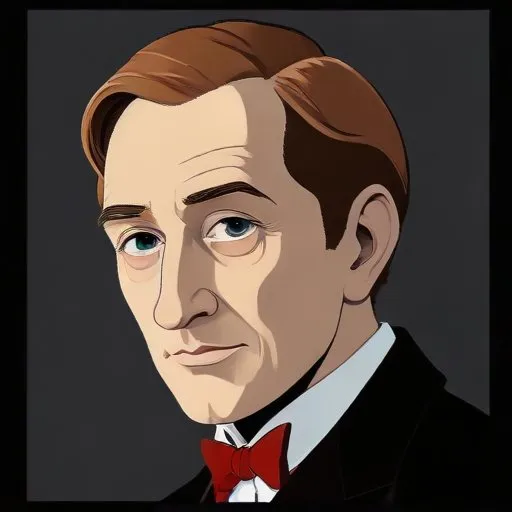
Witty essays and novels that humorously critique American society and politics, particularly in the Gilded Age, are their claim to fame.
Charles Dudley Warner is renowned for co-authoring the iconic novel The Gilded Age: A Tale of Today with none other than Mark Twain, a work that not only gave name to an entire era in American history but also cemented Warner's place as a prominent figure in the literary circle of the late 19th century.
As a prolific essayist, novelist, and friend to Mark Twain, Warner's contributions to American literature are multifaceted and far-reaching, reflecting his deep-seated passion for social reform, cultural commentary, and artistic expression.
Born on September 12, 1829, in Plainfield, Massachusetts, Warner came from a Puritan descent and spent his formative years in Charlemont, Massachusetts, and Cazenovia, New York. He graduated from Hamilton College in Clinton, New York, in 1851, and later studied law at the University of Pennsylvania.
Warner's literary career took off in the 1860s, when he became the assistant editor of The Hartford Press, later becoming its editor in 1861. He continued to work with the publication until 1867, when it merged with The Hartford Courant, and he assumed the role of coeditor with Joseph R. Hawley.
In 1884, Warner joined the editorial staff of Harper's Magazine, where he oversaw "The Editor's Drawer" until 1892, and later took charge of "The Editor's Study". This tenure allowed him to showcase his wit, humor, and astute observations on American life, earning him widespread acclaim and recognition.
Warner was an ardent advocate for social reform, prison reform, and city park supervision. His commitment to the public good led him to become the first president of the National Institute of Arts and Letters, as well as the president of the American Social Science Association at the time of his death.
Warner's oeuvre is characterized by his masterful blend of humor, wit, and insight into human nature. Some of his notable works include:
Charles Dudley Warner's literary contributions and social activism have had a lasting impact on modern society, influencing generations of writers, reformers, and thinkers. His work continues to inspire readers with its prescient commentary on American culture, politics, and society.
Warner's legacy serves as a testament to the power of literature to shape public discourse, inform social reform, and inspire personal growth – a true embodiment of the American spirit.
Born in 1835
Witty writer of classics like "The Adventures of Tom Sawyer" and "The Adventures of Huckleberry Finn", known for humor and social commentary.
Born in 1811
Wrote influential abolitionist novels, including "Uncle Tom's Cabin", which humanized the horrors of slavery and fueled the anti-slavery movement.
Born in 1837
A prominent figure in American literary realism, known for his novels and plays that explored the lives of ordinary people, and his influential literary criticism.
Born in 1843
A renowned literary mastermind, celebrated for crafting psychologically complex, atmospheric novels and short stories that probed the human condition, often exploring the intricacies of the American and European aristocracy.
Born in 1862
A pioneering female author of novels and short stories that explored the social conventions and morals of the Gilded Age, known for her witty and insightful portrayals of the American aristocracy.
Born in 1871
A pioneering realist writer who chronicled the lives of the American working class, capturing the gritty realities of urban existence through novels like "Sister Carrie" and "An American Tragedy".
Born in 1870
Pioneering naturalist writer who explored the darker aspects of human nature and the American Dream through novels like "McTeague" and "The Octopus".
Born in 1871
A pioneering writer of realistic and impressionistic fiction, known for his vivid and intense portrayals of war, poverty, and human struggle. His works are considered some of the most innovative and influential of the late 19th century.
