


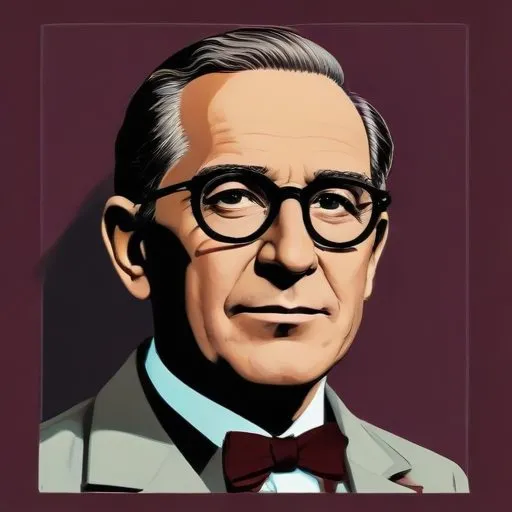
Developed innovative engineering curricula and wrote influential textbooks on thermodynamics, making complex concepts accessible to students. His work has had a lasting impact on engineering education.
Charles E. Wicks was a renowned American chemical engineer, best known for his groundbreaking contributions to the field of mass transfer and his co-authorship of the seminal textbook, Fundamentals of Momentum, Heat, and Mass Transfer. This comprehensive guide, which has undergone four editions, remains a cornerstone of chemical engineering education, providing students and professionals alike with a thorough understanding of the complex principles governing mass transfer.
Born on July 9, 1925, in Prineville, Oregon, Wicks was raised in Albany, Oregon. He pursued his undergraduate studies at Willamette University before serving in the military. After his service, he completed his degree in chemical engineering at Oregon State College (now Oregon State University) in 1950.
Wicks furthered his education at Carnegie Institute of Technology (now Carnegie Mellon University) in Pittsburgh, Pennsylvania, earning his Master of Science in 1952 and PhD in 1954. This foundation in chemical engineering laid the groundwork for his future achievements.
Wicks joined the faculty of the Department of Chemical Engineering at Oregon State University, where he spent 34 years as a professor and adviser. During his tenure, he chaired the department for 17 years, until his retirement in 1987.
In addition to his academic pursuits, Wicks was an active member of the American Institute of Chemical Engineers (AIChE) and the Chemical Engineers of Oregon, serving as president from 1973 to 1974. His dedication to the field earned him a place in the Oregon State Engineering Hall of Fame in 1999.
Wicks' most notable publication, Fundamentals of Momentum, Heat, and Mass Transfer, was first published in 1969 and has since undergone three revisions. This textbook has become a staple in chemical engineering education, providing students with a comprehensive understanding of the principles governing mass transfer.
Wicks' outstanding contributions to the field of chemical engineering were recognized with his election into the Oregon State Engineering Hall of Fame in 1999.
Charles E. Wicks passed away on July 29, 2010, leaving behind a legacy of excellence in chemical engineering education and research. His life was celebrated at Oregon State University in a standing-room-only event on September 17, 2010, a testament to the impact he had on the lives of his students and colleagues.
Through his work, Wicks has inspired generations of chemical engineers, providing them with the foundational knowledge necessary to excel in their field. His contributions to the discipline continue to influence modern chemical engineering, ensuring his legacy as a pioneering figure in the field.
96 Years Old
First person to walk on the Moon during the Apollo 11 mission, marking a historic milestone in space exploration.
96 Years Old
Second man to walk on the Moon during the Apollo 11 mission, a pioneering astronaut and advocate for space exploration.
75 Years Old
American physicist and astronaut who broke barriers as the first woman in space, inspiring generations of women in STEM fields. Founded a company to promote science education and literacy.
98 Years Old
American baseball player who pitched in the Major Leagues from 1965 to 1975, known for being a four-time All-Star and winning the American League ERA title in 1968.
Born in 1923
First American in space, commanded Apollo 14 mission, and walked on the Moon.
98 Years Old
Commander of the Apollo 13 mission, known for his heroic efforts in saving his crew after an explosion occurred on board. He's an iconic figure in space exploration history.
96 Years Old
Led the third manned mission to land on the Moon, Apollo 12, and became the third person to walk on its surface. Known for his bold and fearless approach to space exploration.
Born in 1923
One of the original seven astronauts in Project Mercury, this pioneer flew on three historic spaceflights, including the first American manned orbital flight and the Apollo 7 mission.
