


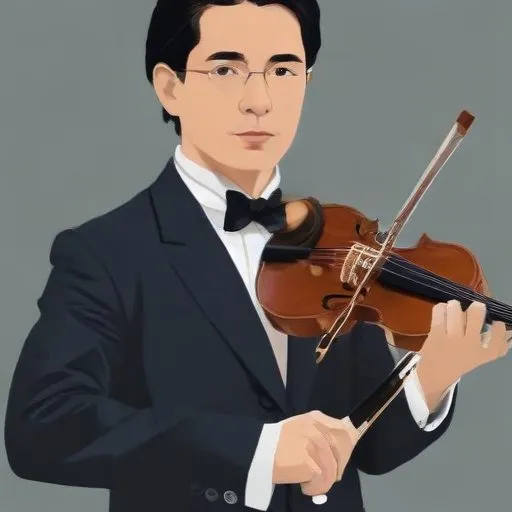
A renowned violinist and conductor, leading the Boston Symphony Orchestra to new heights, and premiering works by famous composers like Debussy and Ravel.
Charles Munch was a renowned French conductor and violinist, best known for his long-standing tenure as the Music Director of the Boston Symphony Orchestra and his profound impact on the world of classical music. With his expressive interpretations and meticulous attention to detail, Munch earned a reputation as one of the most celebrated conductors of his generation.
Born on September 22, 1891, in Strasbourg, Alsace, Munch began his musical journey at a young age, studying violin at the Strasbourg Conservatory. He later continued his education at the Paris Conservatory, where he honed his skills under the guidance of esteemed violinists and conductors.
Munch's conducting career began in the 1920s, with appointments at various French orchestras, including the Orchestre de la Société des Concerts du Conservatoire. In 1937, he became the Music Director of the Société des Concerts du Conservatoire, a position he held until 1946. During this period, Munch developed a reputation for his innovative programming and interpretations of French classical music.
In 1949, Munch was appointed Music Director of the Boston Symphony Orchestra, a position he held for 13 years. During his tenure, he not only raised the orchestra's profile but also introduced a wide range of French repertoire to American audiences. His performances of Debussy, Ravel, and Berlioz are still remembered for their elegance and refinement.
Munch was deeply committed to the idea that music should be a reflection of the human experience. He believed that a conductor's role was not only to interpret the score but also to convey the emotional essence of the music to the audience. This philosophy guided his approach to conducting, resulting in performances that were both intellectually stimulating and emotionally moving.
Munch's discography is a testament to his dedication to French classical music. Some of his most notable recordings include:
Munch's impact on modern society extends beyond the realm of classical music. He was a strong advocate for music education and was instrumental in establishing the Tanglewood Music Center, a prestigious summer music program for young musicians. His commitment to nurturing young talent continues to inspire generations of musicians.
Charles Munch passed away on November 6, 1968, leaving behind a rich legacy in the world of classical music. His contributions to the Boston Symphony Orchestra, his commitment to French repertoire, and his dedication to music education continue to inspire musicians and music lovers alike. As a conductor, musician, and educator, Munch's impact will be felt for generations to come.
"Music is the only language that can express the inexpressible."
"A conductor must be a servant of the music, not a dictator."
Munch was known for his elegant style, both on and off the podium. He was often seen wearing a signature white tie and tails, earning him the nickname "The White Knight of Conductors."
Munch was a devout Catholic and often incorporated spiritual themes into his performances.
Born in 1916
A renowned violinist and conductor who mesmerized audiences with his virtuosic performances and collaborations with esteemed musicians, also a passionate advocate for music education.
Born in 1901
A virtuosic violinist renowned for his technical perfection, tone, and phrasing, revolutionizing the art of violin playing through his recordings and teaching.
Born in 1908
A renowned violinist and educator, known for his technical mastery and emotional depth, influencing generations of musicians with his iconic performances and pedagogical legacy.
Born in 1924
A renowned violinist and educator, celebrated for his technical mastery and emotional depth, inspiring generations of musicians.
Born in 1904
A virtuosic violinist and composer, renowned for his technical mastery and poetic interpretations of classical music, particularly Bach's solo violin works.
Born in 1903
A renowned pianist and composer, celebrated for his virtuosic technique and powerful performances of classical music, particularly Chopin and Rachmaninoff.
Born in 1873
A renowned Russian musician who composed iconic symphonies and piano concertos, and was also a skilled pianist and conductor, leaving a lasting legacy in classical music.
Born in 1882
A Russian master of music, renowned for revolutionizing classical music with bold, avant-garde compositions that blended traditional and modern elements. His iconic works, such as "The Rite of Spring," continue to inspire and influence artists across genres.
