


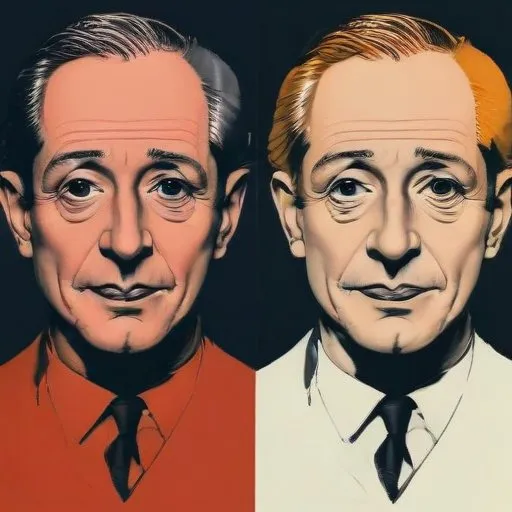
A French poet and journalist who wrote about social justice and nationalism, influencing the development of Christian socialism and modern French literature.
Charles Péguy, a French poet, essayist, and editor, is renowned for his profound philosophical contributions, particularly in the realms of socialism and nationalism. Through his literary works, he articulated the intricacies of these ideologies, earning him a prominent place in the pantheon of French intellectual history.
Born on January 7, 1873, in Orléans, France, Péguy's early life was marked by poverty and hardship. His mother, Cécile, was a widow who supported her family by mending chairs, while his father, Désiré, a cabinet maker, died in 1874 as a result of combat wounds.
Péguy's intellectual pursuits led him to the Lycée Lakanal in Sceaux, where he won a scholarship to the École Normale Supérieure in Paris. There, he attended lectures by Henri Bergson and Romain Rolland, with whom he formed a lasting friendship. Although he formally left the École Normale Supérieure in 1897 without graduating, he continued to attend lectures in 1898.
Péguy's philosophical framework was deeply rooted in socialism and nationalism. He became an ardent Dreyfusard, influenced by Lucien Herr's ideas. In 1895, he joined the Socialist Party, demonstrating his commitment to the cause.
Throughout his life, Péguy's Catholic faith played a significant role in shaping his worldview. By 1908, he had become a believing, if not practicing, Roman Catholic. This spiritual evolution had a profound impact on his works, imbuing them with a sense of moral urgency and social responsibility.
Péguy's literary output was marked by its diversity and depth. As the main contributor and editor of the literary magazine Les Cahiers de la Quinzaine, he published not only his own essays and poetry but also works by prominent contemporary authors like Romain Rolland.
His free-verse poem, Portico of the Mystery of the Second Virtue, has gone through more than 60 editions in France, becoming a beloved classic. The poem's themes of morality, social justice, and personal struggle resonated deeply with the French people, including Charles de Gaulle, who counted it among his favorite books.
In 1897, Péguy married Charlotte-Françoise Baudoin, with whom he had one daughter and three sons, one of whom was born after his passing. Around 1910, he fell deeply in love with Blanche Raphael, a young Jewish friend, although he remained faithful to his wife.
Péguy's life was cut short when he died on September 5, 1914, at the age of 41. His premature death was a devastating blow to the literary community, which mourned the loss of a brilliant and innovative mind.
Péguy's philosophical and literary contributions continue to influence modern society. His advocacy for socialism and nationalism has inspired generations of thinkers and activists. His commitment to social justice and his emphasis on the importance of individual morality have left an indelible mark on French intellectual history.
Through his life and works, Péguy embodied the spirit of socialism and nationalism, demonstrating the power of literature to inspire and transform society. As a poet, essayist, and editor, he remains an enduring figure in French letters, a testament to the enduring power of ideas and ideals.
Born in 1840
A pioneering figure in naturalist literature, known for his influential novels that exposed social ills and championed reform, such as "Germinal" and "Nana".
Born in 1842
A French poet and critic who pioneered Symbolism, experimenting with language and form to evoke emotions and ideas, and is known for his enigmatic and influential poetry.
Born in 1869
A French literary giant, renowned for his novels and essays that explored the human condition, morality, and the search for authenticity. His works often blurred the lines between fiction and autobiography.
Born in 1889
A renowned French creative force, celebrated for his innovative and surreal works that blurred the lines between literature, art, and cinema, leaving an indelible mark on 20th-century culture.
Born in 1880
An Italian-French literary genius who pioneered Cubist poetry, blending fragmented images and multiple narratives to create a new kind of lyrical expression. His work influenced the development of Surrealism and modern art.
Born in 1844
A leading figure of the French Symbolist movement, known for his sensual and emotive poetry that explored themes of love, beauty, and the human condition.
Born in 1854
A rebellious and visionary poet who abandoned literature at 21 to become an African explorer and trader, known for his vivid and expressive poetry that influenced modern literature.
Born in 1871
A French poet and philosopher who explored the human condition through lyrical poetry and philosophical essays, delving into the mysteries of existence and the human experience.
