


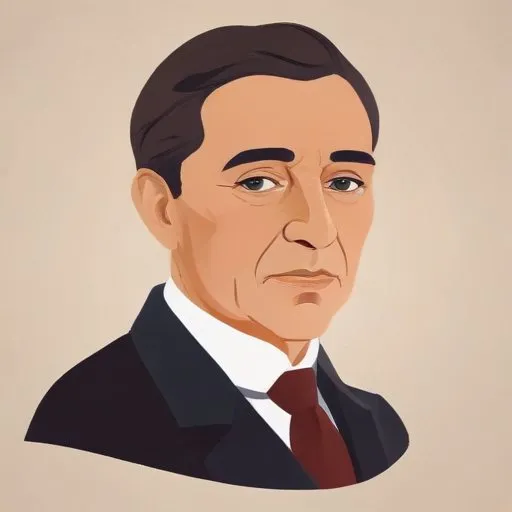
A renowned historian and educator who wrote influential works on ancient history, shaping the way Europeans understood classical civilizations. His writings remain a cornerstone of historical education.
Charles Rollin, a renowned French historian and educator, is best known for his monumental work in reviving the study of Greek and producing two seminal historical works, Ancient History and Roman History, which instructed and fascinated generations of scholars. His groundbreaking approach to education, outlined in his treatise Trait des tudes, transformed the French education system, abandoning medieval traditions and emphasizing national history and vernacular languages.
Born in Paris on January 30, 1661, Rollin was the son of a cutler. At the age of 22, he became a master at the Collège du Plessis, where he would later play a pivotal role in shaping the institution's academic landscape.
In 1694, Rollin was appointed rector of the University of Paris, a position he held for two years instead of the customary one. During his tenure, he championed the study of Greek, which had fallen into disfavor. His unwavering commitment to Jansenist principles led him to defend the miracles attributed to François de Paris, also known as Deacon Paris. This stance, however, ultimately cost him his appointments and disqualified him from becoming the rector again in 1719.
Rollin's literary output, primarily written during the latter part of his life, includes his celebrated Ancient History, a 12-volume set, and the unfinished Roman History, which comprises five volumes. Although his historical works were compilations and somewhat inaccurate, they remained widely read and influential for generations. His most original and significant contribution, however, is his Trait des tudes, a treatise on education that outlined a revolutionary approach to learning, discarding medieval traditions and emphasizing national history and vernacular languages.
Rollin's Jansenist principles and commitment to reviving the study of Greek reflect his philosophical stance, which prioritized intellectual rigor and critical thinking. His advocacy for the study of national history and vernacular languages demonstrates his dedication to promoting a more inclusive and accessible education system.
Charles Rollin's contributions to education and historiography have left an indelible mark on French academic landscape. His Trait des tudes paved the way for a more modern and progressive approach to education, while his historical works continue to inspire scholars and historians. Despite facing opposition and persecution due to his Jansenist beliefs, Rollin remained steadfast in his pursuit of knowledge and his commitment to education.
Born in 1694
A witty and insightful 18th-century writer and philosopher who used satire to critique societal norms and advocate for reason, tolerance, and human rights.
Born in 1712
A pioneering thinker who shaped modern democracy and education with his ideas on social contracts, general will, and the importance of early childhood education. His writings influenced the French Revolution and modern political thought.
Born in 1689
A French lawyer and philosopher who developed the concept of separation of powers, which divides a government into legislative, executive, and judicial branches to prevent abuse of power. His ideas greatly influenced modern democracy.
Born in 1717
A French Enlightenment thinker who made significant contributions to mathematics, physics, and philosophy, particularly in the fields of fluid dynamics and the study of vibrating strings. He's also known for his work on the Encyclopedia, a comprehensive reference work that aimed to compile all knowledge of the time.
Born in 1741
A witty and insightful French writer who penned biting social commentary and clever aphorisms, known for his sharp observations on human nature and society.
Born in 1647
A 17th-century philosopher and writer who critiqued religious intolerance and advocated for reason, skepticism, and intellectual freedom. His works influenced the Enlightenment and modern critical thinking.
