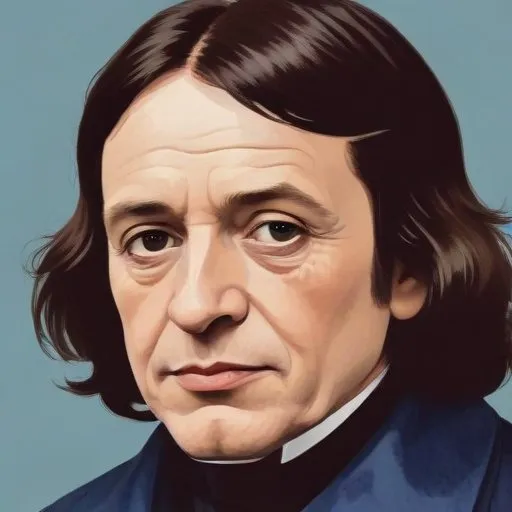
Pierre Bayle: The Skeptical Philosopher and Lexicographer of the Enlightenment
A Life of Controversy and Intellectual Pursuit
Pierre Bayle, a French philosopher, author, and lexicographer, is best known for his monumental work, the
Historical and Critical Dictionary, whose publication began in 1697. This seminal work, with its voluminous footnotes and cleverly hidden controversial ideas, cemented Bayle's reputation as a forerunner of the Encyclopédistes of the mid-18th century and a pioneering figure of the European Enlightenment.
A Life of Exile and Persecution
Born on November 18, 1647, in Carla-le-Comte, near Pamiers, France, Bayle was a Huguenot, a member of the French Protestant minority. Faced with religious persecution, he fled to the Dutch Republic in 1681, where he would spend the remainder of his life. This exile, however, did not quell Bayle's intellectual pursuits; instead, it fueled his passion for philosophical inquiry and his advocacy for religious toleration.
A Skeptical Philosophy
Bayle's philosophical contributions were marked by skepticism and a critical approach to knowledge. He questioned the nature of truth and the role of reason in human understanding. His work was influenced by the writings of the Muslim philosopher Ibn Tufayl, and he, in turn, influenced many prominent thinkers of his era, including
Gottfried Wilhelm Leibniz.
The Historical and Critical Dictionary
Bayle's magnum opus, the
Historical and Critical Dictionary, was a groundbreaking work that challenged traditional notions of knowledge and authority. This comprehensive dictionary, with its intricate network of cross-references and subtle critiques, became a powerful tool for Enlightenment thinkers. Bayle's innovative approach to lexicography allowed him to slyly insert his skeptical ideas and critiques of dogmatic thinking, often in the footnotes of seemingly innocuous entries.
Influence and Legacy
Bayle's impact on the European Enlightenment cannot be overstated. His skeptical philosophy and his advocacy for religious toleration paved the way for the intellectual and cultural transformations of the 18th century. He influenced many prominent thinkers, including Voltaire,
Denis Diderot, and
Jean-Jacques Rousseau, who would go on to shape the course of modern philosophy and politics.
Personal Life and Milestones
- Bayle was educated by his father, a Calvinist minister, and later at an academy at Puylaurens.
- In 1669, he entered a Jesuit college at Toulouse and briefly converted to Roman Catholicism.
- He returned to Calvinism and fled to Geneva, where he was introduced to the teachings of René Descartes.
- In 1675, he was appointed to the chair of philosophy at the Protestant Academy of Sedan.
- In 1681, he fled to the Dutch Republic, where he became professor of philosophy and history at the École Illustre in Rotterdam.
A Legacy of Critical Thought
Pierre Bayle's life and work serve as a testament to the power of critical thought and intellectual inquiry. His skeptical philosophy, his advocacy for religious toleration, and his innovative approach to lexicography continue to inspire and challenge scholars to this day. As a pioneer of the Enlightenment, Bayle's legacy reminds us of the importance of questioning authority, promoting critical thinking, and fostering an environment of intellectual freedom.
FAQ
Who was Pierre Bayle?
Pierre Bayle was a French philosopher and author who lived in the 17th century. He is best known for his Historical and Critical Dictionary, which is considered one of the first modern encyclopedias.
What was Pierre Bayles contribution to the development of modern philosophy?
Pierre Bayles work laid the foundation for the development of modern philosophy, particularly in the areas of skepticism and rationalism. He was a major influence on later philosophers such as Voltaire and Immanuel Kant.
What was Pierre Bayles views on tolerance and freedom of thought?
Pierre Bayle was a strong advocate for tolerance and freedom of thought. He believed that individuals should be free to hold their own beliefs and opinions, even if they differed from those of the majority.
How did Pierre Bayles Historical and Critical Dictionary influence later scholars?
Pierre Bayles Historical and Critical Dictionary was a groundbreaking work that set a new standard for scholarship and critical thinking. It influenced later scholars such as Denis Diderot and Jean le Rond dAlembert, who built upon his work.
What was Pierre Bayles relationship with the Catholic Church?
Pierre Bayle was a Protestant and was critical of the Catholic Churchs dogmatic approach to theology. He was forced to flee France during the persecution of Protestants in the 17th century.