


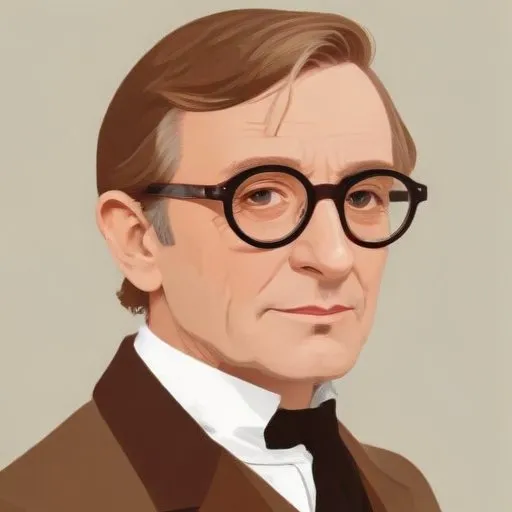
Pioneering zoologist and ecologist who developed the concept of food chains and webs, and introduced the idea of invasive species.
Charles Sutherland Elton is renowned for his groundbreaking contributions to the field of zoology and ecology, particularly in the development of population and community ecology. His seminal work on invasive species and their impact on ecosystems has shaped our understanding of the natural world and continues to influence modern conservation efforts.
Born on March 29, 1900, in Manchester, England, Elton was the son of literary scholar Oliver Elton and children's writer Letitia Maynard Elton (née MacColl). His older brother, Geoffrey Elton, who died at 33, inspired Charles's interest in scientific natural history.
Elton pursued his education at Liverpool College and Oxford University, graduating in zoology in 1922. During his studies, he conceptualized his ideas about animal ecology, aiming to turn natural history into a scientific discipline by applying rigorous methods to studying animal behavior in their natural habitats and interactions with the environment.
In 1921, while still an undergraduate, Elton joined Julian Huxley on an expedition to Spitsbergen, where he conducted an ecological survey of Arctic vertebrates. This experience sparked a lifelong passion for Arctic research, which he continued on three more expeditions in 1923, 1924, and 1930.
Elton's Arctic expeditions led to a consultancy with the Hudson's Bay Company from 1926 to 1931, where he studied fluctuating populations of animal species of interest to the fur trade. He later applied this expertise to studying British mouse and vole populations.
Elton spent many years conducting field research in Wytham Woods, Oxford, where he developed his ideas about population and community ecology. His work in Wytham Woods laid the foundation for modern ecological research and cemented his reputation as a pioneer in the field.
Elton's work has had a profound impact on modern conservation efforts, informing strategies for managing invasive species, preserving ecosystem balance, and understanding the complex relationships between species and their environments.
His legacy continues to inspire new generations of ecologists, conservationists, and scientists, shaping our understanding of the natural world and our responsibility to protect it.
Elton received numerous awards and honors for his contributions to ecology, including the Darwin Medal in 1976 and the British Ecological Society's Silver Medal in 1984.
Elton married English poet Edith Joy Scovell in 1937, with whom he had two children, Catherine Ingrid Buffonge MBE and Robert Elton. He was previously married to Rose Montague, with whom he had an amicable divorce.
Charles Sutherland Elton's groundbreaking work has left an indelible mark on the scientific community, shaping our understanding of ecology, conservation, and the natural world. His contributions continue to inspire and inform new generations of scientists, conservationists, and environmentalists.
Through his research, Elton has demonstrated the importance of interdisciplinary approaches to understanding the complex relationships between species and their environments, paving the way for future generations of scientists and conservationists to build upon his foundational work.
Born in 1887
A pioneering biologist and conservationist who played a key role in establishing UNESCO and promoting the concept of evolution, making significant contributions to the fields of biology and anthropology.
Born in 1901
Pioneering geneticist and biologist who developed the science of ecological genetics, studying the interaction between genetics and environment, and was a key figure in the modern evolutionary synthesis.
Born in 1892
A pioneering geneticist and biologist who contributed significantly to the development of modern genetics, particularly in the fields of population genetics and evolutionary biology.
Born in 1890
A pioneer in statistics and genetics, he developed techniques for data analysis and laid the foundations for modern evolutionary theory. His work has far-reaching implications in fields like medicine, agriculture, and social sciences.
