


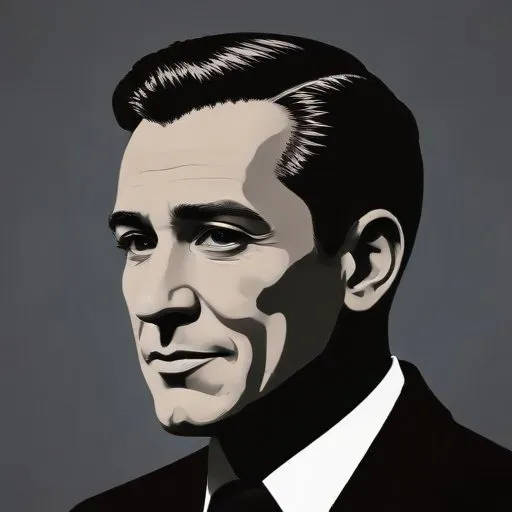
Noted for his powerful bass-baritone voice and contributions to the development of vocal pedagogy, he was a renowned concert singer and influential teacher.
Regarded as the first American baritone singer to achieve fame in Europe, Charles W. Clark is widely considered one of the greatest baritone singers of all time. With a career spanning over two decades, Clark mesmerized audiences at major opera houses across Europe and America, effortlessly navigating a vast repertoire that ranged from the lyric to the dramatic.
Born on October 15, 1865, in Van Wert, Ohio, Clark was the fourth of eight children to William Asbury Clark and Virginia Adelia Mahan Clark. His early life was marked by a strong connection to music, which he pursued as a passion during his free time and at the First Methodist Church of Van Wert.
A life-altering accident in 1884, where a chip of stone flew off a mill wheel and lodged in his eye, led Clark to seriously consider a singing career. This unexpected turn of events prompted him to begin his vocalist studies at the age of 20 with Frederic W. Root in Chicago, a relationship that would last for ten years.
Clark's talent was evident from the start, and he quickly gained success with his first public singing performances while studying with Root. His breakthrough came when he gave a concert at a mission in one of Chicago's suburbs, an event that marked the beginning of his illustrious career.
Clark's remarkable vocal abilities soon took him to the world stage, performing at renowned opera houses in Europe and America. He effortlessly sang in multiple languages, mastering roles from the Italian, French, and German repertoires. His versatility and charisma earned him a devoted following, solidifying his position as a leading baritone of his time.
Clark's approach to singing was deeply rooted in his philosophical understanding of music. He firmly believed that a singer's primary goal should be to convey the emotional essence of the music, rather than mere technical prowess. This artistic philosophy guided his performances, allowing him to connect with audiences on a profound level.
Charles W. Clark's remarkable career not only paved the way for future American baritone singers but also left an indelible mark on the world of opera. His dedication to his craft, combined with his unique artistic philosophy, continues to inspire generations of musicians and music lovers alike.
In the realm of opera, Clark's influence can still be felt, with many contemporary singers drawing inspiration from his iconic performances. As a testament to his enduring legacy, Charles W. Clark remains an revered figure in the world of classical music, a true pioneer who continues to enchant audiences with his timeless artistry.
"The singer should be the servant of the song, not the song the servant of the singer."
This quote, often attributed to Clark, encapsulates his artistic philosophy, emphasizing the importance of conveying the emotional essence of music over mere technical display.
Clark's impressive repertoire included a wide range of roles, from the lyric to the dramatic. Some of his most notable performances include:
These iconic performances, among many others, have cemented Clark's position as one of the greatest baritone singers in history.
Born in 1898
A renowned singer, actor, and activist who used his talents to promote social justice and equality, particularly for African Americans, through powerful performances and outspoken advocacy.
Born in 1897
A renowned contralto who broke racial barriers in the music industry, performing at the White House and becoming a symbol of the Civil Rights Movement.
99 Years Old
Renowned for her powerful, expressive voice and iconic performances in operas like "Aida" and "Tosca", she is a trailblazing soprano who broke racial barriers in the opera world.
81 Years Old
Renowned for her powerful, rich voice and captivating stage presence, this soprano was a trailblazing opera singer who performed with major companies worldwide and won numerous awards.
61 Years Old
A renowned bass-baritone opera singer celebrated for his powerful, rich voice and iconic performances in operas like Mozart's "The Magic Flute" and Wagner's "Der Ring des Nibelungen".
67 Years Old
A world-renowned soprano and actress, celebrated for her stunning vocal range and captivating performances in opera, musical theater, and film.
85 Years Old
A world-renowned opera singer and conductor, known for his powerful voice and versatility in performing a wide range of operatic roles. He has led several major opera companies and has won numerous awards for his performances.
97 Years Old
A renowned pianist, composer, and conductor who blurred classical and jazz boundaries, earning numerous Grammy Awards and acclaim for his eclectic style.
