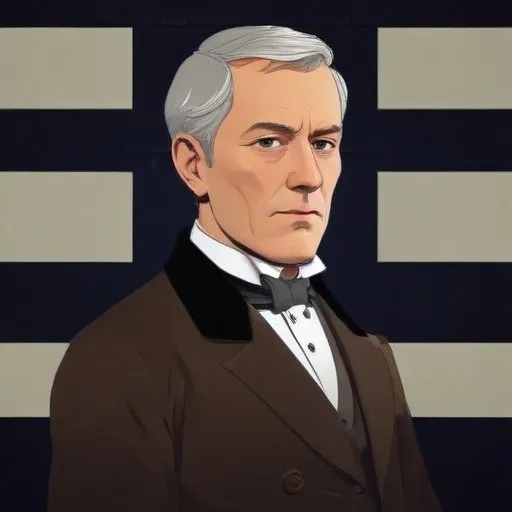
Sir Charles Wheatstone: The Visionary Inventor and Telegraphy Pioneer
A Legacy of Innovation
Sir Charles Wheatstone, a renowned English scientist and inventor, left an indelible mark on the Victorian era with his groundbreaking contributions to various fields. He is perhaps best known for developing the Wheatstone bridge, a device used to measure unknown electrical resistance, and his pivotal role in the development of telegraphy.
Early Life and Education
Born on February 6, 1802, in Barnwood, Gloucestershire, Wheatstone was the second son of William Wheatstone, a music seller and teacher. He spent his early years in London, where he attended several institutions, showcasing his rapid progress and intellectual curiosity. The shy and sensitive young Wheatstone found solace in books and studies, encouraged by his father.
The Road to Invention
At the age of 14, Wheatstone was apprenticed to his uncle, a maker and seller of musical instruments. However, he demonstrated little affinity for handicraft or business, preferring to immerse himself in books. His father eventually removed him from his uncle's charge, allowing Wheatstone to pursue his intellectual passions.
Major Contributions
Wheatstone's inventive spirit led to several notable achievements, including:
- Development of the Wheatstone bridge, originally invented by Samuel Hunter Christie, to measure unknown electrical resistance.
- Invention of the stereoscope, a device capable of displaying three-dimensional images.
- Creation of the Playfair cipher, an encryption technique.
- Significant contributions to the development of telegraphy, transforming the way people communicate.
Telegraphy and the Dawn of Modern Communication
Wheatstone's work in telegraphy revolutionized long-distance communication. He experimented with various transmission methods, including the use of electricity and electromagnetic induction. His pioneering spirit enabled the development of the first commercial telegraph system, connecting London and Birmingham in 1838.
Awards and Honors
Wheatstone's outstanding contributions earned him numerous accolades, including:
- Fellow of the Royal Society (1836)
- Copley Medal (1843)
- Knighthood (1868)
Legacy and Impact
Sir Charles Wheatstone's groundbreaking work continues to influence modern society. His inventions and innovations paved the way for significant advancements in communication, engineering, and beyond. His legacy serves as a testament to the power of human ingenuity and the importance of pursuing one's passions.
Personal Milestones and Key Life Events
Throughout his life, Wheatstone experienced numerous personal milestones, including:
- Translation of French poetry at the age of 15
- Writing of two songs, one of which was published without his knowledge
- Frequent visits to an old bookstall in Pall Mall, where he spent his pocket money on books
Inspirational Stories and Motivations
Wheatstone's life story serves as a beacon of inspiration, demonstrating the importance of:
- Embracing one's intellectual curiosity and passions
- Pursuing innovation and creativity, despite adversity
- Persevering in the face of challenges and setbacks
Wheatstone's remarkable life and achievements continue to captivate and inspire, serving as a testament to the enduring power of human innovation and creativity.
FAQ
What is Charles Wheatstones most famous invention?
Charles Wheatstones most famous invention is the Wheatstone bridge, a device used to measure electrical resistance. This invention revolutionized the field of electrical engineering and paved the way for future discoveries.
What is Charles Wheatstones contribution to cryptography?
Charles Wheatstone made significant contributions to the field of cryptography, including the development of the Playfair cipher, a complex encryption method used for secure communication.
What is Charles Wheatstones role in the development of the telegraph?
Charles Wheatstone played a crucial role in the development of the telegraph, working alongside Samuel Morse to improve the design and functionality of the device.
What is Charles Wheatstones significance in the history of physics?
Charles Wheatstones work in physics helped to establish the field of electrical engineering and paved the way for future research in electromagnetism.
What is Charles Wheatstones legacy in modern technology?
Charles Wheatstones legacy in modern technology is one of innovation and forward thinking. His inventions and discoveries continue to influence the development of new technologies today.