


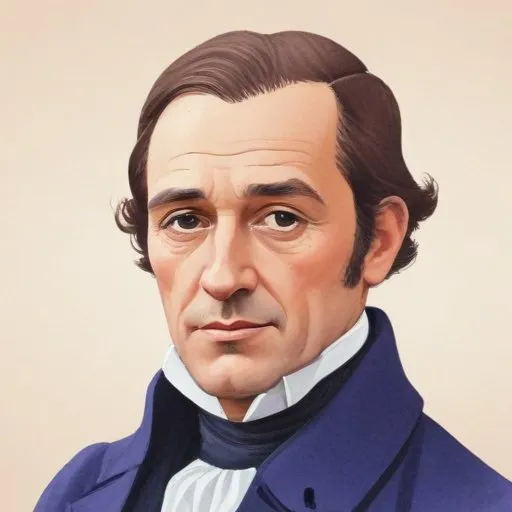
Charles le Beau, a prominent French historian, is best known for his monumental work, Histoire du Bas-Empire, a 22-volume masterpiece that chronicles the Byzantine Empire from the reign of Constantine the Great to the fall of Constantinople in 1453. This magnum opus, published between 1756 and 1779, is a testament to le Beau's tireless research and dedication to uncovering the secrets of the Eastern Roman Empire.
Born on October 18, 1701, in Paris, France, le Beau received his education at the prestigious Collège de Sainte-Barbe and the Collège du Plessis. He later became a teacher at the Collège du Plessis, where he honed his skills as a scholar and developed a passion for history.
In 1748, le Beau was admitted to the Academy of Inscriptions, a prestigious institution dedicated to the study of ancient civilizations. Four years later, he became a professor of Latin eloquence at the Collège de France, solidifying his reputation as a leading historian of his time.
In 1755, le Beau assumed the role of perpetual secretary to the Academy of Inscriptions, a position that enabled him to edit 15 volumes of the institution's publications, including the Histoire de l'Académie royale des inscriptions et belles-lettres.
Le Beau's Histoire du Bas-Empire is a seminal work that has had a profound impact on the study of Byzantine history. By compiling and translating the works of Byzantine historians, le Beau created a comprehensive and authoritative account of the Eastern Roman Empire. His work has been widely acclaimed for its accuracy and meticulous attention to detail.
Five additional volumes were added to Histoire du Bas-Empire by Hubert-Pascal Ameilhon, bringing the total number of volumes to 27. Later editions, edited by Antoine-Jean Saint-Martin and Marie-Félicité Brosset, further solidified le Beau's legacy as a pioneer in Byzantine studies.
Charles le Beau passed away on March 13, 1778, in Paris, leaving behind a body of work that continues to inspire and inform generations of historians and scholars. His contributions to the field of Byzantine studies have been immense, and his Histoire du Bas-Empire remains an indispensable resource for anyone seeking to understand the complexities and richness of the Byzantine Empire.
Born in 1694
A witty and insightful 18th-century writer and philosopher who used satire to critique societal norms and advocate for reason, tolerance, and human rights.
Born in 1712
A pioneering thinker who shaped modern democracy and education with his ideas on social contracts, general will, and the importance of early childhood education. His writings influenced the French Revolution and modern political thought.
Born in 1689
A French lawyer and philosopher who developed the concept of separation of powers, which divides a government into legislative, executive, and judicial branches to prevent abuse of power. His ideas greatly influenced modern democracy.
Born in 1717
A French Enlightenment thinker who made significant contributions to mathematics, physics, and philosophy, particularly in the fields of fluid dynamics and the study of vibrating strings. He's also known for his work on the Encyclopedia, a comprehensive reference work that aimed to compile all knowledge of the time.
Born in 1749
Developed nebular hypothesis of the origin of the solar system and formulated Laplace's equation, a fundamental concept in mathematics and physics. He's considered the founder of celestial mechanics.
Born in 1752
Developed the theory of elliptic integrals, and his work on number theory laid the foundation for modern cryptography.
Born in 1744
A French soldier, biologist, and academic who developed a theory of inheritance of acquired characteristics, proposing that organisms adapt to their environment and pass on those traits to their offspring.
