


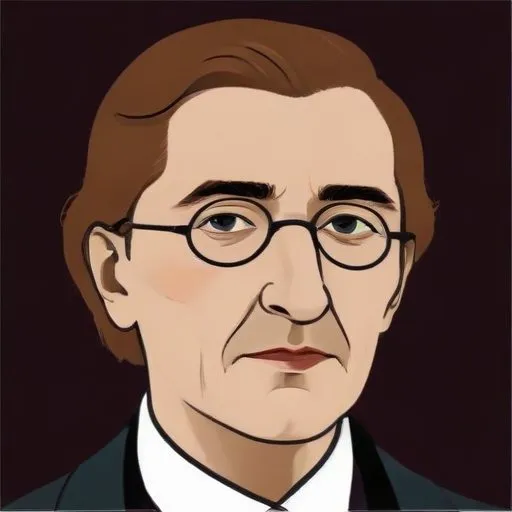
A prominent 18th-century poet and academic who wrote influential works that shaped German literature and education. He's known for his fables, poems, and essays that promoted moral values and Enlightenment ideas.
Christian Frchtegott Gellert, a prominent German poet, is celebrated as one of the forerunners of the golden age of German literature, paving the way for luminaries like Lessing. His remarkable body of work, which includes fables, stories, poems, and hymns, earned him unparalleled recognition and admiration in his lifetime.
Gellert was born on July 4, 1715, in Hainichen, Saxony, at the foot of the Erzgebirge. After attending the school of St. Afra in Meissen, he enrolled in Leipzig University in 1734 to study theology. However, due to financial constraints, he had to break off his studies in 1738 and became a private tutor for a few years. Returning to Leipzig in 1741, Gellert contributed to the Bremer Beiträge, a periodical founded by former disciples of Johann Christoph Gottsched who had revolted against the pedantry of his school.
Gellert's determination and passion for literature led him to complete his magister degree in 1743 and qualify as a university lecturer in 1744. In 1745, he established himself as a Privatdozent in philosophy at the University of Leipzig, lecturing on poetry, rhetoric, and moral philosophy. His exceptional teaching skills and amiable nature earned him the admiration of his students, who revered him for his unaffected piety and humility.
Gellert's literary prowess is exemplified in his two most notable works: Fabeln und Erzählungen (Fables and Stories) and Geistliche Oden und Lieder (Spiritual Odes and Songs). The former, a collection of fables and stories in verse, was first published in 1746 and achieved immense success, cementing his literary reputation. The latter, a collection of religious poems and hymns, appeared in 1751 and further solidified his position as a prominent German author.
In 1751, Gellert was appointed extraordinary professor of philosophy, a post he held until his death in 1769. Throughout his academic career, he inspired generations of students, fostering a love for literature and philosophy that continued to flourish long after his passing. Gellert's unflagging commitment to his craft, coupled with his generosity and humility, has made him an enduring symbol of German literary excellence.
Gellert's remarkable life and literary contributions continue to inspire scholars and literature enthusiasts alike, solidifying his place as a pioneering voice in German literature.
Born in 1749
A German literary giant who penned iconic works like "Faust" and "The Sorrows of Young Werther", shaping the Romantic movement and influencing countless writers.
Born in 1759
A renowned poet and playwright who crafted influential works that explored the human condition, morality, and the struggle for freedom, leaving a lasting impact on German literature.
Born in 1762
A German philosopher and academic who developed the concept of German idealism, emphasizing the role of the individual and the nation in shaping reality. He's known for his influence on German philosophy and the development of existentialism.
Born in 1724
Developed influential philosophical frameworks, such as the Critique of Pure Reason, that shaped modern Western thought on ethics, morality, and human understanding.
Born in 1729
A prominent Enlightenment thinker, he's known for his influential writings on philosophy, literature, and theology, which helped shape modern German culture. He's also credited with developing the concept of dramatic irony in literature.
53 Years Old
A Jamaican artist who blends dancehall, reggae, and pop to create infectious hits, known for his energetic stage presence and chart-topping singles like "Gimme the Light" and "Baby Boy".
Born in 1751
A renowned poet, translator, and academic who made significant contributions to German literature, particularly through his translations of classical Greek and Roman works. He played a crucial role in shaping the country's literary landscape.
