


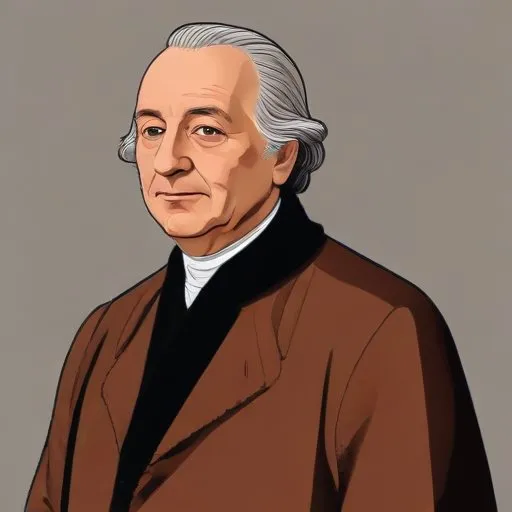
A prominent 18th-century literary figure who advocated for Enlightenment values and rationalism in German literature, shaping the country's literary scene with his influential writings and critiques.
Johann Christoph Gottsched, a luminary of the German Enlightenment, is renowned for revolutionizing the literary landscape of 18th-century Germany. As a philosopher, author, and critic, Gottsched is credited with transforming the country's theatrical scene, elevating its literary standards, and laying the groundwork for a new era of intellectual and artistic growth.
Born on February 2, 1700, in Juditten (present-day Mendeleyevo), near Königsberg, Brandenburg-Prussia, Gottsched was the son of a Lutheran clergyman. He studied philosophy and history at the University of Königsberg, where he earned his degree of Magister in 1723. Fearing conscription into the Prussian army, Gottsched fled to Leipzig, where he sought the protection of Johann Burckhardt Mencke, a prominent poet and president of the Deutschbende poetische Gesellschaft.
Gottsched's literary career spanned over four decades and was marked by unwavering critical acumen. As editor of the weekly journals Die vernünftigen Tadlerinnen (1725-1726) and Der Biedermann (1727), Gottsched pioneered a new era of literary criticism. He targeted the bombast and absurd affectations of the Second Silesian School, advocating for the subordination of German literature to the principles of French classicism.
Gottsched's most significant contributions include:
Gottsched's literary reforms and critical writings had a profound impact on modern German society. He paved the way for the emergence of prominent writers, such as Gotthold Ephraim Lessing and Friedrich Schiller, who further shaped the country's literary landscape. Gottsched's emphasis on reason, intellect, and artistic merit helped establish a cultural environment conducive to the growth of the Enlightenment movement.
Gottsched married Luise Kulmus, a talented writer and translator, in 1735. The couple had no children, but their collaborative efforts significantly contributed to the advancement of German literature. Gottsched passed away on December 12, 1766, leaving behind a legacy that continued to inspire generations of writers, critics, and intellectuals.
Today, Gottsched is remembered as a trailblazer who championed the cause of German Enlightenment literature, elevating the country's cultural and intellectual profile on the European stage.
"The poet must be a philosopher, and the philosopher a poet."
"Taste is not a matter of instinct, but of education and cultivation."
"The goal of literature is not to entertain, but to instruct and improve."
Born in 1749
A German literary giant who penned iconic works like "Faust" and "The Sorrows of Young Werther", shaping the Romantic movement and influencing countless writers.
Born in 1759
A renowned poet and playwright who crafted influential works that explored the human condition, morality, and the struggle for freedom, leaving a lasting impact on German literature.
Born in 1729
A prominent Enlightenment thinker, he's known for his influential writings on philosophy, literature, and theology, which helped shape modern German culture. He's also credited with developing the concept of dramatic irony in literature.
Born in 1715
A prominent 18th-century poet and academic who wrote influential works that shaped German literature and education. He's known for his fables, poems, and essays that promoted moral values and Enlightenment ideas.
Born in 1729
A leading figure of the Haskalah, the Jewish Enlightenment, who sought to reconcile traditional Judaism with modern European philosophy and culture. He's known for his efforts to integrate Jews into European society.
Born in 1724
Developed influential philosophical frameworks, such as the Critique of Pure Reason, that shaped modern Western thought on ethics, morality, and human understanding.
Born in 1712
A pioneering thinker who shaped modern democracy and education with his ideas on social contracts, general will, and the importance of early childhood education. His writings influenced the French Revolution and modern political thought.
Born in 1694
A witty and insightful 18th-century writer and philosopher who used satire to critique societal norms and advocate for reason, tolerance, and human rights.
