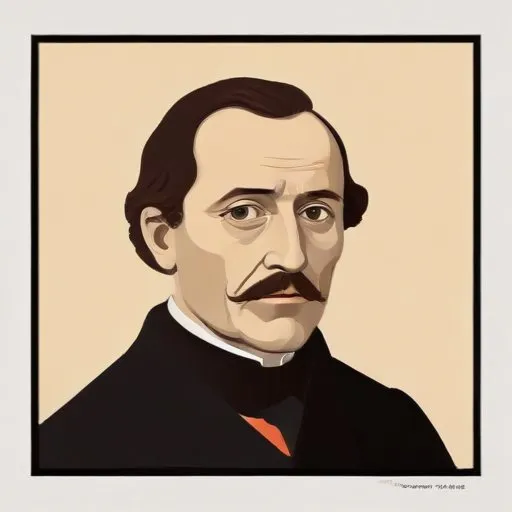
Christian Friedrich Hebbel: The German Poet and Dramatist Extraordinaire
Breaking Grounds in Literature
Christian Friedrich Hebbel, a German poet and dramatist, is renowned for his remarkable contributions to the world of literature. With his provocative and thought-provoking works, Hebbel left an indelible mark on the literary scene of the 19th century. Born on March 18, 1813, in Wesselburen, Dithmarschen, Holstein, Hebbel's humble beginnings as the son of a bricklayer did not deter him from pursuing his passion for poetry and drama.
A Journey of Self-Discovery
Hebbel's inclination towards poetry and literature was evident from an early age. Despite the financial constraints, he managed to receive a decent education at the Gelehrtenschule des Johanneums, a grammar school in Hamburg. His talent did not go unnoticed, and his verses were published in the Hamburg Modezeitung, a popular magazine of the time. The patronage of Amalie Schoppe, a well-known journalist and author, enabled him to pursue his higher education at the University of Hamburg.
A Prolific Career
Hebbel's literary career spanned multiple genres, including tragedy, comedy, and poetry. His debut tragedy,
Judith, published in 1841, was a groundbreaking work that catapulted him to fame. The play's success was followed by
Genoveva, another tragedy, and
Der Diamant, a comedy. His travels to Copenhagen, Paris, and Italy further enriched his literary experience, resulting in the creation of
Maria Magdalena, a tragedy of common life.
A New Chapter in Life
Hebbel's visit to Vienna marked a significant turning point in his life. He befriended two Prussian noblemen, the Zerboni di Sposetti brothers, who recognized his genius and provided him with financial support. This newfound stability allowed Hebbel to mingle with the intellectual elite of Vienna, leading to a remarkable transformation in his personal life. In 1846, he married Christine Enghaus, a beautiful and wealthy actress, leaving his precarious past behind.
Philosophical Contributions and Beliefs
Hebbel's works were deeply rooted in his philosophical beliefs. He was intrigued by the human condition, and his writing often explored the complexities of life, morality, and social norms. His plays delved into the human psyche, revealing the intricate web of relationships and emotions that define our existence.
Influence on Modern Society
Hebbel's impact on modern society extends beyond the realm of literature. His works continue to inspire generations of writers, poets, and playwrights. His exploration of the human condition, morality, and social norms remains relevant today, making him a timeless figure in the world of literature.
Personal Milestones and Key Life Events
- Born on March 18, 1813, in Wesselburen, Dithmarschen, Holstein
- Published his debut tragedy, Judith, in 1841
- Visited Copenhagen, Paris, and Italy between 1842 and 1846
- Married Christine Enghaus in 1846
- Died on December 13, 1863, at the age of 50
Legacy
Christian Friedrich Hebbel's contributions to literature are a testament to his unwavering dedication to his craft. His thought-provoking works continue to inspire and influence writers, poets, and playwrights to this day. As we delve into the world of Hebbel's creations, we are reminded of the power of literature to shape our understanding of the human experience.
FAQ
What were Christian Friedrich Hebbels major literary works?
Christian Friedrich Hebbel was a prolific writer, and his major literary works include the dramas Judith and The Nibelungs, as well as many poems and essays.
What was Christian Friedrich Hebbels impact on German literature?
Christian Friedrich Hebbel was a prominent figure in 19th-century German literature, and his works had a significant impact on the development of German drama and poetry.
What was Christian Friedrich Hebbels early life like?
Christian Friedrich Hebbel was born into poverty and had to work his way through school, eventually earning a scholarship to study law at the University of Heidelberg.
How did Christian Friedrich Hebbels experiences shape his writing?
Christian Friedrich Hebbels experiences as a poor student and later as a struggling writer greatly influenced his writing, which often explored themes of struggle and social justice.
What was Christian Friedrich Hebbels legacy?
Christian Friedrich Hebbels legacy is that of a pioneering German dramatist and poet who explored new themes and forms in his work.