


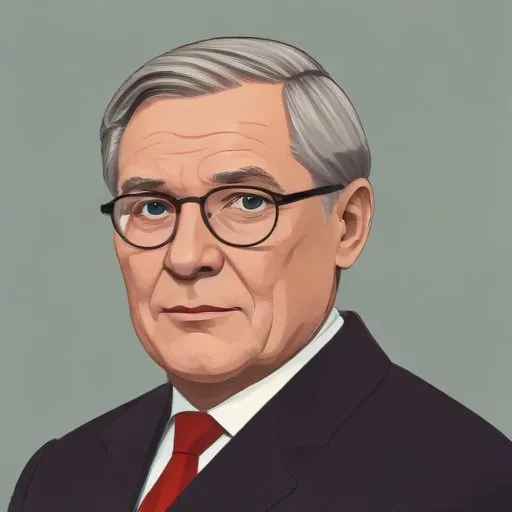
A Norwegian Nobel laureate who pioneered the study of international relations and peace, known for his work on the history of internationalism and the development of the Nobel Peace Prize.
Christian Lous Lange was a Norwegian historian, teacher, and political scientist who left an indelible mark on the world of internationalism, dedicating his life to promoting peace, understanding, and cooperation among nations. He is perhaps best known for his instrumental role in the InterParliamentary Union, serving as its secretary general for over two decades and playing a crucial part in shaping the organization's mission and direction.
Born on September 17, 1869, in Stavanger, Norway, Lange was the grandson of the renowned historian Christian C. A. Lange. He graduated from secondary school in 1887 and went on to study history, English, and French at the University of Oslo, earning his cand. philol. degree in 1893.
Lange's passion for internationalism led him to become involved with the InterParliamentary Union, initially serving as secretary of the committee organizing an Oslo conference in 1899. This marked the beginning of a lifelong commitment to promoting dialogue and cooperation among parliamentarians from different countries.
In 1900, Lange was appointed secretary of the Nobel Committee of the Norwegian Parliament, a position he held until 1909. During this time, he played a key role in the early days of the Norwegian Nobel Institute and was instrumental in shaping the institution's mission and direction.
In 1909, Lange was appointed secretary general of the InterParliamentary Union, a position he held for over two decades until 1933. During his tenure, he oversaw the organization's move to Brussels, sustained it through the challenging times of World War I, and eventually moved it to Geneva after the war.
Lange's dedication to internationalism extended beyond the InterParliamentary Union. He was Norway's delegate or alternate delegate to the League of Nations from its founding until 1938 and wrote reports as a correspondent for the Carnegie Endowment for International Peace. He also participated in the Dutch-sponsored Central Organisation for Durable Peace, among other organizations.
Christian Lous Lange's life's work continues to inspire generations of scholars, diplomats, and policymakers. His contributions to the field of internationalism have left an indelible mark on global politics and diplomacy. As we look to the future, his legacy serves as a powerful reminder of the importance of cooperation, dialogue, and understanding among nations.
Lange's passing on December 11, 1938, marked the end of an era, but his ideas and ideals continue to shape the world we live in today.
Born in 1861
A Norwegian pioneer who explored the Arctic, made groundbreaking scientific discoveries, and championed humanitarian causes, earning a Nobel Prize for his efforts. He's most famous for being the first to cross Greenland and his innovative sled designs.
Born in 1828
Co-founder of the Red Cross, a humanitarian organization providing aid in war zones and natural disasters, and a Nobel Peace Prize winner for his efforts. He pioneered the concept of international humanitarian law.
97 Years Old
A prominent leader in the civil rights movement, advocating for racial equality and social justice through nonviolent means, leaving a lasting impact on American history.
Born in 1918
A South African lawyer and politician who fought against apartheid, becoming the country's first black president and a symbol of racial reconciliation, earning a Nobel Peace Prize. He's a beacon of hope and freedom.
94 Years Old
A prominent religious leader and human rights advocate who fought against apartheid and racism, known for his tireless efforts to promote equality and forgiveness.
81 Years Old
A democracy icon and human rights activist, she led the fight against Myanmar's military rule and was awarded the Nobel Peace Prize in 1991.
28 Years Old
A courageous advocate for girls' education, particularly in her native Swat Valley, who survived a Taliban assassination attempt and continues to inspire global change through her activism and writing.
88 Years Old
A renowned international diplomat who led the United Nations from 1997 to 2006, promoting global cooperation and development, and receiving the Nobel Peace Prize in 2001.
