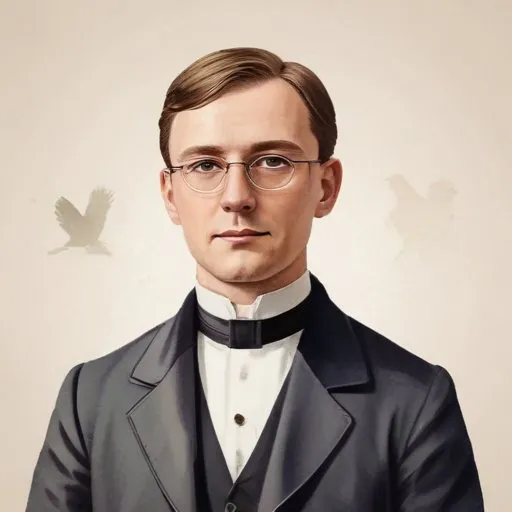
Christian Ludwig Brehm: The Ornithologist Pastor
Christian Ludwig Brehm is renowned for his meticulous descriptions of German bird species, amassing a collection of 15,000 bird specimens, and penning seminal works like
Beiträge zur Vogelkunde and
Handbuch der Naturgeschichte aller Vögel Deutschlands. As a German pastor and ornithologist, Brehm's contributions to the field of ornithology are still revered today.
Early Life and Education
Born on January 24, 1787, in Schnau near Gotha, Brehm was educated at the University of Jena, where he was ordained as a minister in 1813. He served as a pastor in Renthendorf, a position he held until his death in 1864.
Ornithological Contributions
Brehm's magnum opus,
Beiträge zur Vogelkunde, published between 1820 and 1822, is a three-volume masterpiece that describes 104 German bird species in exquisite detail. This work laid the foundation for modern ornithology and cemented Brehm's status as a pioneer in the field. His subsequent work,
Handbuch der Naturgeschichte aller Vögel Deutschlands (1831), is a comprehensive guide to 900 bird species found in Germany.
The Brehm Collection
Throughout his life, Brehm accumulated an astonishing 15,000 bird specimens, including samples collected by his son,
Alfred Brehm, during his expeditions to Sudan, Egypt, and Europe. Although he attempted to sell the collection to the Berlin Zoological Museum in 1835, the deal fell through, and the specimens remained in his attic. Years later, they were discovered by Otto Kleinschmidt and eventually acquired by Lord Rothschild in 1897. Today, the collection resides at the Museum Koenig in Bonn, Germany.
Major Works
- Beiträge zur Vogelkunde (1820-1822)
- Lehrbuch der Naturgeschichte aller europäischen Vögel (1823-1824)
- Ornis oder das Neueste und Wichtigste der Vogelkunde (1824-1827)
- Handbuch der Naturgeschichte aller Vögel Deutschlands (1831)
- Handbuch für den Liebhaber der Stuben, Haus und aller der Zähmung werthen Vögel (1832)
- Der Vogelfang (1836)
- Der vollständige Vogelfang (1855)
- Die Kunst, Vögel als Bälge zu bereiten (1842)
- Die Wartung, Pflege und Fortpflanzung der Canarienvögel (1855)
Legacy
Christian Ludwig Brehm's dedication to ornithology has left an indelible mark on the field. His meticulous descriptions, extensive collection, and influential writings have inspired generations of ornithologists and naturalists. Today, his work remains a testament to the importance of careful observation, rigorous research, and the pursuit of knowledge.
FAQ
What contributions did Christian Ludwig Brehm make to the field of ornithology?
Brehm was a pioneer in the field of ornithology, publishing several important works on bird species and their behavior. He was particularly interested in the birds of Germany and Europe.
How did Christian Ludwig Brehms pastoral work inform his scientific pursuits?
As a pastor, Brehms work with his congregation influenced his scientific pursuits. He saw the natural world as a reflection of Gods creation and believed that studying nature could lead to a deeper understanding of the divine.
What were Christian Ludwig Brehms most notable ornithological discoveries?
Brehms most notable discoveries include the identification of several new bird species and the documentation of bird migrations and habits. His work laid the foundation for later ornithologists.
How did Christian Ludwig Brehms work influence later scientists and naturalists?
Brehms work influenced later scientists and naturalists, including Charles Darwin, who credited Brehm with inspiring his own research on bird species.
What were Christian Ludwig Brehms views on the relationship between science and faith?
Brehm saw science and faith as complementary pursuits, believing that the study of nature could lead to a deeper understanding of Gods creation and the human place within it.