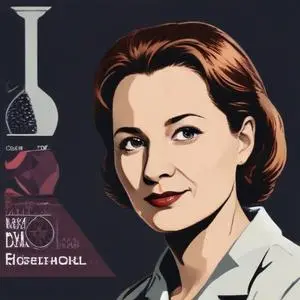
Christiane Nsslein-Volhard: Unraveling the Mysteries of Embryonic Development
The Pioneering German Biologist Behind the Nobel Prize in Physiology or Medicine
Christiane Nsslein-Volhard, a renowned German developmental biologist, is celebrated for her groundbreaking research on the genetic control of embryonic development. In 1995, she was awarded the Nobel Prize in Physiology or Medicine, together with Eric Wieschaus and
Edward B. Lewis, for her pioneering work in this field.
Early Life and Education
Born on October 20, 1942, in Magdeburg, Germany, Nsslein-Volhard grew up in a family of intellectuals. Her great-grandfather, Jacob Volhard, was a chemist, and her grandfather, Franz Volhard, was a prominent internist. She was the second of five children, with three sisters and one brother. Nsslein-Volhard's curiosity and passion for biology were nurtured from an early age, influenced by her parents, Rolf Volhard, an architect, and Brigitte Haas Volhard, a nursery school teacher.
After completing her Abitur in 1962, Nsslein-Volhard briefly considered pursuing medicine, but her interest in biology led her to study at Goethe University Frankfurt. In 1964, she transferred to the University of Tbingen, where she started a new course in biochemistry, ultimately earning a PhD in 1974.
Career Highlights and Major Works
Nsslein-Volhard's research has focused on the genetic mechanisms controlling embryonic development, particularly in the fruit fly, Drosophila melanogaster. Her work has led to significant breakthroughs in understanding pattern formation and the development of body axes.
- She was awarded the Albert Lasker Award for Basic Medical Research in 1991.
- In 1995, she received the Nobel Prize in Physiology or Medicine, together with Eric Wieschaus and Edward B. Lewis.
- She is the only woman from Germany to have received a Nobel Prize in the sciences.
Influence on Modern Society
Nsslein-Volhard's research has far-reaching implications for our understanding of human development and disease. Her work has paved the way for advancements in fields such as regenerative medicine, tissue engineering, and cancer research.
Her dedication to promoting scientific education and literacy has inspired countless students and researchers, especially women, to pursue careers in science.
Personal Milestones and Key Life Events
Nsslein-Volhard's personal life has been marked by significant milestones, including:
- Becoming an aunt to Nobel laureate in chemistry Benjamin List.
- Receiving the Order of Merit of the Federal Republic of Germany in 1995.
Philosophical Contributions and Beliefs
Nsslein-Volhard's work embodies a deep appreciation for the intricate beauty of biological systems and a commitment to advancing our understanding of the natural world.
Her dedication to promoting scientific literacy and critical thinking has inspired a new generation of researchers and scientists.
Legacy
Christiane Nsslein-Volhard's pioneering work has left an indelible mark on the field of developmental biology. Her groundbreaking research, awards, and recognition serve as a testament to her unwavering passion for science and her dedication to advancing our understanding of the human body.
As a trailblazing female scientist, Nsslein-Volhard's legacy continues to inspire and empower women in science, promoting a more inclusive and diverse scientific community.
FAQ
What is Christiane Nüsslein-Volhards most significant scientific contribution?
Christiane Nüsslein-Volhards most significant scientific contribution is her discovery of the genetic mechanisms that control embryonic development, for which she was awarded the Nobel Prize in Physiology or Medicine in 1995.
How did Christiane Nüsslein-Volhard get started in science?
Christiane Nüsslein-Volhard got started in science as a graduate student, studying biochemistry and molecular biology before becoming interested in developmental biology.
What is Christiane Nüsslein-Volhards approach to scientific research?
Christiane Nüsslein-Volhards approach to scientific research is characterized by her curiosity, her creativity, and her rigorous attention to detail, which have enabled her to make numerous groundbreaking discoveries in the field of developmental biology.
What other notable awards has Christiane Nüsslein-Volhard won?
Christiane Nüsslein-Volhard has won numerous notable awards, including the Albert Lasker Award for Basic Medical Research, the Louis Jeantet Prize for Medicine, and the Otto Warburg Medal, among others.
What is Christiane Nüsslein-Volhards legacy in science?
Christiane Nüsslein-Volhards legacy in science is as a pioneering female scientist who has made fundamental contributions to our understanding of embryonic development, and has inspired countless other scientists to pursue careers in research.