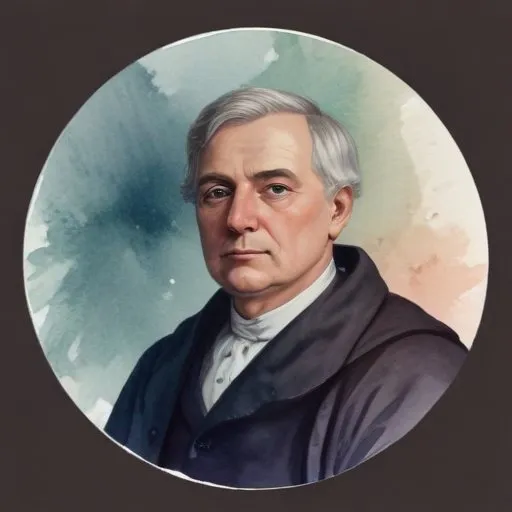
Christopher Clavius: The Brilliant Mathematician Behind the Gregorian Calendar
The Mastermind of Timekeeping
Christopher Clavius was a German mathematician and astronomer who left an indelible mark on the world of timekeeping. He is best known for his instrumental role in the development of the Gregorian calendar, the most widely used civil calendar in the world.
Early Life and Education
Born in Bamberg, Germany in 1538, Clavius' early life remains shrouded in mystery. His given name is unknown, and scholars believe it may have been Christoph Clau or Klau. He joined the Jesuit order in 1555 and attended the University of Coimbra in Portugal, where he possibly had contact with the renowned mathematician Pedro Nunes. He later studied theology at the Jesuit Collegio Romano in Rome, where he was ordained in 1564.
The Calendar Reform
Clavius' most significant contribution came when he was tasked with computing the basis for a reformed calendar. He built upon the work of Aloysius Lilius and used the Prussian Tables of
Erasmus Reinhold to propose a calendar reform that would prevent the Church's holidays from drifting relative to the seasons. His work was adopted in 1582 by
Pope Gregory XIII, and the resulting Gregorian calendar has been used worldwide ever since.
Influence on Modern Society
Clavius' calendar reform had a profound impact on modern society. The adoption of the Gregorian calendar facilitated global communication, trade, and travel by providing a standardized system of timekeeping. It also enabled the accurate prediction of astronomical events, which has had a lasting impact on fields such as astronomy, navigation, and agriculture.
Mathematical Contributions
Clavius was a prolific mathematician who wrote extensively on algebra, geometry, and trigonometry. His textbooks were used for astronomical education for over 50 years, making him one of the most respected astronomers in Europe during his lifetime.
Philosophical Contributions and Beliefs
Clavius was a devout Jesuit who believed in the importance of mathematical inquiry in understanding the natural world. He saw his work as a way to glorify God and demonstrate the beauty of His creation. His philosophical approach to mathematics emphasized the importance of empirical observation and rational inquiry.
Trivia and Fun Facts
- Clavius was known for his exceptional memory and could recite entire books from memory.
- He was a talented linguist and could speak multiple languages, including Latin, Greek, and Portuguese.
- Clavius was a prolific writer and published over 20 books on mathematics, astronomy, and philosophy.
Legacy and Impact on Their Field
Clavius' contributions to mathematics, astronomy, and timekeeping have had a lasting impact on their respective fields. He is remembered as one of the most influential mathematicians of his time, and his work continues to influence modern science and technology.
Personal Milestones and Key Life Events
- 1555: Clavius joins the Jesuit order
- 1564: Clavius is ordained as a priest
- 1582: The Gregorian calendar is adopted by Pope Gregory XIII
- 1612: Clavius passes away at the age of 73
Comparative Analysis with Contemporaries
Clavius' work was contemporaneous with that of other prominent mathematicians and astronomers, such as
Tycho Brahe and
Johannes Kepler. While these individuals made significant contributions to their respective fields, Clavius' work on the Gregorian calendar stands out as a singular achievement that has had a profound impact on modern society.
FAQ
Who was Christopher Clavius?
Christopher Clavius was a German mathematician and astronomer who lived in the 16th century. He was a prominent figure in the Jesuit order and made significant contributions to the fields of mathematics, astronomy, and optics.
What were Christopher Claviuss contributions to astronomy?
Christopher Clavius was a leading astronomer of his time, making significant contributions to the study of the solar system, including the observation of the comet of 1577 and the development of new astronomical tables.
What was Christopher Claviuss role in the Gregorian calendar reform?
Christopher Clavius played a crucial role in the Gregorian calendar reform, advising Pope Gregory XIII on the new calendar and developing the algorithms for calculating the dates of Easter.
What were Christopher Claviuss contributions to optics?
Christopher Clavius made significant contributions to the study of optics, including the development of new theories on the nature of light and color and the invention of new optical instruments.
How did Christopher Claviuss work influence later scientists?
Christopher Claviuss work had a profound impact on later scientists, influencing the development of astronomy, mathematics, and optics in the 17th and 18th centuries.