


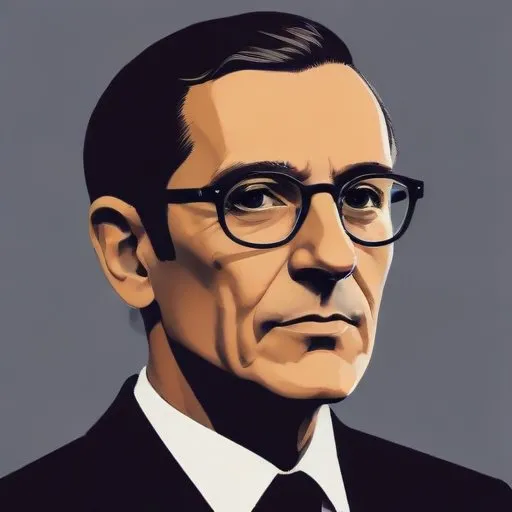
A renowned expert in urban and regional economics, he is most known for his work on urban planning, transportation, and economic development.
Christopher Foster was a British academic and economist who left an indelible mark on the fields of urban studies, economics, and public policy. He is best known for his work as a professor of economics at the London School of Economics, a consultant at Coopers & Lybrand and PricewaterhouseCoopers, and a temporary civil servant.
Christopher Foster was born on 30 October 1930 in London, England. He received his education at Merchant Taylors' School, Northwood, and King's College, Cambridge, where he read History and Economics. Following his graduation, he spent a year as a Harkness fellow at the University of Pennsylvania before embarking on a career as an economics don at the University of Manchester and Jesus College, Oxford.
Foster's academic career spanned several decades, during which he made significant contributions to the fields of urban studies and economics. At the University of Oxford, he led a team studying urban transport problems at the Oxford Institute of Economics and Statistics. In 1970, he moved to the London School of Economics, where he eventually became Professor of Urban Studies and Economics.
Foster's expertise extended beyond academia, and he was often called upon to advise governments on matters of economic policy. In 1966, he took a leave of absence from his academic career to serve as Director-General of Economic Planning at the Ministry of Transport, where he worked closely with Cabinet minister Barbara Castle.
Foster was a prolific writer and published several books on topics related to transport, local government finance, privatization, and public ownership. His last book, British Government in Crisis, was published in 2005.
Throughout his career, Foster's work had a significant impact on public policy and economic discourse. His expertise was sought by governments across the political spectrum, and he was known for his outspoken views on matters of public policy. In 2007, he gave an interview to The Daily Telegraph in which he criticized Tony Blair's government, earning him attention and controversy.
Today, Foster's legacy continues to be felt in the fields of urban studies, economics, and public policy. His contributions to our understanding of these complex issues remain invaluable, and his work continues to inspire new generations of scholars and policymakers.
76 Years Old
A former Archbishop of Canterbury and prominent theologian, known for his progressive views on social issues and his efforts to promote interfaith dialogue.
80 Years Old
A prominent Catholic Church leader, known for his progressive views on social issues and his role in shaping the Church's stance on various matters. He's the Archbishop of Westminster, a senior Catholic cleric in England and Wales.
87 Years Old
A legendary Australian radio and TV personality, best known for his iconic voice and charismatic hosting style, entertaining generations with his warm and witty on-air presence.
90 Years Old
A prominent leader of the Church of England, serving as Archbishop of Canterbury from 1991 to 2002, known for his efforts to modernize the church and promote interfaith dialogue.
76 Years Old
A Pakistani-born Anglican bishop who served as the Bishop of Rochester and was the first non-white diocesan bishop in the Church of England, known for his conservative views on social issues.
76 Years Old
A 17th-century Anglican bishop who played a key role in the English Civil War and was a strong advocate for the Church of England. He's also known for his writings on theology and ecclesiastical history.
67 Years Old
The 105th Archbishop of York, a senior bishop in the Church of England, known for his progressive views on social issues and his efforts to modernize the church. He's a prominent figure in British religious life, advocating for inclusivity and social justice.
