


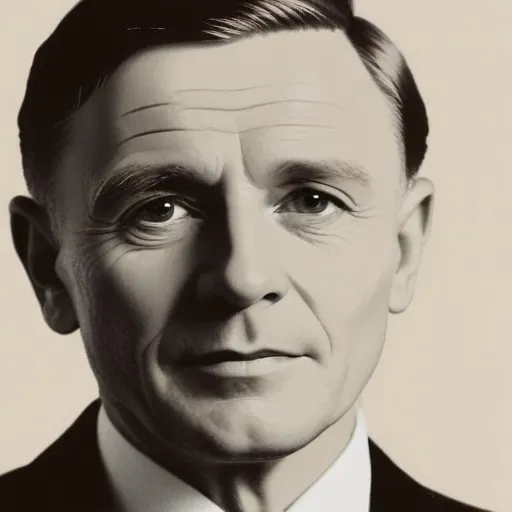
A celebrated author of novels and plays, known for his vivid portrayals of 1930s Berlin and his exploration of gay identity.
Christopher Isherwood, a renowned Anglo-American novelist, playwright, and screenwriter, is best known for his semi-autobiographical novel Goodbye to Berlin, which inspired the iconic musical Cabaret, and his poignant novel A Single Man, adapted into a film by Tom Ford in 2009. Through his works, Isherwood masterfully captured the complexities of the human experience, exploring themes of identity, love, and social commentary.
Born on August 26, 1904, on his family's estate in Cheshire, England, Isherwood was the elder son of Francis Edward Bradshaw Isherwood and Kathleen Bradshaw Isherwood. His father, a professional soldier, played a significant role in shaping Isherwood's perspective on life, as did his mother's connection to the wealthy Greene brewing family.
Isherwood's writing career began to take shape during his time at Repton School in Derbyshire, where he met his lifelong friend and collaborator, Edward Upward. Together, they created the imaginary English village of Mortmere, which later inspired Isherwood's fictional autobiography, Lions and Shadows (1938).
In the 1930s, Isherwood moved to Berlin, where he became enamored with the city's vibrant culture and nightlife. This period of his life greatly influenced his writing, as seen in Goodbye to Berlin (1939), a novel that explores the city's decadent and tumultuous atmosphere on the eve of World War II.
Isherwood's personal life was marked by significant relationships, including his long-term partnership with Don Bachardy, whom he met in 1953. Isherwood's memoir, Christopher and His Kind (1976), candidly explores his experiences as a gay man and his involvement in the Gay Liberation movement.
Isherwood's contributions to literature and his unflinching portrayal of the human experience have left an indelible mark on modern society. His works have inspired countless writers, filmmakers, and artists, cementing his status as a literary icon of the 20th century.
Christopher Isherwood's literary legacy continues to resonate with readers and writers today. His exploration of the human condition, his mastery of language, and his unwavering commitment to telling the truth have solidified his place as one of the most important writers of his generation.
As Isherwood once said, "I think I've always been interested in the politics of identity, and the way people define themselves." Through his life's work, he has left us with a profound understanding of the complexities and contradictions that make us human.
Born in 1907
A renowned poet, playwright, and composer who explored themes of love, morality, and social justice through his works, leaving a lasting impact on 20th-century literature.
Born in 1879
This celebrated author crafted novels and plays that probed the human condition, exploring themes of social class, morality, and personal relationships, with a distinctive wit and insight. Their works continue to captivate audiences with their nuanced portrayals of English society during the early 20th century.
Born in 1894
Author of dystopian classics like Brave New World, exploring the consequences of technological advancements on humanity. Known for prophetic warnings about government control and manipulation.
Born in 1889
A renowned French creative force, celebrated for his innovative and surreal works that blurred the lines between literature, art, and cinema, leaving an indelible mark on 20th-century culture.
Born in 1911
A Pulitzer Prize-winning playwright and poet, known for crafting emotionally charged, poetic dramas that explore the human condition, particularly in the American South.
Born in 1924
A celebrated author of dark, atmospheric fiction, known for crafting intricate, psychologically complex stories that blur the lines between reality and fantasy. His work often explores the American psyche, delving into themes of identity, morality, and the human condition.
Born in 1925
A celebrated author of novels, essays, and plays, known for his witty humor, sharp critiques of politics and society, and iconic works like "Myra Breckinridge" and "Lincoln".
