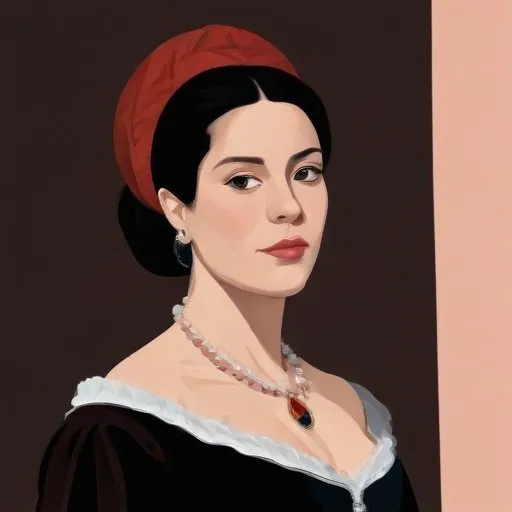
Clara Gonzaga: A Pivotal Figure in the Italian Renaissance
Introducing the Countess of Montpensier and Dauphine of Auvergne
Clara Gonzaga, a scion of the illustrious House of Gonzaga, is remembered as a prominent figure in the Italian Renaissance, known for her strategic marriage alliances and her role as the mother of
Charles III, Duke of Bourbon, who played a pivotal role in the Sack of Rome. Her life was a testament to the complex web of relationships between European noble families during the 15th and 16th centuries.
Early Life and Family
Born on July 1, 1464, in Mantua, Clara was the eldest daughter of Federico I Gonzaga, Marquess of Mantua, and Margaret of Bavaria. Her family was renowned for their literary and artistic patronage, which greatly influenced the cultural landscape of Renaissance Italy. Clara's siblings included
Francesco II Gonzaga, Marquess of Mantua, whose wife, Isabella d'Este, was a celebrated patron of the arts.
Marriage and Issue
On February 24, 1482, Clara married Gilbert of Bourbon-Montpensier, who would later become the Count of Montpensier and Dauphin of Auvergne. This strategic alliance was orchestrated by Clara's uncle, Francesco Secco of Aragon. The couple had six children, including:
- Louis II, Count of Montpensier (1483-1501), who died unmarried.
- Charles III, Duke of Bourbon, Count of Montpensier, Dauphin of Auvergne, and Constable of France (1490-1527), who led the Imperial Army in the Sack of Rome.
Influence on Modern Society
Clara's life and legacy are a testament to the significant role women played in shaping the course of European history. Her marriage alliance with Gilbert of Bourbon-Montpensier highlights the importance of family ties and strategic relationships between noble families. Furthermore, her son Charles III's involvement in the Sack of Rome underscores the complex and often tumultuous nature of Renaissance politics.
Literary Legacy
Clara's life was immortalized in the Heptaméron, a collection of short stories published in 1558 by Marguerite de Navarre, Queen of Navarre and sister of King
Francis I of France. This literary work provides valuable insights into the lives of women during the Renaissance, offering a unique perspective on Clara's experiences and the cultural context in which she lived.
Historical Context and Legacy
Clara Gonzaga's life was shaped by the tumultuous landscape of Renaissance Italy, marked by conflicts between city-states, the rise of powerful families, and the influence of the Catholic Church. Her legacy serves as a reminder of the complex web of relationships and alliances that defined this era, as well as the significant role women played in shaping the course of history.
FAQ
Who was Clara Gonzagas husband?
Clara Gonzaga was married to Gilbert of Bourbon, Count of Montpensier, and was the mother of Charles III, Duke of Bourbon.
What was Clara Gonzagas role in Italian politics?
Clara Gonzaga played an important role in Italian politics during the 15th century, using her wealth and influence to support her husbands military campaigns and promote the interests of her family.
What are Clara Gonzagas achievements?
Clara Gonzaga was a patron of the arts and a supporter of education, and her court at Montpensier was known for its cultural and intellectual pursuits.
What is Clara Gonzagas personal life like?
Clara Gonzaga was born in 1464 in Mantua, Italy, and grew up in a family of nobles. She was known for her beauty, intelligence, and strong will from an early age.
How is Clara Gonzaga remembered in Italian history?
Clara Gonzaga is remembered as a powerful and influential noblewoman who played an important role in shaping Italian politics and culture during the Renaissance.