


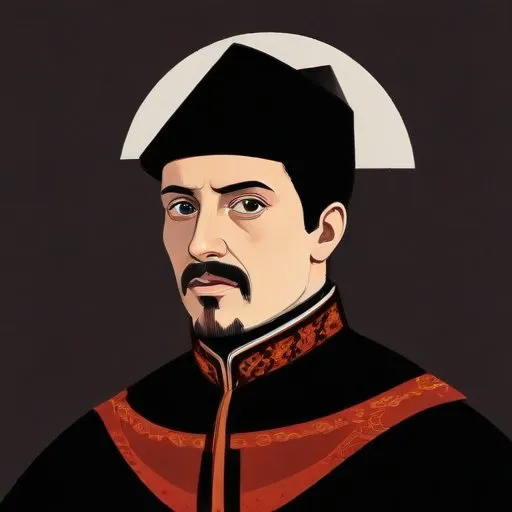
Ruler of Milan who transformed the city into a cultural and economic hub, commissioning grand architectural projects and fostering a Renaissance humanist movement.
Gian Galeazzo Sforza, also known as Giovan Galeazzo Sforza, was the sixth Duke of Milan, a position he ascended to at the tender age of seven after the assassination of his father, Galeazzo Maria Sforza, in 1476. Despite his promising start, Gian Galeazzo's life was marked by tragedy, power struggles, and ultimately, a suspicious death at the hands of his uncle, Ludovico Sforza.
Born in Abbiategrasso on June 20, 1469, Gian Galeazzo was thrust into the limelight after his father's untimely death. His uncle, Ludovico Sforza, acted as regent to the young duke, but soon wrested all power from him, becoming the de facto ruler of Milan.
In February 1489, Gian Galeazzo married his cousin, Princess Isabella of Naples. Together, they had several children, including:
In 1491, Ludovico Sforza had Gian Galeazzo and his wife, Isabella of Aragon, transferred to the Visconti Castle of Pavia, where they created a brilliant court. It was here that Gian Galeazzo died in 1494, amidst rumors of poisoning by his uncle, Ludovico il Moro. The Italian historian Francesco Guicciardini wrote in his History of Italy that Gian Galeazzo's death was widely believed to have been orchestrated by Ludovico Sforza.
Despite his tragic fate, Gian Galeazzo's legacy lives on as a poignant reminder of the intrigue and power struggles that defined the Renaissance era. His story serves as a testament to the cutthroat nature of politics and the devastating consequences of ambition.
Gian Galeazzo Sforza's family tree is a complex web of alliances and rivalries, with his ancestry tracing back to the powerful Visconti and Sforza families.
Through his story, we are reminded of the enduring significance of the Sforza dynasty, which shaped the course of Italian history and left an indelible mark on the world.
Born in 1452
Ruler of Milan who commissioned Leonardo da Vinci's famous painting, The Last Supper, and was a patron of the arts and architecture.
Born in 1401
The Duke of Milan, a powerful Renaissance leader, expanded his dominion through strategic marriages and military campaigns, fostering a cultural and artistic boom in 15th-century Italy.
Born in 1472
The wife of Maximilian I, Holy Roman Emperor, was a member of the powerful Sforza dynasty in Milan and played a key role in 15th-century European politics. She was a patron of the arts and a fashion icon of her time.
Born in 1444
The ruler of Milan from 1466 to 1476, known for his cruel and tyrannical reign, marked by numerous assassinations and brutal suppression of opposition. He was also a patron of the arts, commissioning works from famous artists like Leonardo da Vinci.
Born in 1495
Ruler of Milan from 1521 to 1535, known for his military campaigns and cultural patronage, particularly in the arts and architecture.
