


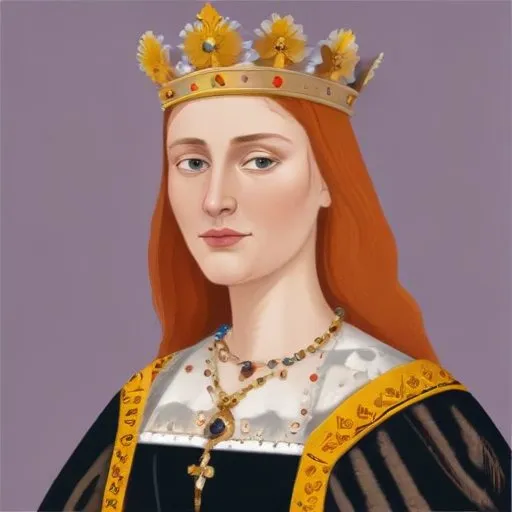
The queen who brought Italian Renaissance culture to Poland, introducing new agricultural practices and promoting education, and was a shrewd politician who protected her family's interests.
Bona Sforza, the second wife of Sigismund the Old, is renowned for her remarkable influence on the political and cultural landscape of the Polish-Lithuanian union. As the Duchess of Bari and Rossano by her own right, she implemented far-reaching economic reforms, forged strategic alliances, and left a lasting legacy that continued to shape the region for centuries to come.
Bona was born on February 2, 1494, in Vigevano, Milan, to Gian Galeazzo Sforza, the legal heir to the Duchy of Milan, and Isabella of Naples, daughter of King Alfonso II of Naples from the House of Trastámara. Her family's tumultuous history was marked by power struggles, usurpations, and even allegations of poisoning.
As the Queen of Poland and Grand Duchess of Lithuania, Bona's ambition and energy led her to implement numerous economic and agricultural reforms, aimed at increasing state revenue during the Chicken War. Her most notable achievement was the Wallach Reform in the Grand Duchy of Lithuania, which had a profound impact on the region's development.
Bona's descendants became beneficiaries of the Neapolitan sums, a loan to Philip II of Spain that was never completely repaid. Her influence extended beyond her lifetime, shaping the course of the Polish-Lithuanian union and leaving a lasting legacy in the region's politics, economy, and culture.
Bona Sforza's remarkable life and achievements serve as a testament to her strength, intelligence, and vision. As a true leader, she navigated the complexities of politics and diplomacy, leaving behind a lasting impact on the Polish-Lithuanian union and the world beyond.
Born in 1310
The last Piast king of Poland, who reformed the country's judicial system, established universities, and promoted trade and commerce, earning him the title "the Great".
Born in 1461
The last Jagiellonian king of Poland, known for his efforts to strengthen the Polish-Lithuanian union and defend against the Teutonic Knights. He also played a key role in the Polish-Ottoman War.
