


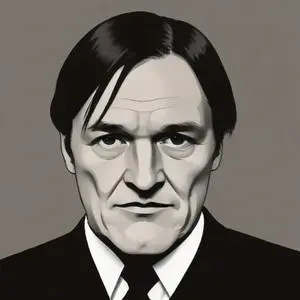
Noted lawyer who famously defended controversial cases, including the Scopes "Monkey Trial," and was a pioneer in the development of modern American legal defense strategies.
Clarence Darrow, the renowned American lawyer, is still revered for his trailblazing defence of the underdog, his unwavering commitment to social justice, and his unparalleled courtroom prowess. With a career spanning over five decades, Darrow tackled some of the most contentious and high-profile cases of his time, leaving an indelible mark on the American legal landscape.
Born on April 18, 1857, in Farmdale, Ohio, Clarence Seward Darrow was the fifth son of Amirus and Emily Darrow. His family's strong abolitionist and feminist roots instilled in him a sense of justice and a desire to challenge the status quo. Despite not graduating from Allegheny College and the University of Michigan Law School, Darrow's self-study and determination earned him a place in the law department at Ann Arbor.
Darrow's early career as a labour lawyer saw him take on powerful corporations, fighting for the rights of trade unions and workers. His fearlessness in the face of adversity earned him the nickname "Attorney for the Damned." His most notable cases include the Leopold and Loeb murder trial, where he saved the defendants from the death penalty, and the Scopes monkey trial, which challenged the teaching of evolution in schools.
A passionate advocate for civil liberties, Darrow was a founding member of the American Civil Liberties Union (ACLU). He championed the cause of free speech, racial equality, and reproductive rights, often taking on unpopular causes and clients. His eloquence and wit in the courtroom earned him the respect of his peers and the admiration of the public.
Darrow's philosophical outlook was shaped by his beliefs in individualism, humanitarianism, and Georgist economic reform. He saw the law as a tool for social change, and his writings and public speaking reflected his commitment to creating a more just and equitable society.
Posthumously inducted into the Trial Lawyer Hall of Fame, Darrow's legacy continues to inspire generations of lawyers, activists, and social reformers. His impact on modern society is still felt, with many regarding him as the greatest lawyer of the 20th century.
Darrow's life serves as a testament to the power of perseverance and conviction. Despite facing numerous setbacks and criticisms, he remained steadfast in his pursuit of justice, inspiring countless individuals to embrace their own humanity and fight for the rights of others.
Clarence Darrow's remarkable life and career continue to captivate and inspire people around the world. His unwavering commitment to social justice, his unshakeable faith in the human spirit, and his unrelenting pursuit of truth have left an indelible mark on American history, cementing his place as one of the most iconic and revered legal minds of the 20th century.
Born in 1900
Taught biology in Tennessee, sparking the famous "Monkey Trial" that challenged evolution education in public schools.
Born in 1860
A prominent lawyer and politician who served as Secretary of State, famously advocating for progressive reforms and delivering the iconic "Cross of Gold" speech. He's also known for his role in the Scopes Trial, debating evolution in schools.
Born in 1880
A satirical journalist and social critic who ridiculed American culture and politics, known for his witty writings and sharp commentary on the human condition.
Born in 1855
A pioneering labor leader who fought for workers' rights and social justice, founding the Industrial Workers of the World and running for president five times on the Socialist Party ticket.
Born in 1878
A pioneering muckraker, exposing social and economic injustices through influential novels, most notably "The Jungle", which led to significant reforms in the meatpacking industry.
