


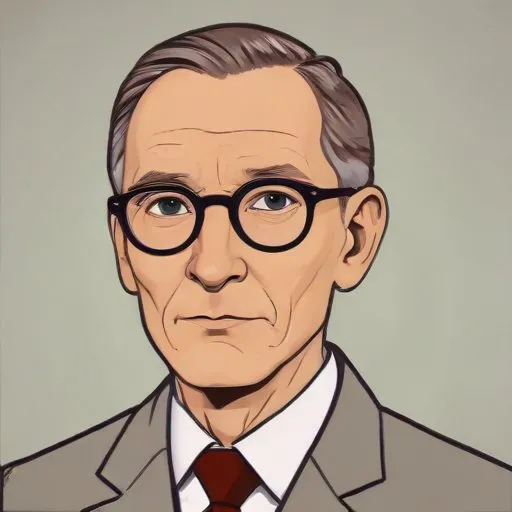
Taught biology in Tennessee, sparking the famous "Monkey Trial" that challenged evolution education in public schools.
John T. Scopes, a high school teacher in Dayton, Tennessee, is famously known for being at the center of the Scopes Trial, a landmark court case that challenged the constitutionality of Tennessee's Butler Act, which prohibited the teaching of human evolution in public schools. In 1925, Scopes was put on trial for teaching evolution to his students, sparking a national debate on the role of science in education.
Born on August 3, 1900, in Paducah, Kentucky, Scopes was the fifth child and only son of Thomas Scopes and Mary Alva Brown. He grew up on a farm and later moved to Danville, Illinois, with his family. Scopes attended the University of Illinois briefly before quitting due to health reasons. He eventually earned a degree from the University of Kentucky in 1924, majoring in law and minoring in geology.
The Scopes Trial was a carefully orchestrated event, prompted by the American Civil Liberties Union (ACLU), which was seeking to challenge the Butler Act. A group of businessmen in Dayton, Tennessee, including engineer and geologist George Rappleyea, saw this as an opportunity to bring publicity to their town. Rappleyea persuaded Scopes to participate in the trial, arguing that the state's required textbook, George William Hunter's Civic Biology, included a chapter on evolution, essentially forcing teachers to violate the law.
The trial began on July 10, 1925, and lasted for eight days. Scopes was defended by a team of lawyers, including Clarence Darrow, a prominent defense attorney. The prosecution, led by William Jennings Bryan, argued that Scopes had violated the law by teaching evolution. The trial was widely publicized, with many journalists and spectators attending the proceedings.
The Scopes Trial was a significant event in the history of American education, highlighting the tension between science and religion. Although Scopes was found guilty and fined $100, the trial ultimately led to the repeal of the Butler Act in 1967. Scopes' courage in challenging the law helped pave the way for the teaching of evolution in public schools, ensuring that future generations would have access to accurate scientific knowledge.
After the trial, Scopes moved to Chicago, where he worked as an oil geologist for several years. He later returned to Tennessee and taught school in Rhea County. Scopes remained involved in the education system, serving as a consultant for the State Department of Education. He died on October 21, 1970, at the age of 70.
Scopes was posthumously inducted into the Tennessee Teachers' Hall of Fame in 1969. His legacy continues to inspire educators and scientists who advocate for the importance of teaching evolution in public schools.
The Scopes Trial took place during a time of great social and cultural change in the United States. The 1920s were marked by the rise of fundamentalism and the clash between modernity and traditional values. Scopes' case was not an isolated incident, as similar debates were taking place across the country. The trial can be seen as a precursor to the modern creationism-evolution debate, which continues to shape American education policy today.
Born in 1857
Noted lawyer who famously defended controversial cases, including the Scopes "Monkey Trial," and was a pioneer in the development of modern American legal defense strategies.
Born in 1860
A prominent lawyer and politician who served as Secretary of State, famously advocating for progressive reforms and delivering the iconic "Cross of Gold" speech. He's also known for his role in the Scopes Trial, debating evolution in schools.
Born in 1880
A satirical journalist and social critic who ridiculed American culture and politics, known for his witty writings and sharp commentary on the human condition.
Born in 1809
Developed the theory of evolution through natural selection, revolutionizing our understanding of life on Earth. This groundbreaking idea transformed the fields of biology, ecology, and beyond.
Born in 1822
An Austrian monk who pioneered genetics by experimenting with pea plants, discovering the fundamental laws of heredity, and laying the foundation for modern genetics.
Born in 1823
A pioneering naturalist who discovered evolution through natural selection, independently of Charles Darwin, and contributed significantly to the field of biogeography.
Born in 1834
A German biologist, physician, and philosopher who coined the term "ecology" and made significant contributions to the field of evolutionary biology, including the recapitulation theory.
Born in 1900
A pioneer in evolutionary biology, he integrated genetics and evolution, revolutionizing our understanding of species adaptation and diversity. His work laid the foundation for modern evolutionary theory.
