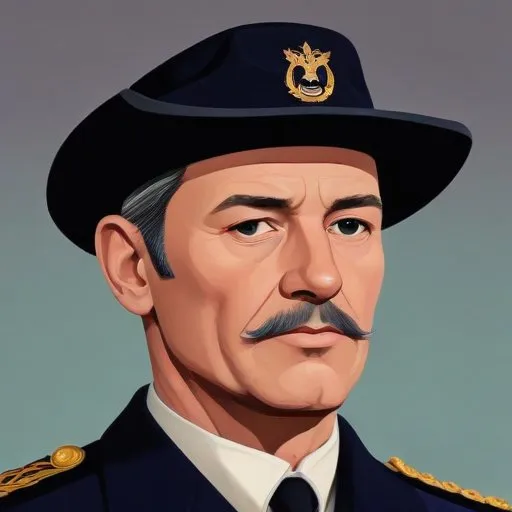
Clarence Dutton

Clarence Dutton

Clarence Dutton was born on May 15th, 1841

Full Name: Clarence Dutton
Profession: Commander, Geologist
Nationality: American
Birth Place: Wall Township, NJ, USA
Years Active: 1841-1912
Occupations: Commander, Geologist
Notable Work: US Geological Survey
Military Rank: Commander

American commander and geologist who led expeditions to explore and map the American West, making significant contributions to the field of geology. He's also known for his writings on the Grand Canyon.

Written by: Carlos Hernandez Carlos Hernandez

Clarence Dutton: The Pioneering Geologist Who Shaped Our Understanding of the Earth

Clarence Dutton is renowned for his groundbreaking contributions to the field of geology, particularly in the study of volcanic geology and isostasy. As a prominent American geologist and US Army officer, Dutton's work had a profound impact on our understanding of the Earth's surface, earning him a place among the most influential geologists of his time.

Early Life and Education

Born on May 15, 1841, in Wallingford, Connecticut, Dutton graduated from Yale College in 1860. He went on to take postgraduate courses at Yale until 1862, when he enlisted in the 21st Connecticut Volunteer Infantry, fighting in several significant battles, including Fredericksburg, Suffolk, Nashville, and Petersburg.

Geological Contributions

Dutton's most notable contributions came during his time with the U.S. Geological Survey (USGS), where he worked chiefly in the Colorado Plateau region. His classic papers on the geological studies of the high plateaus of Utah (1879-1880) and the Cenozoic history of the Grand Canyon district (1882) remain seminal works in the field. Additionally, his study on the Charleston, South Carolina, earthquake of 1886 showcased his expertise in seismology.

Isostasy and the Birth of a New Concept

In an 1882 review in the American Journal of Science, Dutton coined the term "isostasy," which refers to the concept of the Earth's crust floating on a liquid or highly plastic substratum. This idea revolutionized the field of geology, providing a new framework for understanding the Earth's surface processes.

Expeditions and Fieldwork

Dutton led several notable expeditions, including a USGS party to Crater Lake, Oregon, in 1886. During this expedition, he used a halfton survey boat, the Cleetwood, to measure the depth of the lake at 168 different points, determining its depth to be 1,996 feet.

Awards and Honors

Dutton was elected a member of the National Academy of Sciences in 1884 and was one of the ten founders of the Cosmos Club in 1878. He was also elected as a member to the American Philosophical Society in 1871.

Legacy

Clarence Dutton's groundbreaking work in geology has had a lasting impact on our understanding of the Earth's surface. His contributions to the study of volcanic geology, isostasy, and seismology have influenced generations of geologists, cementing his place as one of the most important figures in the history of geology.

Timeline
1841
Born in Wallingford
Clarence Dutton was born on January 15, 1841, in Wallingford, Vermont, USA. He was an American commander and geologist.
1862
Graduated from Yale University
Dutton graduated from Yale University, where he studied geology and mining engineering.
1875
Joined the United States Geological Survey
Dutton joined the United States Geological Survey, where he worked as a geologist and explorer.
1880
Published Report on the Geology of the High Plateaus of Utah
Dutton published his seminal work, Report on the Geology of the High Plateaus of Utah, which revolutionized the field of geology.
1912
Death in Englewood
Clarence Dutton died on January 4, 1912, in Englewood, New Jersey, USA, leaving behind a legacy as a pioneering geologist and explorer.
Clarence Dutton

Clarence Dutton Quiz

What was Clarence Dutton's profession aside from being a geologist?

Score: 0/5
FAQ
What was Clarence Duttons role in the US Geological Survey?
Clarence Dutton was a prominent figure in the US Geological Survey (USGS), serving as a geologist and commander in the US Army. He played a key role in the surveys early years, helping to map the geology of the American West.
What are Clarence Duttons contributions to volcanology?
Clarence Dutton made significant contributions to the field of volcanology, particularly in the study of volcanic eruptions and the formation of volcanic landforms. His work on the Hawaiian Islands helped to establish the modern understanding of volcanic activity.
What was Clarence Duttons military career like?
Clarence Dutton had a distinguished military career, serving in the US Army during the American Civil War and later as a commander in the US Geological Survey. He received several awards for his bravery and service.
What were Clarence Duttons literary achievements?
Clarence Dutton was a prolific writer and published several books on geology, volcanology, and military history. His writings are still studied by scholars today and are considered classics in their field.
How did Clarence Duttons work impact the development of the American West?
Clarence Duttons work with the US Geological Survey helped to shape the development of the American West, particularly in the areas of mining, agriculture, and natural resource management. His maps and reports provided valuable information for settlers and investors.

Related People:

John Wesley Powell

Born in 1834

Led a groundbreaking expedition down the Colorado River, mapping the Grand Canyon and making significant geological discoveries. He's considered one of the most important figures in the exploration of the American West.

Grove Karl Gilbert

Born in 1843

Pioneering geologist who revolutionized the field with groundbreaking research on plate tectonics, earthquakes, and the geological history of the American West.

Elihu Thomson

Born in 1853

Developed groundbreaking inventions and innovations in electrical engineering, including the first practical welding machine and the first electric streetcar system.