


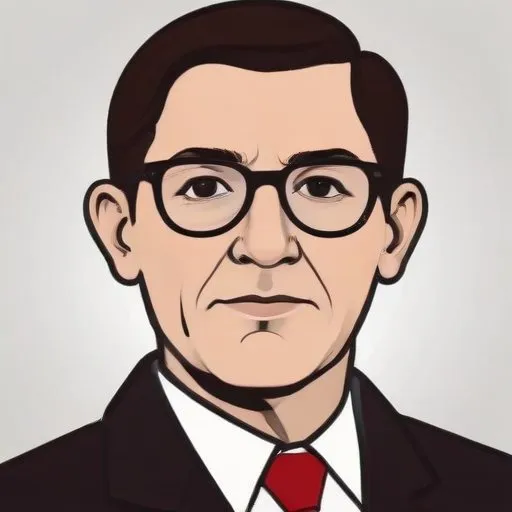
Developed pioneering work in automotive engineering, particularly in the field of vehicle dynamics, and held esteemed academic positions.
Clark L. Brundin was a renowned American-born academic who left an indelible mark on the world of education and public service. As the former Vice-Chancellor of the University of Warwick, President of Templeton College, and an Oxford councillor, Brundin's dedication to excellence in education and governance is a testament to his commitment to the betterment of society.
Born on March 21, 1931, in Los Angeles County, California, Brundin's academic journey began at the University of Oxford, where he joined the Engineering Department in 1957. As a teacher and researcher in high altitude aerodynamics, Brundin became a Fellow and Tutor in Jesus College, Oxford.
From 1985 to 1992, Brundin served as the Vice-Chancellor of the University of Warwick, where he implemented innovative strategies to enhance academic excellence and foster a culture of inclusivity. His leadership prowess was further demonstrated as the founding director of the Saïd Business School, established in 1992, and as President of Templeton College.
Brundin's commitment to public service was evident in his role as a Liberal Democrat city councillor from 2004. He was an active member of the Audit Committee, the Finance Scrutiny Committee, the Housing Advisory Board, and the Strategic Development Control Committee, among others. His tireless efforts to promote good governance and accountability earned him a reputation as a dedicated public servant.
Brundin's passion for education and community development led him to serve as a governor of Oxford Polytechnic (now Oxford Brookes University) and a non-executive director of Blackwell Science. His dedication to the betterment of society was further exemplified through his roles on various panels and committees.
Clark L. Brundin's remarkable life was a testament to his unwavering commitment to education, public service, and governance. His legacy continues to inspire future generations of scholars, policymakers, and community leaders. Through his tireless efforts, Brundin left an indelible mark on the world, reminding us of the transformative power of education and the importance of dedicated public service.
Clark L. Brundin passed away on May 3, 2021, at the age of 90, leaving behind a rich legacy of academic excellence, public service, and community engagement. His life's work serves as a beacon of inspiration, reminding us of the impact one individual can have on the world.
Born in 1806
A visionary engineer who revolutionized transportation with innovative designs, including the iconic Clifton Suspension Bridge, which transformed urban landscapes.
Born in 1781
Designed the Liverpool and Manchester Railway, a pioneering feat that revolutionized transportation and paved the way for modern rail networks.
Born in 1791
Pioneering scientist who discovered electromagnetic induction, formulated the laws of electrolysis, and invented the first electrical generator, revolutionizing our understanding of electricity and its applications.
Born in 1736
Improved steam engine efficiency, revolutionizing industry and transportation. Known for his innovative designs and patents that transformed the Industrial Revolution.
Born in 1791
A pioneer in computer science, credited with inventing the first mechanical computer, the Difference Engine, and conceptualizing the Analytical Engine, a precursor to modern computers.
Born in 1815
Pioneering mathematician and computer scientist who wrote the first algorithm intended to be processed by a machine, and is often considered the first computer programmer. Her work on Charles Babbage's Analytical Engine envisioned its potential to go beyond mere calculation and perform any task that could be expressed in a series of steps.
Born in 1856
A pioneering engineer who harnessed the power of alternating current (AC) to transform the world's electrical systems, and is credited with developing groundbreaking technologies like radio communication and X-ray imaging.
Born in 1847
A pioneer in innovation, credited with developing groundbreaking inventions that revolutionized the way people live and communicate, including the light bulb and phonograph.
