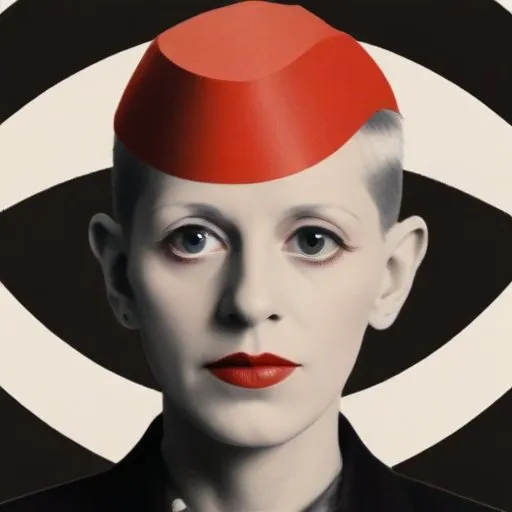
Claude Cahun: The Pioneering Surrealist Photographer and Writer
Early Life and Adoption of Pseudonym
Claude Cahun, born Lucy Renee Mathilde Schwob on October 25, 1894, was a French surrealist photographer, sculptor, and writer known for her groundbreaking work in blurring the lines of gender and identity. Adopting the pseudonym Claude Cahun in 1914, this innovative artist consistently referred to herself as "elle" (she) in her writing, emphasizing her fluid gender identity.
The Surrealist Visionary: Photography and Writing
Cahun is best known for her photographic self-portraits, which challenged the strict gender roles of her time. Her work in this medium showcased a wide range of personas, from masculine to feminine, often combining elements of both. Her writing, particularly in her book "Disavowals," further explored the notion of gender fluidity, as she wrote, "Masculine? Feminine? It depends on the situation. Neuter is the only gender that always suits me."
Family and Upbringing
Born into a well-off literary Jewish family in Nantes, Cahun's uncle was the avant-garde writer Marcel Schwob, and her great-uncle was the Orientalist David Léon Cahun. Her mother, Mary-Antoinette Courbebaisse, suffered from mental illness, which led to her permanent internment at a psychiatric facility when Cahun was just four years old. She was subsequently raised by her grandmother, Mathilde.
Education and Early Career
Cahun attended a private school, Parsons Mead School in Surrey, after experiencing antisemitism at high school in Nantes. She later attended the University of Paris, Sorbonne, where she began making photographic self-portraits as early as 1912, at the age of 18. She continued taking images of herself throughout the 1930s, showcasing her growing mastery of the medium.
Personal Life and Relationships
Around the early 1920s, Cahun settled in Paris with her lifelong partner, Suzanne Malherbe, with whom she shared a deep creative and emotional bond. This partnership would last for over three decades, until Cahun's passing in 1954.
Resistant and Propagandist during World War II
During World War II, Cahun was an active resistance worker and propagandist. Alongside
André Breton and others, she founded the leftist group Contre Attaque, a union of communist writers, artists, and workers. Her contributions to the resistance efforts remain a testament to her unwavering commitment to social justice and activism.
Legacy and Historical Context
Cahun's pioneering work in photography, writing, and activism has had a profound impact on modern society. Her commitment to challenging traditional gender roles and exploring the fluidity of identity has inspired countless artists, writers, and thinkers. Today, her work is recognized as a vital contribution to the development of surrealist art and literature, cementing her place as a trailblazing figure in the history of modern art.
Major Works and Career Highlights
- Photographic self-portraits (1912-1930s)
- "Disavowals" (writing, 1930)
- Contre Attaque (resistance group, founded 1940s)
- Collaborations with André Breton and other surrealist artists
Influence on Modern Society
Cahun's influence extends far beyond the realm of art and literature. Her exploration of gender fluidity and identity has had a profound impact on modern society, paving the way for future generations of LGBTQ+ individuals. Her commitment to social justice and activism continues to inspire artists, writers, and thinkers today.
Conclusion
Claude Cahun's remarkable life and work serve as a testament to the power of creativity, activism, and self-expression. Her pioneering spirit, reflected in her groundbreaking photography, writing, and activism, continues to inspire and influence art, literature, and modern society. As a true visionary, Cahun's legacy will forever be etched in the annals of art history, ensuring her place as a pioneering figure in the development of surrealist art and literature.
FAQ
What were Claude Cahuns contributions to photography?
Claude Cahun was a French photographer and sculptor known for her pioneering work in self-portraiture and surrealist photography. Her contributions to photography include experimenting with techniques like montage and manipulating prints to create thought-provoking and often humorous images.
What is Claude Cahuns most famous work?
One of Claude Cahuns most famous works is the series of self-portraits she took in the 1920s and 1930s, which showcased her androgynous appearance and challenged traditional gender norms.
What was Claude Cahuns role in the Surrealist movement?
Claude Cahun was closely associated with the Surrealist movement, and her work was featured in several Surrealist exhibitions and publications. Her photography and writings explored themes of identity, gender, and sexuality, which resonated with the movements focus on the subconscious and irrational.
What was Claude Cahuns relationship with Marcel Moore?
Claude Cahun was in a long-term romantic relationship with Marcel Moore, a French artist and illustrator. The two women lived together on the island of Jersey and collaborated on various artistic projects.
What is Claude Cahuns legacy in contemporary art?
Claude Cahuns work has had a significant impact on contemporary art, inspiring artists who explore themes of identity, gender, and sexuality. Her pioneering work in self-portraiture and surrealist photography has also influenced the development of feminist and queer art movements.