


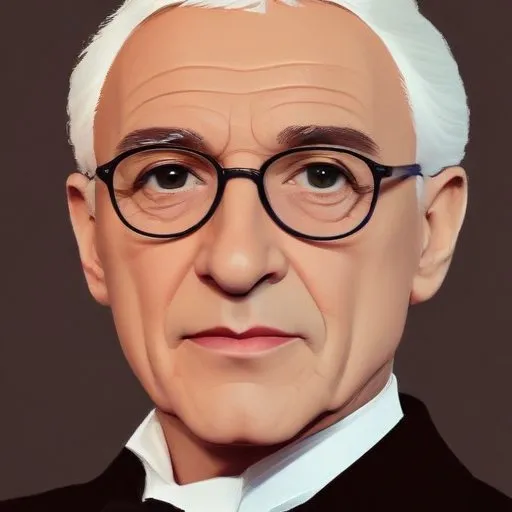
French author of fantastical and supernatural fiction, particularly known for his short stories that often blurred the lines between reality and the unknown.
Claude Seignolle was a renowned French author, best known for his work in folklore and horror, with a career spanning over seven decades. His writing often delved into the realms of the supernatural, weaving together elements of myth, legend, and terror.
Seignolle was born on June 25, 1917, in France. His family moved to Chatenay-Malabry when he was just 12 years old, where he developed a strong interest in archaeology, encouraged by his history teacher at Lakanal high school in Sceaux. This was where he first met the famous folklorist Arnold Van Gennep, who would later have a significant impact on his work.
In the 1930s, Seignolle toured Hurepoix with his brother Jacques, collecting local folklore and legends. This experience led to the publication of their joint work, The Folklore of Hurepoix, in 1937. The book received praise from literary figures such as Pierre Mac Orlan and Blaise Cendrars.
In 1945, Seignolle published his first novel, Le Rond des sorciers, marking a shift towards fiction writing. This was followed by a series of supernatural horror novels, including The Accursed, which cemented his reputation as a master of the horror genre.
Seignolle's writing style was characterized by a matter-of-fact approach to the supernatural, making the fantastical seem disturbingly real. This unique approach has influenced many horror writers and earned him recognition as one of the greatest horror writers. Lawrence Durrell, a prominent author, praised Seignolle's work, noting that his approach made the reader "rapidly find himself believing" in the supernatural.
In 2008, Seignolle received the prestigious Prix Alfred Verdaguer from the French Academy. A literary prize bearing his name was established in 2004, recognizing works related to French folklore and awarded annually at the Festival Imaginales.
Seignolle's work has been translated into multiple languages, including English. Some of his notable works include Man with Seven Wolves and The Child's World. His contributions to folklore and horror have left an indelible mark on French literature, ensuring his legacy as a master of the dark and fantastical.
In June 2017, Seignolle celebrated his 100th birthday, a testament to his remarkable life and enduring legacy. He passed away on July 13, 2018, at the age of 101, leaving behind a body of work that continues to captivate readers and inspire writers.
Born in 1821
A pioneering realist novelist who crafted meticulous, psychologically nuanced portrayals of 19th-century French life, particularly in his iconic novel "Madame Bovary".
Born in 1840
A pioneering figure in naturalist literature, known for his influential novels that exposed social ills and championed reform, such as "Germinal" and "Nana".
Born in 1850
A 19th-century French literary mastermind who crafted hauntingly beautiful short stories and novels that probed the human psyche, often with a dark, ironic twist. His works remain widely read and adapted today.
Born in 1905
Existentialist philosopher and playwright who argued that humans have complete freedom to choose their actions and create their own meaning in life, influencing modern thought on morality and individual responsibility.
Born in 1908
A pioneering feminist philosopher who wrote extensively on ethics, politics, and gender, famously arguing that "one is not born, but rather becomes, a woman."
Born in 1913
A French novelist, philosopher, and journalist who wrote influential works like "The Stranger" and "The Plague", exploring absurdism and the human condition.
Born in 1869
A French literary giant, renowned for his novels and essays that explored the human condition, morality, and the search for authenticity. His works often blurred the lines between fiction and autobiography.
