


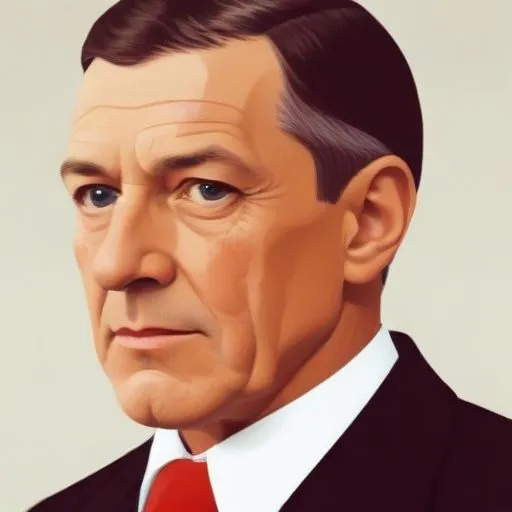
A renowned statistician and academic who made significant contributions to the field of statistics and education, particularly in the UK. He's known for his work on the UK's education system and statistical analysis.
Claus Moser, Baron Moser, was a British statistician renowned for his groundbreaking contributions to both academia and the Civil Service. As a self-proclaimed "nonmathematical statistician," Moser's work defied conventional boundaries, leaving an indelible mark on the field of statistics.
Born in Berlin on November 24, 1922, Moser was the son of Dr. Ernst Ernest Moser, a private banker, and Lotte (née Goldberg), a talented amateur musician. In 1936, he moved to England with his family, where he attended Frensham Heights School and later the London School of Economics (LSE).
Moser's academic prowess earned him a string of esteemed positions at the LSE, culminating in his appointment as Professor of Social Statistics in 1961. His work was recognized with numerous honors, including election as a Fellow of the American Statistical Association (1965) and appointment as a Commander of the Order of the British Empire (CBE) in the 1965 New Year Honours.
In 1967, Harold Wilson appointed Moser Director of the Central Statistical Office, a position he held until 1978. However, his appointment was not without controversy, as he had previously been rejected for the same role in 1965 due to his status as a former "enemy alien." This setback did not deter Moser, who went on to become a Knight Commander of the Bath (KCB) in the 1973 New Year Honours.
Moser's influence on modern statistics is profound. He prided himself on being a "nonmathematical statistician," and his work continues to inspire new generations of researchers. His legacy extends beyond academia, with his contributions to the Civil Service shaping the course of British policy.
Moser's approach to statistics was rooted in a deep understanding of the human experience. He believed that statistics should be used to inform policy, rather than dictate it. This philosophy is reflected in his work, which consistently emphasized the importance of context and nuance in statistical analysis.
Moser's extensive bibliography includes numerous publications on social statistics, economics, and policy. Some of his most notable works include:
In addition to his impressive professional achievements, Moser's life was marked by significant personal milestones. He was interned as an enemy alien in 1940, but later served in the Royal Air Force from 1943 to 1946. He was appointed a life peer in 2001, taking the title Baron Moser of Wienbury.
Moser's work continues to shape our understanding of the world around us. His contributions to the field of statistics have informed policy decisions, improved economic analysis, and inspired new generations of researchers.
Through his dedication to the pursuit of knowledge and his commitment to using statistics for the betterment of society, Claus Moser, Baron Moser, has left an indelible mark on the world of statistics and beyond.
Born in 1920
A British politician who served as President of the European Commission, known for his progressive reforms and efforts to create a more unified Europe. He played a key role in shaping the EU's modern identity.
93 Years Old
A Deputy Prime Minister of the UK, known for his influential role in British politics and his leadership of the Conservative Party during the 1990s. He's also a successful businessman with interests in publishing and property.
Born in 1917
A British politician who served as Chancellor of the Exchequer from 1974 to 1979, known for his efforts to stabilize the UK's economy during a period of high inflation and economic crisis.
75 Years Old
The Prime Minister of the United Kingdom from 2007 to 2010, known for his key role in shaping the country's economy and response to the 2008 global financial crisis.
73 Years Old
The former Prime Minister of the United Kingdom who led the country through a transformative period, including the Iraq War, and is known for his charismatic leadership and controversial decisions.
83 Years Old
A former Prime Minister of the United Kingdom, he led the country from 1990 to 1997, playing a key role in shaping the nation's economy and foreign policy during a tumultuous period.
73 Years Old
A British politician who played a key role in the Northern Ireland peace process and served in various UK cabinet positions, known for his diplomatic efforts and Labour Party leadership.
88 Years Old
A British doctor-turned-politician who served as Foreign Secretary, known for his efforts to reform the UK's National Health Service and his role in shaping European politics.
