


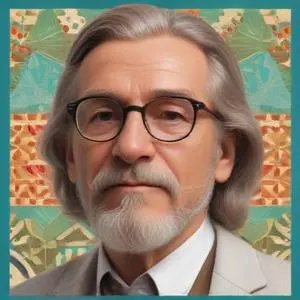
An American anthropologist and academic who interpreted cultures through symbolic analysis, exploring how people create meaning in their lives. He's most known for his work on Balinese culture and his concept of "thick description".
Clifford Geertz, a name synonymous with the realm of cultural anthropology, is renowned for his pioneering work in symbolic anthropology, a school of thought that seeks to comprehend human culture through the lens of symbols, rituals, and beliefs. As a stalwart figure in the field, Geertz's work has had a profound impact on modern anthropology, shaping the way we understand human societies and their intricate web of cultural practices.
Born on August 23, 1926, in San Francisco, Geertz's journey began with a Bachelor of Arts in philosophy from Antioch College in 1950. His academic pursuits led him to Harvard University, where he earned a Ph.D. in anthropology in 1956. Under the guidance of Talcott Parsons, Geertz was trained as an anthropologist, laying the foundation for his future research endeavors.
Geertz's first foray into long-term fieldwork was in Java, Indonesia, alongside his wife, Hildred. Funded by the Ford Foundation and the Massachusetts Institute of Technology, this research expedition marked the beginning of his fascination with the complexities of human culture. He delved deeper into the religious life of a small, upcountry town, immersing himself in the daily lives of a railroad laborers' family for two and a half years. This experience would later culminate in his dissertation, "Religion in Modjokuto: A Study of Ritual Belief in a Complex Society."
Geertz's magnum opus, "The Interpretation of Cultures" (1973), is a seminal work that solidified his position as a leading figure in cultural anthropology. This collection of essays explores the intricacies of human culture, critiquing traditional anthropological approaches and advocating for a more nuanced understanding of symbolic systems. Geertz's work has inspired generations of scholars, influencing the development of anthropology, sociology, and philosophy.
Throughout his illustrious career, Geertz received numerous accolades, including honorary doctorate degrees from esteemed institutions such as Harvard, Cambridge, and the University of Chicago. He was also recognized with the Association for Asian Studies' 1987 Award for Distinguished Contributions to Asian Studies, among other distinguished honors.
Geertz's philosophical stance emphasizes the importance of cultural context in understanding human behavior. He argued that cultural practices and symbols are not mere reflections of social structures, but rather active participants in shaping human experience. This perspective has far-reaching implications for the social sciences, urging scholars to adopt a more empathetic and nuanced approach to studying human societies.
Geertz served in the US Navy during World War II from 1943 to 1945, an experience that likely informed his later research on the complexities of human societies. He was a member of the American Academy of Arts and Sciences, the American Philosophical Society, and the United States National Academy of Sciences.
Geertz's work has transcended the realm of academia, influencing the way we approach cultural diversity, tolerance, and understanding. His ideas have permeated fields such as sociology, philosophy, and psychology, shaping our comprehension of human societies and their intricate cultural tapestries.
As a testament to his enduring legacy, Geertz's work continues to inspire new generations of scholars, policymakers, and thinkers. His influence extends beyond the boundaries of academia, informing our understanding of human societies and their complexities. Through his research, Geertz has left an indelible mark on the world, urging us to embrace the richness and diversity of human cultures.
75 Years Old
A Polish athlete who won Olympic medals in the 400 meters hurdles and 4x400 meters relay at the 1964 Tokyo Olympics, setting multiple national records.
Born in 1901
A pioneering anthropologist and author who studied and wrote about diverse cultures, shedding light on human behavior and societal norms. Her groundbreaking work continues to influence modern anthropology and beyond.
Born in 1858
Pioneering anthropologist and linguist who challenged prevailing racial and cultural stereotypes, establishing modern anthropology and contributing significantly to our understanding of human diversity and cultural relativity.
Born in 1872
A pioneering sociologist and anthropologist who developed the concept of "gift economy" and explored the social significance of exchange and reciprocity in human societies.
