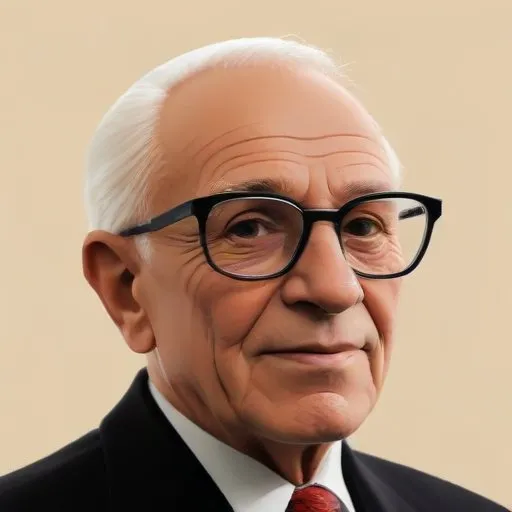
Clyde Kluckhohn: The Pioneering Anthropologist Behind Navajo Cultural Insights
A Legendary Figure in American Anthropology
Clyde Kluckhohn is renowned for his groundbreaking ethnographic work among the Navajo people, significantly contributing to the development of cultural theory within American anthropology. His extensive research and publications have left an indelible mark on the field, shaping our understanding of Native American cultures and societies.
Early Life and Education: A Journey of Discovery
Born on January 11, 1905, in Le Mars, Iowa, Kluckhohn's early life was marked by a series of events that would shape his future pursuits. He matriculated at Princeton University but was forced to take a break due to ill health, during which he convalesced on a ranch in New Mexico owned by his mother's cousin's husband, Evon Z. Vogt. This experience not only introduced him to the neighboring Navajo people but also sparked a lifelong passion for their language and culture.
He resumed his studies at the University of Wisconsin-Madison, earning his AB in Greek in 1928. Kluckhohn then continued his education as a Rhodes Scholar at Corpus Christi College, Oxford, where he studied classics from 1928 to 1930. Subsequently, he pursued anthropology at the University of Vienna, where he was exposed to psychoanalysis.
A Career of Cultural Immersion and Innovation
Kluckhohn's academic journey led him to Harvard University, where he earned his Ph.D. in anthropology in 1936. He remained at Harvard as a professor of Social Anthropology and later Social Relations, dedicating his life to the study of human cultures.
Major Works and Contributions
In 1949, Kluckhohn embarked on a landmark project, studying five adjacent communities in the Southwest: Zuni, Navajo, Mormon (LDS), Spanish-American (Mexican-American), and Texas Homesteaders. This comprehensive research, conducted alongside his wife Florence Rockwood Kluckhohn and colleagues Evon Z. Vogt and Ethel M. Albert, among others, led to the development of a key methodological approach.
- His work led to the publication of several influential books, including To the Foot of the Rainbow (1927) and Beyond the Rainbow (1933), which offered unique insights into Navajo culture.
- Kluckhohn's contributions extended beyond anthropology, influencing the fields of sociology, psychology, and philosophy.
Awards and Honors: Recognition for a Lifetime of Achievement
Kluckhohn's outstanding contributions earned him numerous accolades, including:
- Member of the American Academy of Arts and Sciences (1944)
- Member of the United States National Academy of Sciences (1952)
- Member of the American Philosophical Society (1952)
Legacy and Impact on Modern Society
Clyde Kluckhohn's pioneering work has had a profound impact on our understanding of cultural diversity and the importance of interdisciplinary approaches to social sciences. His legacy continues to inspire generations of anthropologists, sociologists, and scholars, shaping the course of anthropological research and beyond.
Kluckhohn's untimely passing on July 28, 1960, near Santa Fe, New Mexico, marked the end of an era, but his work remains a testament to his unwavering dedication to the pursuit of knowledge and his profound respect for the cultures he studied.
FAQ
What were Clyde Kluckhohns contributions to anthropology?
Clyde Kluckhohn made significant contributions to anthropology, including his work on Navajo culture and his development of the concept of culture lag. He also emphasized the importance of understanding cultural context in anthropological research.
What was Clyde Kluckhohns approach to studying culture?
Clyde Kluckhohns approach to studying culture was holistic, emphasizing the importance of understanding cultural systems as a whole. He believed that culture could not be reduced to individual components, but rather must be examined in its entirety.
What was Clyde Kluckhohns role in the development of modern anthropology?
Clyde Kluckhohn played a significant role in the development of modern anthropology, as he helped to establish the field as a distinct discipline. His work also helped to shift the focus of anthropology from a solely descriptive approach to a more theoretical and analytical one.
What were Clyde Kluckhohns views on cultural relativism?
Clyde Kluckhohn was a proponent of cultural relativism, arguing that cultures must be understood on their own terms, rather than being evaluated according to external standards. He believed that cultural relativism was essential for truly understanding and appreciating cultural diversity.
What were Clyde Kluckhohns major works?
Clyde Kluckhohns major works include Mirror for Man and Navajo Witchcraft, which explore Navajo culture and society. These works showcase his in-depth knowledge of Navajo culture and his ability to apply anthropological theory to real-world cases.