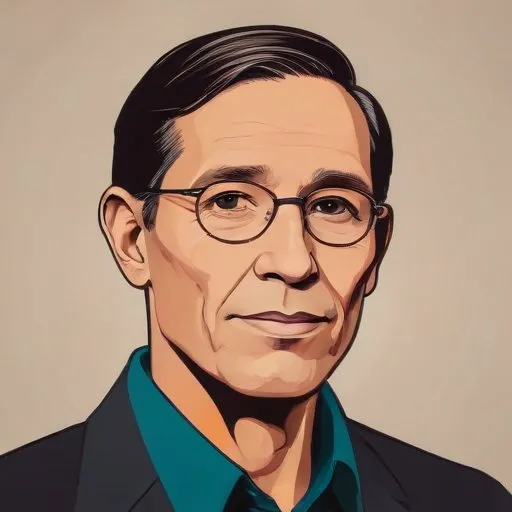
Julian Steward: Pioneering Anthropologist and Architect of Cultural Ecology
A Legacy of Cultural Insights and Theoretical Contributions
Julian Haynes Steward, a trailblazing American anthropologist, is renowned for developing the concept and method of cultural ecology, as well as a scientific theory of culture change. Through his groundbreaking work, Steward has left an indelible mark on the field of anthropology, reshaping our understanding of human societies and their complex relationships with the environment.
Early Life and Formative Experiences
Born on January 31, 1902, in Washington, D.C., Steward's early life was marked by an unhappy childhood, which prompted him to leave for boarding school in Deep Springs Valley, California, at the age of 16. This formative experience had a profound impact on his academic and career interests, as he became deeply engaged with the land and the Northern Paiute Amerindians who lived there.
Academic Pursuits and Influential Mentors
Steward's academic journey began at UC Berkeley, where he studied for a year under the guidance of esteemed professors Alfred Kroeber and
Robert Lowie. He later transferred to Cornell University, graduating in 1925 with a B.Sc. in zoology. Although Cornell did not have an anthropology department at the time, its president, Livingston Farrand, advised Steward to pursue his passion for anthropology at Berkeley.
Theoretical Contributions and Career Highlights
Steward's dissertation, "The Ceremonial Buffoon of the American Indian, a Study of Ritualized Clowning and Role Reversals," was accepted in 1929. This seminal work laid the foundation for his subsequent research on cultural ecology, which explored the dynamic relationships between human societies and their environments.
Some of Steward's most significant contributions include:
- Development of the theory and method of cultural ecology, which emphasizes the adaptive responses of human societies to their environments.
- Pioneering work on the concept of cultural evolution, which posits that human societies evolve through a series of adaptive stages.
- Extensive research on the cultural practices and social organizations of indigenous peoples, including the Northern Paiute Amerindians.
Influence on Modern Anthropology and Beyond
Steward's work has had a profound impact on modern anthropology, influencing generations of scholars and researchers. His theoretical contributions have also resonated beyond the field of anthropology, informing research in fields such as environmental studies, sociology, and geography.
Personal Milestones and Key Life Events
Steward's legacy extends beyond his academic contributions. He played a pivotal role in establishing the anthropology department at the University of Michigan, where he taught until 1930. Throughout his life, Steward remained committed to his work, leaving behind a rich legacy that continues to inspire and inform research today.
Historical Context and Legacy
Steward's work must be understood within the historical context of early 20th-century anthropology, which was characterized by a growing interest in cultural evolution and the development of theoretical frameworks. As a pioneer in the field, Steward's contributions have had a lasting impact on our understanding of human societies and their complex relationships with the environment.
Final Reflections
Julian Steward's remarkable life and work serve as a testament to the power of dedication, curiosity, and intellectual rigor. Through his groundbreaking research and theoretical contributions, Steward has left an indelible mark on the field of anthropology, ensuring that his legacy will continue to inspire and inform future generations of scholars and researchers.
FAQ
What was Julian Stewards most significant contribution to anthropology?
Julian Stewards most significant contribution to anthropology was his development of the concept of cultural ecology, which emphasized the importance of environmental factors in shaping human societies.
How did Julian Stewards research approach differ from others?
Julian Stewards research approach differed from others in that it focused on the cultural and environmental factors that shaped human societies, rather than solely on social structures or cultural traits.
What was Julian Stewards work on Native American cultures?
Julian Stewards work on Native American cultures focused on the Great Basin region, and his research provided valuable insights into the cultural and ecological adaptations of Native American societies.
How did Julian Stewards work influence anthropology?
Julian Stewards work influenced anthropology by shifting the focus towards cultural ecology and the importance of environmental factors in understanding human societies.
Is Julian Stewards legacy still remembered today?
Yes, Julian Stewards legacy is still remembered today, with his work on cultural ecology continuing to shape the field of anthropology and inspire new generations of researchers.