


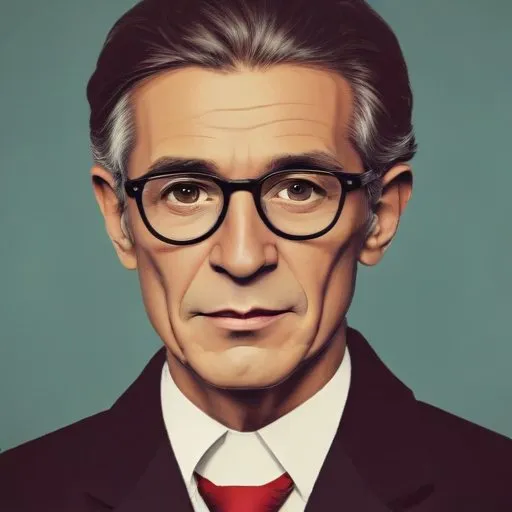
A pioneering anthropologist who studied Native American cultures, developing theories on cultural evolution and social organization. His work greatly advanced the field of anthropology.
Robert Lowie, an Austrian-born American anthropologist, is renowned for his groundbreaking research on Indigenous peoples of the Americas. Through his exhaustive fieldwork and scholarly contributions, Lowie has been instrumental in the development of modern anthropology, earning himself the distinction of being one of the key figures in the history of the discipline.
Born Robert Heinrich Löwe on June 12, 1883, in Vienna, Austria-Hungary, Lowie spent the first ten years of his life in Europe before migrating to the United States in 1893. He pursued his academic interests at the College of the City of New York, where he earned a BA in Classical Philology in 1901. During this period, he formed a lasting friendship with Paul Radin, a fellow scholar who would later become a prominent anthropologist in his own right.
Lowie's intellectual curiosity soon led him to study chemistry at Columbia University, but it was his encounter with anthropology under the guidance of Franz Boas, Livingston Farrand, and Clark Wissler that truly ignited his passion. This pivotal moment marked the beginning of Lowie's illustrious career in anthropology, with Wissler's influence paving the way for his first fieldwork experience among the Northern Shoshone on the Lemhi Reservation in Idaho in 1906.
Lowie's academic prowess earned him a Ph.D. in 1908, with a dissertation titled "The Test-Theme in North American Mythology." This milestone marked the beginning of a distinguished career, with significant contributions to the field of anthropology. In 1909, he became the assistant curator to Clark Wissler at the American Museum of Natural History in New York, solidifying his reputation as a specialist in American Indians.
As his expertise grew, Lowie embarked on numerous expeditions to the Great Plains, conducting ethnographic fieldwork among the Absarokee Crow, Arikaree, Hidatsa, Mandan, and Shoshone between 1907 and 1931. His work led to a deep understanding of the Crow Indians, and his research was instrumental in shaping the discipline of anthropology. In 1917, Lowie became an assistant professor at the University of California, Berkeley, and later held the position of professor of anthropology from 1925 until his retirement in 1950.
Throughout his career, Lowie's work was characterized by a deep empathy for the cultures he studied. He rejected the prevailing views of his time, which often portrayed Indigenous peoples as "primitive" and "backward." Instead, Lowie advocated for a nuanced understanding of these cultures, emphasizing their inherent value and complexity.
Lowie's commitment to cultural relativism was reflected in his methodological approach, which privileged direct observation and immersion in the cultures he studied. This perspective enabled him to challenge prevailing stereotypes and contribute to a more informed understanding of Indigenous cultures, paving the way for future generations of anthropologists.
Robert Lowie's enduring legacy is a testament to his tireless efforts to promote cross-cultural understanding. Through his work, he has inspired countless anthropologists, indigenous rights activists, and scholars from diverse disciplines. His contributions have had a profound impact on our understanding of Indigenous cultures, challenging dominant narratives and promoting a more inclusive and nuanced perspective.
Today, Lowie's work continues to resonate, informing contemporary debates on cultural heritage, indigenous rights, and the importance of preserving cultural diversity. As a pioneering anthropologist, his influence extends beyond the academic sphere, shaping our understanding of the world and our place within it.
"The only way to understand a culture is to immerse oneself in it." - Robert Lowie
"The task of anthropology is not to impose our own notions on others, but to understand theirs." - Robert Lowie
Robert Lowie's remarkable journey serves as a testament to the power of dedication, curiosity, and empathy. As we continue to navigate the complexities of our globalized world, his pioneering work in anthropology reminds us of the importance of understanding and respecting cultural diversity.
Born in 1858
Pioneering anthropologist and linguist who challenged prevailing racial and cultural stereotypes, establishing modern anthropology and contributing significantly to our understanding of human diversity and cultural relativity.
Born in 1876
Pioneering anthropologist and ethnologist who explored the intersection of culture and psychology, shedding light on the complexities of human societies and behaviors.
Born in 1901
A pioneering anthropologist and author who studied and wrote about diverse cultures, shedding light on human behavior and societal norms. Her groundbreaking work continues to influence modern anthropology and beyond.
Born in 1926
An American anthropologist and academic who interpreted cultures through symbolic analysis, exploring how people create meaning in their lives. He's most known for his work on Balinese culture and his concept of "thick description".
