


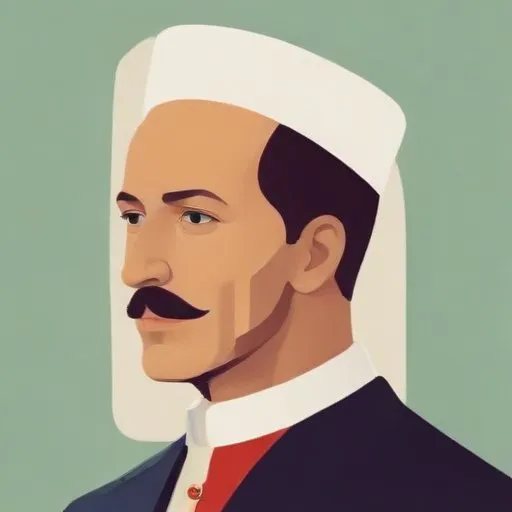
King of the Lombards and King of Italy from 1093 to 1101, known for his attempts to assert imperial authority over the papacy and his role in the Investiture Controversy.
Conrad II of Italy, also known as Conrad III, is renowned for his supremacy as the Duke of Lower Lorraine, King of Germany, and King of Italy, leaving an indelible mark on European history. Born on February 12, 1074, Conrad's life was steeped in power struggles, royal intrigue, and dynastical legacy.
Conrad was born at Hersfeld Abbey while his father, Holy Roman Emperor Henry IV, was battling against the Saxon rebellion. Just three days later, he was baptized in the abbey, solidifying his path to royalty. Conrad's older brother, Henry, had been born and died in the same month of August 1071. After Henry's victory against the Saxons, he arranged for an assembly at Goslar on Christmas Day 1075 to swear an oath recognizing Conrad as his successor.
Following the death of Duke Godfrey IV of Lower Lorraine on February 22, 1076, Conrad's father refused to appoint the late duke's chosen successor, Godfrey of Bouillon, instead naming his two-year-old son Duke of Lower Lorraine. Albert III of Namur, the deceased duke's brother-in-law, was appointed as Conrad's viceduke to perform daily government functions. This decision led to the decline of ducal authority in Lower Lorraine. Meanwhile, Conrad spent most of his life in Italy, where he held significant power and influence.
Conrad's rule in Lorraine and Germany was largely nominal, with his father wielding significant control. However, in Italy, Conrad held substantial power, earning him the reputation as a formidable monarch. During his reign, the Peace of God was introduced into the diocese of Liège in 1082. Conrad subscribed to his first royal charter in 1079 and remained in Italy to act as a pledge to the imperialist party, under the care of Archbishop Tedald of Milan and Bishop Denis of Piacenza.
Conrad II of Italy's reign marked a significant period in European history, with his influence extending beyond his territories. His life and legacy serve as a testament to the complexities of medieval politics and the struggles for power within royal families. Conrad's story continues to fascinate historians and scholars, offering valuable insights into the intricate web of alliances, rivalries, and dynastical ambitions that shaped the course of European history.
Conrad II of Italy's remarkable life and legacy serve as a poignant reminder of the complexities and intrigues that underscored medieval European history. His story continues to captivate and inspire, offering a window into the lives of those who shaped the course of human history.
Born in 1086
Ruling the Holy Roman Empire from 1111 to 1125, he was a powerful monarch who clashed with the Catholic Church over investiture, sparking a major controversy. He's also known for his complex, often tumultuous relationships with nobles and bishops.
Born in 1194
Ruling the Holy Roman Empire from 1220 to 1250, he was a powerful and cultured leader who promoted arts, science, and architecture, and was known for his impressive constructions, including the Castel del Monte.
