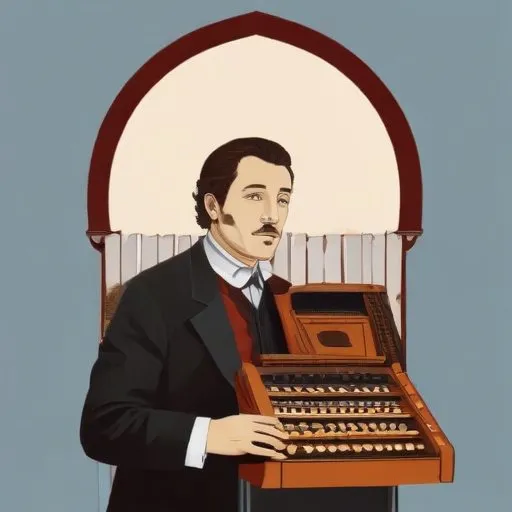
Cristofano Malvezzi: The Renaissance Maestro of Music
A Pioneer of the Late Renaissance
Cristofano Malvezzi was a renowned Italian organist and composer of the late Renaissance, celebrated for his invaluable contributions to the transition from the Renaissance to the Baroque style. Born in Lucca in 1547, Malvezzi's remarkable talent and dedication earned him a prestigious position as one of the most famous composers in Florence during his lifetime.
Early Life and Career
At the tender age of four, Malvezzi moved to Florence with his family, where he would later serve the esteemed Medici family from 1562. During this period, he honed his skills as an organist, holding various posts in the city and teaching students, including the illustrious
Jacopo Peri, who is often credited as the inventor of opera.
Rise to Prominence
Malvezzi's exceptional talent and dedication led to his appointment as maestro di cappella at the Florence Cathedral and S Giovanni Battista in 1573, the highest position for a musician in the city. This prestigious role cemented his reputation as a master composer and organist.
Compositional Legacy
Malvezzi's oeuvre includes three books of madrigals, a book of ricercars, and a limited number of sacred compositions. Notably, he composed music for the La Pellegrina intermedi of 1589, a grandiose production designed by the Florentine Camerata, a group of progressive musicians and poets who sought to recreate the music of ancient Greece.
Connections to the Florentine Camerata
Malvezzi's associations with the Florentine Camerata are evident in his dedication of a book of ricercars to Count Giovanni de Bardi and a book of madrigals to Emilio de Cavalieri. Furthermore, his music showcases a distinct monodic style, characteristic of the Camerata's innovative approaches to music.
Grand Compositions
One of Malvezzi's most celebrated compositions is a colossal setting of "O fortunato giorno," written for a sumptuous intermedio honoring an aristocratic marriage. This magnificent work features thirty separate vocal parts, divided into seven spatially separated choirs, showcasing his mastery of complexity and grandeur.
Legacy and Impact
Cristofano Malvezzi's contributions to the world of music are undeniable. His innovative approaches, dedication to his craft, and associations with the Florentine Camerata have left an indelible mark on the development of music during the late Renaissance. His legacy continues to inspire and influence musicians and composers to this day.
Personal Life
Malvezzi's brother, Alberigo, was also an organist, and the two brothers shared a passion for music. Little is known about Malvezzi's personal life beyond his professional accomplishments, but his music speaks volumes about his artistic vision and dedication to his craft.
Conclusion
Cristofano Malvezzi's remarkable life and legacy serve as a testament to the power of innovation and creativity. As a pioneer of the late Renaissance, he paved the way for future generations of musicians and composers, leaving behind a rich and enduring musical heritage.
FAQ
What was Cristofano Malvezzis role in Renaissance music?
Cristofano Malvezzi was a prominent Italian organist and composer during the Renaissance. He contributed significantly to the development of church music, creating works that showcased his mastery of polyphony and counterpoint.
How did Cristofano Malvezzis music reflect Renaissance ideals?
Cristofano Malvezzis music embodied the Renaissance ideals of humanism, reflecting the eras emphasis on classicism, harmony, and balance. His compositions showcased his skill in blending different musical styles and creating complex, intricate works.
What was Cristofano Malvezzis contribution to the development of the motet?
Cristofano Malvezzi was a key figure in the development of the motet, a polyphonic choral composition popular during the Renaissance. His motets demonstrate his mastery of counterpoint and his ability to create complex, expressive works.
How did Cristofano Malvezzis music influence later generations?
Cristofano Malvezzis music had a profound impact on later generations of composers, including notable figures such as Palestrina and Lasso. His works continue to be studied and admired for their mastery of Renaissance musical styles.
What is Cristofano Malvezzis legacy in Italian music?
Cristofano Malvezzis legacy in Italian music is significant, as he is considered one of the most important figures of the Renaissance. His compositions continue to be celebrated for their beauty, complexity, and mastery of Renaissance musical styles.