


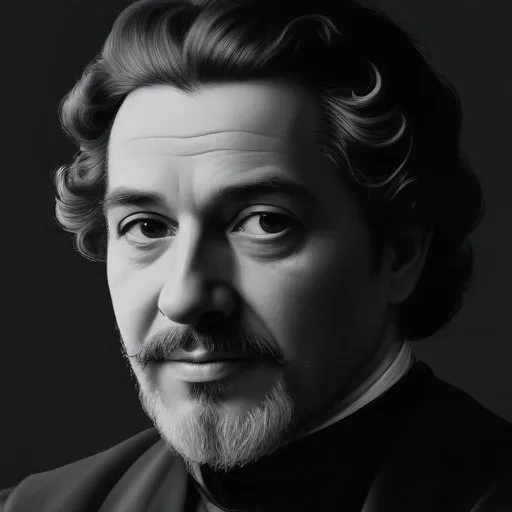
A renowned composer and singer of the late Renaissance period, known for his innovative use of monody and development of the opera genre.
Giulio Caccini, a renowned Italian composer, singer, and instrumentalist, is celebrated as one of the founders of the genre of opera and a pioneer of the Baroque style. His trailblazing contributions to music in the late Renaissance and early Baroque eras have left an indelible mark on the world of classical music.
Born on October 8, 1551, in Rome, Italy, Caccini was the son of a carpenter, Michelangelo Caccini. Little is known about his early life, but it is believed that he began studying the lute, viol, and harp in Rome, where he quickly gained recognition as a talented singer.
In the 1560s, Francesco de Medici, Grand Duke of Tuscany, was impressed by Caccini's talent and invited him to Florence for further study. By 1579, Caccini was singing at the Medici court, where he became a prominent figure in the musical scene. He was a tenor and could accompany himself on the viol or archlute, performing at various entertainments, including weddings and state affairs. During this time, he also participated in the Florentine Camerata, a group of humanists, writers, musicians, and scholars dedicated to reviving the lost glory of ancient Greek dramatic music.
The Florentine Camerata, with Caccini's exceptional skills as a singer, instrumentalist, and composer, developed the concept of monody, an emotionally affective solo vocal line accompanied by simple chordal harmony on one or more instruments. This revolutionary departure from the polyphonic practice of the late Renaissance led to the creation of opera, a new art form that combined music, drama, and visual spectacle.
Caccini was the father of two notable musicians, Francesca Caccini, a composer, and Settimia Caccini, a singer. He died on December 10, 1618, leaving behind a lasting impact on the world of music. His contributions paved the way for future generations of composers, including Claudio Monteverdi, and continue to inspire musicians and music lovers today.
"Music is the medicine of the soul, and I am its devoted servant." - Giulio Caccini
Giulio Caccini's remarkable journey, marked by innovation, creativity, and passion, has left an indelible mark on the world of classical music. His pioneering spirit and contributions continue to inspire and influence musicians today, cementing his place as one of the most important figures in the history of music.
Born in 1567
A Baroque music pioneer who revolutionized the opera and sacred music genres with innovative harmonies and orchestration, leaving an indelible mark on classical music.
Born in 1585
A renowned Baroque composer and organist, known for his contributions to the development of the oratorio and passion genres, creating over 500 works that showcased his mastery of choral music.
Born in 1602
A 17th-century Venetian composer who revolutionized opera with his innovative and expressive style, creating over 40 operas that showcased his mastery of harmony and melody.
Born in 1685
A virtuosic harpsichordist and composer, renowned for crafting over 550 sonatas that showcased his innovative and expressive style, blending Italian and Portuguese influences. 42
Born in 1678
A virtuosic violinist and prolific composer, he crafted over 400 concertos, including "The Four Seasons," which remains a beloved and iconic masterpiece of classical music.
Born in 1660
Baroque-era mastermind behind over 600 cantatas, operas, and orchestral works, shaping the course of classical music with his innovative style and harmonic genius.
