


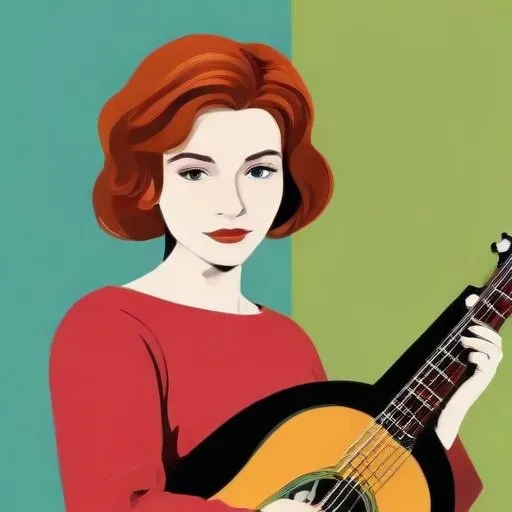
A renowned Baroque-era musician, she composed and performed her own music, including operas and sacred pieces, and was one of the first women to do so. Her works showcased her mastery of harmony and melody.
Francesca Caccini was a trailblazing Italian composer, singer, lutenist, poet, and music teacher who dominated the early Baroque era with her extraordinary talent. Her remarkable career was marked by her groundbreaking composition, La liberazione di Ruggiero, widely considered the oldest surviving opera written by a woman composer.
Born on September 18, 1587, in Florence, Italy, Francesca received a humanistic education that included Latin, Greek, modern languages, literature, mathematics, and music. Her father, Giulio Caccini, a renowned composer and singer, provided her with early musical training, which would later shape her illustrious career.
Francesca's talent was first recognized at the Medici court, where she performed with her family ensemble, known as le donne di Giulio Romano. By 1614, she had become the court's most highly paid musician, earning recognition for her exceptional musical virtuosity, which exemplified the idea of female excellence.
La liberazione di Ruggiero, composed in 1625, is Francesca's most celebrated work, a testament to her innovative style and mastery of the opera genre. This four-act opera, written for the wedding of Prince Lorenzo de' Medici and Princess Margherita of Savoy, showcases her ability to craft captivating music that tells a compelling story.
Francesca's remarkable career not only solidified her own position as a prominent composer but also paved the way for future generations of women in music. Her influence helped to establish women as equal partners in the creative process, challenging the traditional male-dominated music scene.
In addition to her performing career, Francesca was a dedicated teacher and composer, creating music for the court and private patrons. Her students included members of the Medici family and other prominent figures of the time.
Little is known about Francesca's personal life, except that she married twice and had no children. Her legacy, however, is undeniable, with her music continuing to inspire and influence composers to this day.
Francesca Caccini's groundbreaking career has left an indelible mark on the world of music. Her innovative compositions, teaching, and performances have inspired generations of musicians, solidifying her position as one of the most important female composers of the Baroque era.
Born in 1819
A renowned 19th-century pianist and composer, she was one of the first females to achieve recognition in a male-dominated field, creating over 60 pieces of music. Her compositions showcased romanticism and lyricism.
Born in 1619
A 17th-century Venetian composer and singer-songwriter, known for her innovative and expressive works, particularly in the genres of opera and cantata. She was one of the first women to compose large-scale operas.
Born in 1665
A pioneering female composer of the Baroque period, known for her innovative and expressive harpsichord music that blended French and Italian styles.
Born in 1620
A pioneering female composer and educator, she broke barriers in 18th-century Italy, leaving a legacy of innovative music and pedagogical methods. Her contributions paved the way for future generations of female musicians.
Born in 1552
A pioneering female artist of the Renaissance, known for her portraits of noblewomen and her innovative use of symbolism, paving the way for future generations of female artists.
Born in 1593
A pioneering female artist of the Baroque period, known for her dramatic and emotionally charged paintings of strong women from mythology and the Bible. Her work often featured powerful female figures and a unique perspective on traditional stories.
