


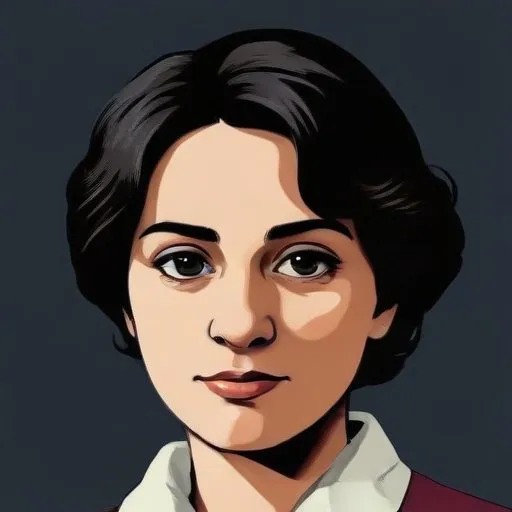
A pioneering female composer and educator, she broke barriers in 18th-century Italy, leaving a legacy of innovative music and pedagogical methods. Her contributions paved the way for future generations of female musicians.
Isabella Leonarda, an Italian composer from Novara, left an indelible mark on the world of music with her prolific compositions, earning her the title of "la Musa novarese" or the muse of Novara. Born on September 6, 1620, Leonarda's extraordinary talent and dedication to her craft resulted in nearly two hundred compositions spanning six decades, cementing her position as one of the most productive female composers of her time.
Leonarda's life was deeply intertwined with the Collegio di Sant'Orsola, an Ursuline convent in Novara, where she entered at the tender age of 16 and spent the remainder of her life. Her family's strong connections with the convent likely contributed to her influential position within the institution, where she held various titles of authority, including madre, superiora, madre vicaria, and consigliera.
Leonarda's published compositions, spanning from 1640 to 1700, showcase her immense talent and versatility. From dialogues to motets, her works demonstrate a remarkable range, earning her recognition in her home city of Novara. Although her music was not widely known beyond Novara, her contribution to the world of music is undeniable.
Lazzaro Agostino Cotta's sonnet, published in praise of Leonarda, compared her musical prowess to the military prowess of Emperor Leopold I, highlighting her significance in the realm of music.
These compositions not only demonstrate Leonarda's skill but also provide a glimpse into her creative evolution over the years.
Leonarda's remarkable talent and dedication to her craft earned her the admiration of her contemporaries. Her reputation as a composer spread throughout Novara, solidifying her position as a prominent figure in the city's musical landscape.
Isabella Leonarda's life and work serve as a testament to the power of dedication, creativity, and perseverance. Her compositions continue to inspire and delight audiences to this day, ensuring her place in the annals of music history.
As "la Musa novarese," Leonarda's harmonious heart beats on, resonating through the centuries, a lasting tribute to the beauty and elegance of her music.
Born in 1587
A renowned Baroque-era musician, she composed and performed her own music, including operas and sacred pieces, and was one of the first women to do so. Her works showcased her mastery of harmony and melody.
Born in 1619
A 17th-century Venetian composer and singer-songwriter, known for her innovative and expressive works, particularly in the genres of opera and cantata. She was one of the first women to compose large-scale operas.
Born in 1665
A pioneering female composer of the Baroque period, known for her innovative and expressive harpsichord music that blended French and Italian styles.
Born in 1591
A renowned 17th-century singer-songwriter, known for her innovative and expressive compositions that blended music and poetry, leaving a lasting impact on the Baroque era's musical landscape.
