


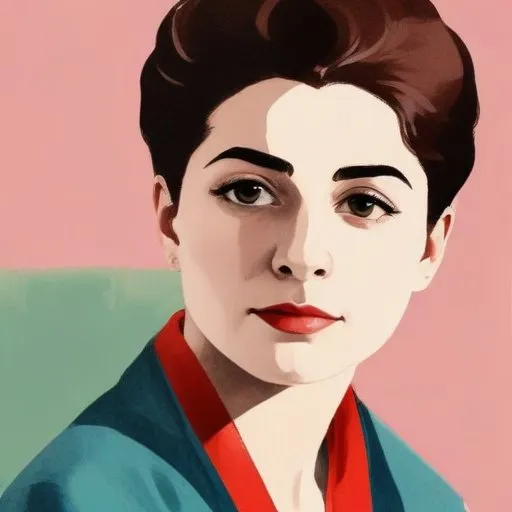
A pioneering female artist of the Renaissance, known for her portraits of noblewomen and her innovative use of symbolism, paving the way for future generations of female artists.
Regarded as the first female career artist in Western Europe, Lavinia Fontana was a renowned Italian Mannerist painter who defied convention and paved the way for future generations of female artists. Her remarkable talent in portraiture, mythology, and religious painting earned her recognition and commissions from prominent patrons, solidifying her position as a respected artist in her own right.
Born on August 24, 1552, in Bologna, Italy, Lavinia Fontana was the daughter of Prospero Fontana, a prominent painter of the School of Bologna. Her father's influence and guidance played a significant role in shaping her artistic career, providing her with the training and support necessary to succeed in a male-dominated field.
Fontana's early education was largely informal, with her father serving as her primary teacher. She later studied under the Netherlandish artist Denis Calvaert, who had once been a pupil of her father and ran an influential painting school in Bologna.
Fontana's earliest known work, Child of the Monkey, dates back to 1575, when she was just 23 years old. Although this work is now lost, another early painting, Christ with the Symbols of the Passion, painted in 1576, is now housed in the El Paso Museum of Art.
As her reputation grew, Fontana began to receive commissions from prominent patrons, including nobility and clergy. Her commercial practice focused on painting small devotional works on copper, which were highly sought after as papal and diplomatic gifts due to the value and luster of the metal.
In 1577, Fontana married Gian Paolo Zappi, a nobleman from Imola, who became her agent and helped manage her career. The couple had 11 children together, with Zappi taking on significant responsibilities in raising their family and managing the household.
Fontana is often credited with being one of the first female artists to paint female nudes, although this claim is disputed among art historians. Her depictions of mythological subjects, such as Venus and Cupid, showcased her skill and innovation in this area.
Fontana's remarkable career spanned over four decades, during which she produced numerous works of outstanding quality. Her innovations and contributions to the art world paved the way for future generations of female artists, solidifying her position as a pioneer and role model.
Today, Fontana's works can be found in prominent museums and collections around the world, including the Uffizi Gallery in Florence, the Vatican Museums in Rome, and the National Gallery in London.
Lavinia Fontana's remarkable career and contributions to the art world cannot be overstated. As a female artist in a male-dominated field, she faced numerous challenges and obstacles, yet managed to overcome them through her talent, determination, and innovative spirit.
Fontana's legacy extends far beyond her own lifetime, inspiring future generations of female artists to pursue their passions and push the boundaries of artistic expression.
Fontana's work is often compared to that of her contemporaries, including Sofonisba Anguissola and Artemisia Gentileschi. While each of these artists made significant contributions to the art world, Fontana's unique blend of talent, innovation, and determination set her apart as a pioneer in her own right.
Through her remarkable body of work, Lavinia Fontana has left an indelible mark on the art world, paving the way for future generations of female artists to follow in her footsteps.
Born in 1593
A pioneering female artist of the Baroque period, known for her dramatic and emotionally charged paintings of strong women from mythology and the Bible. Her work often featured powerful female figures and a unique perspective on traditional stories.
Born in 1609
A Dutch Golden Age painter of joyful, intimate scenes of everyday life, capturing the beauty of domesticity and the innocence of childhood. Known for her captivating use of light and masterful brushwork.
Born in 1577
A renowned Flemish painter and diplomat, famous for his vivid and emotive Baroque-style masterpieces, particularly his lush nudes and dramatic altarpieces.
Born in 1599
A renowned Flemish-English painter and etcher, famous for capturing the essence of 17th-century European aristocracy through his exquisite portraits, characterized by dramatic lighting and subtle emotional depth.
Born in 1575
A prominent Baroque painter and illustrator, renowned for his vivid and emotive depictions of mythological and religious scenes. His works are celebrated for their dramatic lighting and intense emotional power.
