


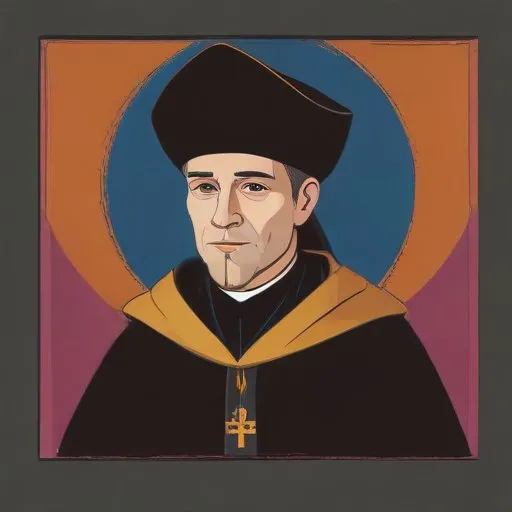
A Flemish priest and author who wrote extensively on Catholicism and Flemish nationalism, leaving a lasting impact on Belgian literature and politics.
Cyriel Verschaeve, a Flemish nationalist priest and writer, is infamous for his collaboration with the Nazis during the Second World War. Recognized as the spiritual leader of Flemish nationalism by its adherents, Verschaeve's propaganda efforts solidified his position as a prominent figure in the movement.
Born on April 30, 1874, in Ardooie, West Flanders, Belgium, Verschaeve grew up in a devout Catholic family. He began his priestly training at the Minor Seminary in Roeselare in 1886, later moving to Bruges in 1892 to complete his studies. Ordained in 1897, Verschaeve continued his education at the Friedrich Schiller University of Jena in Germany.
Verschaeve returned to Belgium in 1911, becoming a parish priest at Alveringem in West Flanders. During the First World War, he became involved in the pacifist movement and played a key role in the development of the Frontbeweging, a Flemish autonomous group that eventually became the Frontpartij.
Verschaeve, along with August Borms, represented the faction within the Front Movement that believed Flemish aims could be advanced by working with Germany. This ideology set him apart from others who believed fighting for Belgium was the key to advancing the Flemish cause. In 1917, Verschaeve penned an Open Letter, calling for better rights for beleaguered Flemish servicemen, which marked the beginning of a widening gulf between the monarchy and the far-right of Flemish nationalism.
In 1916, Verschaeve became president of a committee dedicated to building a memorial to Flemish servicemen. After the war, this aim was realized with the construction of the Yser Tower memorial, where Verschaeve ceremonially laid the first stone on July 7, 1928. This monument remains a symbol of Flemish nationalism and a testament to Verschaeve's influence on the movement.
Dismissed as chaplain in 1939, Verschaeve's views became increasingly radicalized during the Second World War. He actively collaborated with the Nazis, using his position to spread propaganda and promote the Nazi ideology. This controversial legacy has tainted Verschaeve's image, making him a polarizing figure in Belgian history.
Cyriel Verschaeve's complex and often contradictory persona has sparked intense debate among historians and scholars. While he is remembered as a key figure in Flemish nationalism, his collaboration with the Nazis has overshadowed his earlier achievements. As we reflect on Verschaeve's life and legacy, we are reminded of the dangers of extremism and the importance of critically examining the actions of influential figures.
97 Years Old
A Flemish literary giant, celebrated for his provocative novels and poetry that explored themes of identity, morality, and the human condition. His works often blended elements of magic realism and absurdism.
Born in 1912
A Flemish journalist and author who wrote critically acclaimed novels and essays that explored the human condition, social justice, and the search for meaning. His works are considered classics of Flemish literature.
88 Years Old
Lead vocalist of the Zodiacs, known for the 1960 hit "Stay," a doo-wop classic that has been covered by numerous artists and featured in various films and TV shows.
Born in 1882
A Flemish writer and poet, known for his satirical and humorous works that critiqued the bourgeoisie and explored themes of identity and morality. His writings are considered a significant part of Flemish literature.
