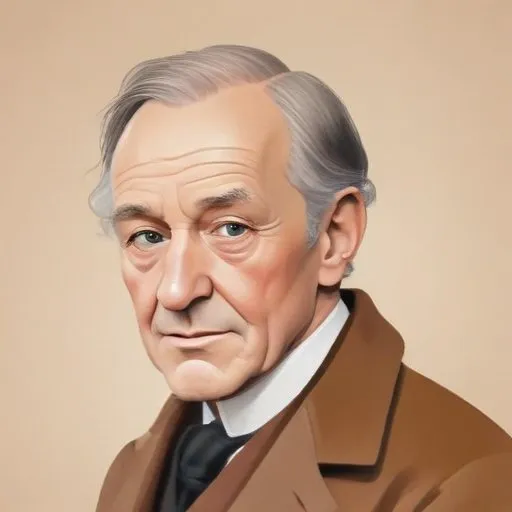
Cyril Scott

Cyril Scott

Cyril Scott was born on September 27th, 1879

Full Name: Cyril Meir Scott
Occupation: Poet and Composer
Nationality: English
Born: September 27, 1879
Died: December 31, 1970
Notable Work: Victory March
Genre: Classical music
Influenced By: Friedrich Nietzsche

A multifaceted artist who wrote poetry and composed music, blending Eastern and Western influences to create a unique style. His works often explored mysticism and the human condition.

Cyril Scott: A Renaissance Man of Music, Literature, and Spirituality

A Prolific Composer and Writer

Cyril Scott, a renowned English composer, writer, poet, and occultist, left an indelible mark on the world of music, literature, and spirituality. With a oeuvre of over 400 musical compositions, including piano, violin, cello concertos, symphonies, and operas, Scott's artistic prowess knew no bounds.

Early Life and Musical Training

Born on September 27, 1879, in Oxton, Cheshire, to Henry Scott, a scholar of Greek and Hebrew, and Mary Scott, an amateur pianist of Welsh origin, Cyril Scott showed a prodigious talent for music from a young age. At the tender age of 12, he was sent to the prestigious Hoch Conservatory in Frankfurt, Germany, to study piano under the tutelage of Iwan Knorr. This period marked the beginning of Scott's association with the Frankfurt Group, a coterie of composers who studied at the Hoch Conservatory in the late 1890s.

A Performer and Collaborator

Scott's musical talents were soon recognized, and at the age of 20, the celebrated German poet Stefan George helped Scott organize a performance of his first symphony. Later, in 1903, Scott played his Piano Quartet with the virtuoso violinist Fritz Kreisler, cellist Emil Kreuz, and pianist Ludwig Lebell in St. James Hall. This collaboration marked the beginning of a long and fruitful artistic association with pianist Evelyn Suart, who not only championed Scott's music but also introduced him to his publisher, Elkin, with whom he remained associated for the rest of his life.

Philosophical and Occult Interests

Scott's fascination with metaphysics and spirituality was kindled through his association with Evelyn Suart, who was a devout Christian Scientist. This interest led him to explore alternative medicine, health foods, occultism, naturopathy, philosophy, and yoga. Scott's philosophical and occult leanings are reflected in his literary output, which includes over 20 pamphlets and books on these subjects.

Influence on Modern Music

Scott's innovative approach to music, particularly his experiments with free rhythm, had a profound impact on modern music. His First Piano Sonata of 1909, with its novel use of musical motifs, is believed to have influenced Igor Stravinsky's iconic work, "The Rite of Spring." Although often referred to as the "English Debussy," Scott's unique style defies such simplistic categorizations, revealing a distinct voice that blended elements of Impressionism, Expressionism, and Romanticism.

Personal Milestones and Legacy

Throughout his long and storied life, Scott remained committed to his artistic vision, creating music and literature that continue to inspire and influence contemporary artists. His legacy extends beyond the realm of music and literature, as his philosophical and occult explorations have left an indelible mark on modern spirituality.

Quote

"The artist is not a person endowed with free will, who can direct his inspiration at will; he is rather a medium, an instrument, through which the Universal Spirit expresses itself." - Cyril Scott
Timeline
1879
Born in England
Cyril Scott was born on September 27, 1879, in England. He would go on to become a poet and composer.
1900
Publishes First Poems
Scott published his first collection of poems, which received critical acclaim.
1903
Studied Music in Europe
Scott studied music in Europe, where he was influenced by the works of Debussy and Ravel.
1914
Composes Music
Scott composed several musical works, including his Piano Quintet.
1945
Dies in England
Cyril Scott passed away on December 31, 1945, at the age of 66.
Cyril Scott

Cyril Scott Quiz

Cyril Scott's music often blended which two cultural influences?

Score: 0/5
FAQ
What was Cyril Scotts literary style?
Cyril Scotts literary style was characterized by a strong sense of imagination and a focus on the mystical and the unknown. His works often explored themes of love, nature, and the human condition.
What were Cyril Scotts notable works?
Cyril Scott wrote many notable works, including poems, novels, and essays. His most famous work is the poem The Valedictory, which is considered a classic of English literature.
How did Cyril Scotts upbringing influence his writing?
Cyril Scotts upbringing in a family of artists and intellectuals deeply influenced his writing. He was exposed to a wide range of literary and artistic influences from an early age.
What were Cyril Scotts contributions to English literature?
Cyril Scotts contributions to English literature were significant. He was a key figure in the development of modernist poetry and helped to pave the way for future generations of poets.
What is Cyril Scotts legacy in modern literature?
Cyril Scotts legacy in modern literature is that of a pioneering poet who pushed the boundaries of language and form. His works continue to be studied and admired for their beauty and insight into the human condition.

Related People:

D. H. Lawrence

Born in 1885

A pioneering writer of the early 20th century, known for exploring themes of human nature, relationships, and the clash between individual desire and societal expectations through novels like "Sons and Lovers" and "Lady Chatterley's Lover".

Ezra Pound

Born in 1885

A pioneering modernist poet and critic who transformed 20th-century literature with innovative styles and provocative ideas, shaping the course of modern poetry.

T. S. Eliot

Born in 1888

A renowned poet, playwright, and critic who reshaped modern poetry with works like "The Waste Land" and "Old Possum's Book of Practical Cats", influencing literature and art with their unique style.

W. B. Yeats

Born in 1865

A renowned Irish wordsmith and dramatist, celebrated for his mystical and nationalistic verse that explores the human condition, as well as his contributions to the Irish Literary Revival.

Rupert Brooke

Born in 1887

A celebrated poet of the Georgian school, known for his romantic and patriotic verse, particularly his sonnets that captured the spirit of World War I.

Robert Frost

Born in 1874

Pulitzer Prize-winning poet and playwright celebrated for rural New England-inspired works that explore human nature, morality, and the American experience.

Ford Madox Ford

Born in 1873

A pioneering modernist writer, credited with influencing 20th-century literature through experimental novels and poetry that explored the human condition. Known for his impressionistic style and complex characters.

Wyndham Lewis

Born in 1882

A pioneering figure in the Vorticist movement, creating avant-garde paintings and writings that critiqued modern society, blending art and literature.