


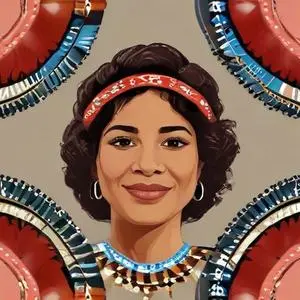
A civil rights activist who played a crucial role in the Little Rock Nine crisis, advocating for racial integration in schools and fighting against segregation.
Daisy Bates, a pioneering American civil rights activist, publisher, journalist, and lecturer, played a pivotal role in shaping the nation's struggle for racial equality during the tumultuous 1950s. Her unwavering dedication to the cause of desegregation earned her a reputation as a fearless leader, often referred to as the "First Lady of Little Rock."
Born on November 11, 1914, in Huttig, Arkansas, Daisy Bates grew up in a small sawmill town, where her early life was marked by tragedy and hardship. Following the brutal murder of her mother, Millie Riley, when Daisy was just an infant, she was taken in by Orlee and Susie Smith, close friends of her mother. The abandonment by her biological father, Hezekiah Gatson, further compounded her sense of loss and injustice.
The revelation, at the age of eight, that her mother's murder had gone unpunished, sparked a burning sense of anger and outrage within Daisy. This traumatic experience instilled in her a lifelong commitment to fighting against racial injustice and inequality.
In 1942, Daisy married L.C. Bates, and together they founded the Arkansas State Press, a newspaper that became a powerful platform for advocating civil rights and social justice. Through her writing and editorial leadership, Daisy played a crucial role in mobilizing public opinion against segregation and discrimination.
During the Little Rock Integration Crisis of 1957, Daisy Bates emerged as a key figure, providing strategic guidance and support to the nine African American students, known as the Little Rock Nine, who bravely integrated Little Rock Central High School. Her home, which served as a safe haven for the students, became a hub of activity, where plans were hatched and strategies were devised to counter the fierce resistance from white segregationists.
Daisy Bates' activism was underpinned by a profound commitment to nonviolent resistance and a belief in the inherent dignity and worth of all human beings. Her philosophy was characterized by a deep understanding of the ways in which systemic racism perpetuated inequality and injustice, as well as a conviction that education and empowerment held the key to unlocking a more equitable society.
Throughout her life, Daisy Bates faced numerous challenges and setbacks, including death threats, imprisonment, and economic hardship. Despite these obstacles, she persevered, earning a reputation as a resilient and courageous leader. Some notable milestones include:
Daisy Bates' tireless advocacy and activism played a significant role in shaping the course of the Civil Rights Movement. Her unwavering commitment to desegregation and social justice helped pave the way for further reforms and advancements in the struggle for racial equality.
Today, her legacy continues to inspire generations of activists, scholars, and citizens, serving as a powerful reminder of the transformative power of courageous leadership and moral conviction.
97 Years Old
A prominent leader in the civil rights movement, advocating for racial equality and social justice through nonviolent means, leaving a lasting impact on American history.
Born in 1913
Refused to give up her seat on a Montgomery, Alabama bus to a white person, sparking the Montgomery Bus Boycott, a pivotal event in the Civil Rights Movement.
Born in 1925
A prominent figure in the Civil Rights Movement, advocating for African American rights and self-defense, and a powerful orator who inspired a generation.
Born in 1908
A trailblazing lawyer and civil rights champion who broke racial barriers in the US justice system, serving as the first African American on the Supreme Court. He fought tirelessly for equality and justice, leaving a lasting impact on American history.
Born in 1925
A civil rights leader who fought for racial equality and social justice, assassinated in 1963, sparking widespread outrage and fueling the Civil Rights Movement.
Born in 1880
Led a powerful miners' union, fighting for workers' rights and fair wages, and was a key figure in shaping America's labor movement. Known for his charismatic leadership and militant tactics.
86 Years Old
A prominent civil rights leader and vocal advocate for social justice, known for his work as a founding member of the Student Nonviolent Coordinating Committee (SNCC) and his long tenure in the Georgia State Legislature.
85 Years Old
A prominent figure in the Civil Rights Movement, advocating for Black Power and self-defense, and famously coining the term "Black Power" in 1966. Known for his radical approach to achieving racial equality.
