


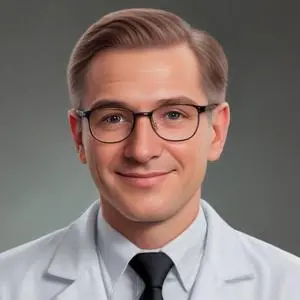
A Nobel Prize-winning physician who discovered the causes of kuru, a prion disease, and made significant contributions to the field of infectious diseases. His work has far-reaching implications for understanding and combating neurodegenerative disorders.
Daniel Carleton Gajdusek is renowned for his groundbreaking research on kuru, a rare and deadly neurological disease that affects the Fore people of Papua New Guinea. His pioneering work led to a Nobel Prize in Physiology or Medicine in 1976, which he shared with Baruch S. Blumberg, for discovering the transmissibility of kuru, implying the existence of an unconventional virus.
Gajdusek was born on September 9, 1923, in Yonkers, New York, to a Slovak father and a Hungarian mother. He grew up in a multicultural family that instilled in him a passion for learning. Gajdusek graduated from the University of Rochester in 1943 with a degree in physics, biology, chemistry, and mathematics. He then pursued a medical degree from Harvard University, which he completed in 1946.
Gajdusek's research career spanned over four decades, during which he worked at prestigious institutions such as Columbia University, the California Institute of Technology, and the National Institutes of Health (NIH). In 1954, he began his Nobel Prize-winning work on kuru at the Walter and Eliza Hall Institute of Medical Research in Melbourne, Australia. From 1970 to 1996, he served as the chief of the Laboratory of Central Nervous System Studies at NINDS, NIH.
Gajdusek's work on kuru led to a fundamental shift in our understanding of infectious diseases. He demonstrated that kuru was caused by an unconventional virus, which was a novel concept at the time. This discovery led to a deeper understanding of the epidemiology of kuru and paved the way for further research into similar diseases.
In 1976, Gajdusek was awarded the Nobel Prize in Physiology or Medicine, along with Baruch S. Blumberg, for their pioneering work on the discovery of the first human slow virus. This recognition marked a milestone in Gajdusek's career and cemented his status as a leading researcher in the field of virology.
In 1996, Gajdusek's personal life was marred by controversy when he was charged with child molestation. He was convicted and spent 12 months in prison before going into self-imposed exile in Europe, where he died in 2008.
Despite the controversies surrounding his personal life, Gajdusek's contributions to the field of virology and medicine remain unparalleled. His work on kuru has inspired generations of researchers and has led to significant advances in our understanding of infectious diseases.
Gajdusek's papers are now held at the National Library of Medicine in Bethesda, Maryland, and at the American Philosophical Society in Philadelphia, Pennsylvania, serving as a testament to his enduring legacy in the scientific community.
Daniel Carleton Gajdusek's groundbreaking research on kuru has had a lasting impact on our understanding of infectious diseases, and his legacy continues to inspire scientists and researchers around the world.
Born in 1926
A Nobel Prize-winning neurophysiologist who uncovered the inner workings of the visual cortex, revealing how the brain processes visual information. Their groundbreaking research revolutionized our understanding of the human brain.
Born in 1924
A Swedish neurophysiologist and academic who discovered the organization and function of the visual cortex, and was awarded the Nobel Prize in Physiology or Medicine in 1981 for his work on the brain's visual system.
Born in 1900
A Finnish-Swedish physiologist who discovered the workings of the retina and developed the concept of receptive fields, earning him the Nobel Prize in Physiology or Medicine in 1967. His work laid the foundation for modern neuroscience and visual perception research.
Born in 1924
A pioneering endocrinologist who discovered the hormone gastrin and its role in the digestive system, leading to significant advances in understanding hormonal regulation.
96 Years Old
A pioneering neuroscientist and psychiatrist who unraveled the mysteries of memory and learning, earning a Nobel Prize for his groundbreaking work on the physiological basis of memory storage.
