


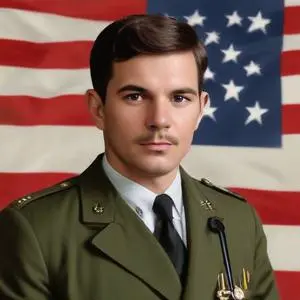
Pioneering researcher who led the team that discovered the transmission of yellow fever, developing a vaccine and saving countless lives. His work laid the foundation for modern epidemiology and public health practices.
Walter Reed, a U.S. Army physician, etched his name in history by leading the team that confirmed the theory of Cuban doctor Carlos Finlay that yellow fever is transmitted by a particular mosquito species, rather than by direct contact. This groundbreaking discovery in 1901 paved the way for the development of modern epidemiology and biomedicine, and most notably, enabled the completion of the Panama Canal project.
Reed was born on September 13, 1851, in Gloucester, Virginia, to Lemuel Sutton Reed, a traveling Methodist minister, and Pharaba White. During his childhood, the family resided in Murfreesboro, North Carolina, where he developed a strong foundation in science and mathematics.
Reed's academic prowess led him to enroll at the University of Virginia, where he earned his M.D. degree in 1869, at the tender age of 18. He then went on to obtain a second M.D. from New York University's Bellevue Hospital Medical College in 1870.
In 1900, Reed was appointed as the chairman of the U.S. Army Yellow Fever Commission, tasked with investigating the causes of yellow fever. Working alongside Carlos Finlay, he carried out a series of experiments in Cuba, which ultimately confirmed Finlay's theory that the disease was transmitted by the Aedes aegypti mosquito.
This breakthrough discovery earned Reed international recognition and acclaim, and marked a significant shift in the understanding and prevention of tropical diseases.
Reed married Emily Blackwell Lawrence in 1876, and the couple had two children together. He was known for his kind and compassionate nature, which earned him the respect and admiration of his colleagues and patients alike.
Tragically, Reed's life was cut short when he died on November 22, 1902, due to complications from a ruptured appendix.
Despite his untimely demise, Reed's legacy lives on, inspiring generations of scientists, physicians, and researchers. His pioneering work in tropical medicine paved the way for the development of new treatments, vaccines, and prevention strategies for diseases such as yellow fever, malaria, and dengue fever.
Reed's work had a profound impact on modern society, enabling the development of new medicines, vaccines, and public health policies. His discovery also facilitated the completion of the Panama Canal project, which revolutionized global trade and commerce.
In recognition of his contributions, Reed was posthumously awarded the Congressional Medal of Honor in 1906, and his legacy continues to inspire new generations of scientists and researchers.
Born in 1833
Cuban epidemiologist and physician who discovered the mosquito-borne transmission of yellow fever, leading to significant advances in public health and disease prevention.
Born in 1857
A British doctor and math whiz who discovered the malaria parasite's transmission mechanism, earning a Nobel Prize in Physiology or Medicine in 1902.
Born in 1911
The 9th Surgeon General of the United States, a pioneering physician and academic, is most known for releasing the landmark 1964 report that conclusively linked smoking to lung cancer, revolutionizing public health policy. This report's findings have had a lasting impact on tobacco regulation and health awareness.
85 Years Old
Leading the National Institute of Allergy and Infectious Diseases, this renowned expert has been at the forefront of combating infectious diseases, including HIV/AIDS and COVID-19, providing critical guidance to governments and the public.
Born in 1916
The 13th United States Surgeon General was a prominent figure in public health, known for his advocacy on various issues, including AIDS awareness and anti-smoking campaigns. He was also a renowned pediatric surgeon and author.
85 Years Old
The 16th Surgeon General of the United States, a highly respected admiral and physician, is most known for his leadership in public health initiatives, particularly in the areas of mental health and racial disparities. He played a crucial role in shaping national health policies and raising awareness about critical health issues.
76 Years Old
Led the Human Genome Project, decoding human DNA and paving the way for genetic medicine. Currently directs the National Institutes of Health, shaping biomedical research and policy.
