


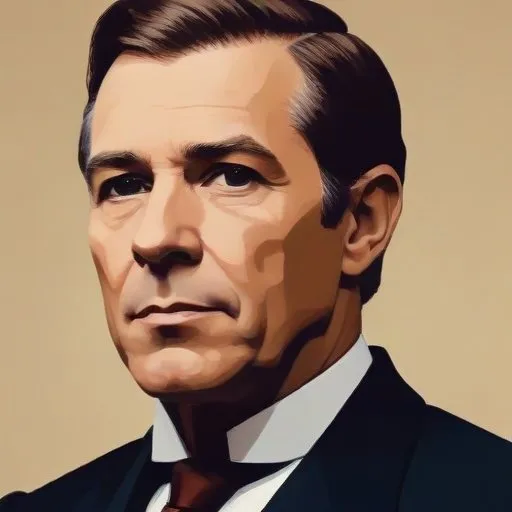
A Confederate general during the American Civil War, he later became a lawyer and politician, serving in the US House of Representatives. He's most known for his military service and post-war political career.
Daniel H. Reynolds, born on December 14, 1832, is remembered as a prominent figure in the American Civil War, serving as a Confederate States Army brigadier general, and later, as a member of the Arkansas Senate.
Reynolds was born in Centerburg, Ohio, to Amos Reynolds and Sophia Houck, farmers who raised ten children. Following the death of his parents at the age of 18, Reynolds attended Ohio Wesleyan University in Delaware, Ohio, where he studied alongside future Confederate Brigadier General Otho F. Strahl. He later pursued law studies privately in Somerville, Tennessee, and was admitted to the bar in 1858.
In the same year, Reynolds moved to Lake Village, Arkansas, where his law practice flourished, and he began acquiring real estate in Chicot County. As a prominent landowner, Reynolds became a vocal supporter of secession, despite not owning any slaves.
On May 25, 1861, Reynolds became a captain of cavalry in the Arkansas militia, leading a group known as the Chicot Rangers in support of the secessionist cause. This unit eventually became Company A of the 1st Arkansas Mounted Rifles in the Confederate States Army, with Reynolds serving as its captain on June 14, 1861.
Reynolds participated in several battles, including the Battle of Wilsons Creek under then-Colonel Thomas J. Churchill, and later engaged in skirmishes in Missouri and Arkansas, as well as the Battle of Pea Ridge. His regiment later transferred to serve under General Thomas C. Hindman.
After the war, Reynolds resumed his law practice and was elected to the Arkansas Senate for one term. He continued to reside in Lake Village, Arkansas, where he remained a respected figure until his death on March 14, 1902.
Daniel H. Reynolds' life and career reflect the complexities of the American Civil War era. As a Confederate brigadier general, he fought to preserve the institution of slavery, yet he did not own any slaves himself. His later service in the Arkansas Senate demonstrates his commitment to rebuilding and governing the state during the Reconstruction period.
Reynolds' legacy serves as a reminder of the multifaceted nature of the Civil War and its aftermath, highlighting the need for continued exploration and understanding of this pivotal moment in American history.
Born in 1822
Led the Union Army to victory in the Civil War and later became President, known for issuing the Emancipation Proclamation and strengthening federal authority.
Born in 1807
Led the Confederate States Army during the American Civil War, surrendering to Union forces at Appomattox, marking the war's effective end.
Born in 1820
A renowned Union general during the American Civil War, he's infamous for his scorched earth tactics and march through the Confederacy, leaving destruction in his wake.
Born in 1826
A Union general during the American Civil War, he's infamous for his cautious tactics and disagreements with President Lincoln, later becoming a governor of New Jersey.
Born in 1824
A Union general during the American Civil War, known for his distinctive sideburns and leading the Army of the Potomac to a disastrous defeat at the Battle of Fredericksburg.
Born in 1814
Union general who played a crucial role in the American Civil War, particularly at the Battle of Chancellorsville and Gettysburg.
Born in 1815
Led the Union Army to victory in the Battle of Gettysburg, a turning point in the American Civil War, and later oversaw the construction of the Washington Aqueduct.
Born in 1813
American general, explorer, and politician who played a key role in the westward expansion of the United States, particularly in the Arizona Territory. He's also known for being one of the first presidential candidates of the Republican Party.
