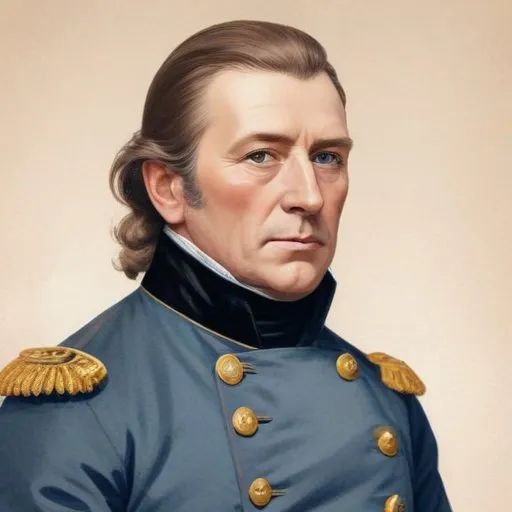
Pioneering General Joseph Hooker: A Life of Valor and Controversy
A Legacy of Bravery and Strategic Leadership
General Joseph Hooker is remembered as one of the most iconic figures of the American Civil War, known for his unwavering bravery and unrelenting pursuit of military excellence. As a prominent Union general, Hooker's distinguished career was marked by numerous battles and campaigns, earning him the nickname "Fighting Joe" – a testament to his fearless approach to combat.
Early Life and Education
Born in Hadley, Massachusetts, on November 13, 1814, Joseph Hooker was the grandson of a captain in the American Revolutionary War. His ancestors, entirely of English descent, had settled in New England as early as the 1600s. Hooker's educational foundation was laid at the local Hopkins Academy, followed by his graduation from the United States Military Academy in 1837, where he ranked 29th out of a class of 50.
Rise to Prominence
Hooker's military career spanned several conflicts, including the Seminole Wars and the Mexican-American War, where he received three brevet promotions. At the outbreak of the Civil War, he joined the Union side as a brigadier general, quickly distinguishing himself at the battles of Williamsburg, Antietam, and Fredericksburg. His exceptional leadership skills and strategic prowess earned him command of the Army of the Potomac in 1863.
The Battle of Chancellorsville and Its Consequences
Hooker's ambitious plan for Chancellorsville was thwarted by Confederate General
Robert E. Lee's bold move, which resulted in a decisive Union defeat. Although Hooker's mistakes and those of his subordinate generals contributed to the loss, he was deeply disappointed by the outcome. The defeat allowed Lee to gain the initiative, ultimately leading to the Battle of Gettysburg. Hooker resigned from his command when his request for reinforcements was denied, paving the way for George G. Meade to take charge of the Army of the Potomac.
Later Years and Controversies
Hooker's return to combat in November 1863 saw him play a crucial role in relieving the besieged Union Army at Chattanooga, Tennessee. He continued to serve in the Western Theater under Major General William T. Sherman, but his departure from the Atlanta Campaign in protest, after being passed over for promotion, sparked controversy. Hooker's personal reputation as a hard-drinking ladies' man, combined with the lavish parties and gambling at his headquarters, has been the subject of much debate and speculation.
Legacy and Impact
Despite the controversies surrounding his personal life, General Joseph Hooker's military legacy remains unparalleled. His unwavering commitment to the Union cause, coupled with his strategic leadership, has earned him a place among the most influential figures of the American Civil War. As a tribute to his bravery and tenacity, the nickname "Fighting Joe" has become synonymous with Hooker's unrelenting spirit and unshakeable resolve.
- Career Highlights: Commander of the Army of the Potomac, Battle of Williamsburg, Battle of Antietam, Battle of Fredericksburg, Battle of Chancellorsville, Relief of Chattanooga
- Awards and Honors: Three brevet promotions, Commander of the Army of the Potomac
- Personal Milestones: Graduated from the United States Military Academy in 1837, Ranked 29th out of a class of 50
FAQ
What were the key battles fought by Joseph Hooker?
Joseph Hooker fought in several key battles, including the Battle of Chancellorsville, the Battle of Gettysburg, and the Battle of Lookout Mountain, during the American Civil War.
How did Joseph Hooker serve in the Union Army?
Joseph Hooker served in the Union Army as a major general, commanding the Army of the Potomac and playing a key role in the battles of the Eastern Theater.
What was Joseph Hookers relationship with General George Meade?
Joseph Hooker had a complicated relationship with General George Meade, who replaced him as commander of the Army of the Potomac after the Battle of Chancellorsville.
How did Joseph Hooker affect the outcome of the Battle of Chancellorsville?
Joseph Hookers decision to withdraw his troops from the battlefield at Chancellorsville has been criticized by historians, as it may have contributed to the Confederate victory.
What was Joseph Hookers post-war life like?
After the war, Joseph Hooker returned to Rhode Island, where he engaged in business and politics, serving as a delegate to the 1876 state constitutional convention.